

Torrent General Manager Meghan Turner Reflects Ahead of Season Two
By Charles Hamaker
Seattle, WA - The inaugural season for the Seattle Torrent was a challenging one on the ice, while off the ice there was plenty of success in overall popularity, home-game attendance, and merchandise sales. The entire Torrent organization, from the front office down to the players, is well aware that the product on the ice wasn’t what anyone wanted, and everyone seems excited to push ahead and improve it.
With a few months to go before the team will hit the ice for their second-ever training camp, general manager Meghan Turner sat down with Circling Seattle Sports to reflect on the inaugural year, the brutal expansion process earlier this summer, their selections in the entry draft, and much more. Here’s the transcript of the interview, with takeaways from it coming in a separate article.
Note: Questions and answers have been edited for brevity and clarity.
Questions and answers
CSS: Can you share some of the obstacles the organization faced in the inaugural season?
Turner: There's a lot from the external side, right? We're kind of building the plane as we fly it. If I'm using that saying right, so the off-season was certainly really busy, just trying to get facilities and operations and obviously staffed up. It takes a lot to hire a whole an entire team staff, a lot of time, a lot of effort. Just trying to get set up, and then getting everyone up to speed on just how the league works and policies and procedures and all those things, so certainly a lot, a big mountain to climb just at the very beginning, trying to get us stood up as a team. We were still a bit of a work in progress on our facilities heading into training camp. I'll say the players were just a fantastic group of people.
They were very kind and understanding of the situation we're at. We tried to manage expectations too, and just be forthcoming about, you know, where we're at as a year one expansion team, the first expansion in the league. Kind of guinea pigs there, but I think everyone took it in stride, and we tried to make the best of it, and just make sure that we weren't sacrificing the quality as much as we could, as far as our training and preparation for the season.
We had a lot of people working hard on the back end, day in and day out, night in and night out, just trying to get everything stood up for the season, and obviously, you know, it's hard when things aren't perfectly set up when you start the year because it's just a bit of noise in the background. But I think our players and staff managed really well and were really flexible and understanding. Obviously, everyone is working on facilities and things of that nature. We were working really hard to get everything done as quickly as possible. We were pretty set to go by December, I'd say mid-December. I think feeling good about where we were at. Still bled into the season a little bit, but yeah, there's some external noise, as I said, but I thought the team managed it really, really well.
And then, you know, people talk about the travel. Certainly, you know, long, hard travel days. But again, like, such a great team we have on the player side, and on the staff side we have really fantastic staff members who tried to reduce some of the bumps that naturally come with a 17-day road trip or whatnot. So I felt like things were really smooth regardless of our situation. And then, you know, the obvious obstacles: we had some injuries coming out of the Olympics and some of that. So certainly, just a lot of getting stood up as a year one team, but I think the team, the players, the coaches, the staff handled it all really, really well. So, really proud of that.
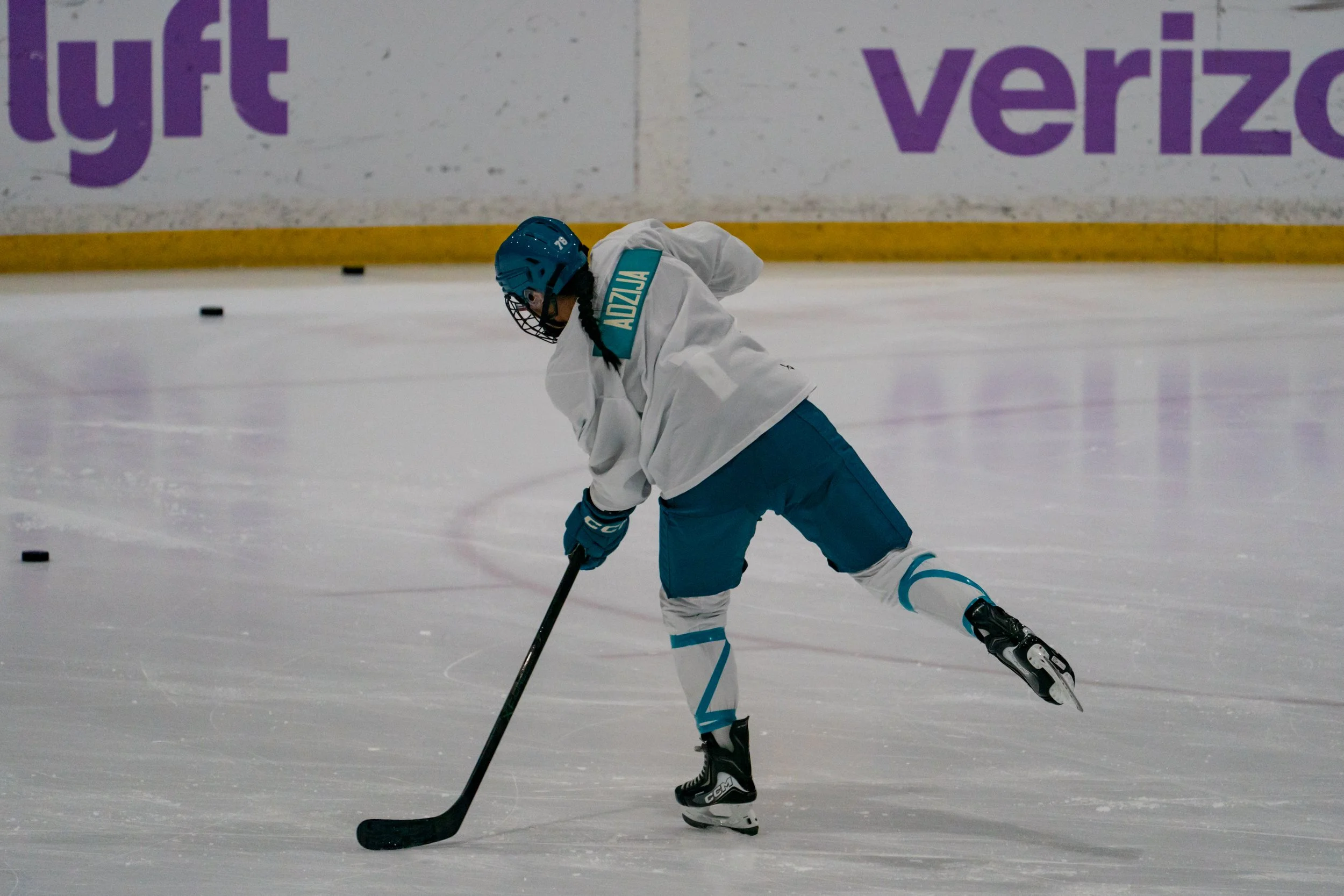
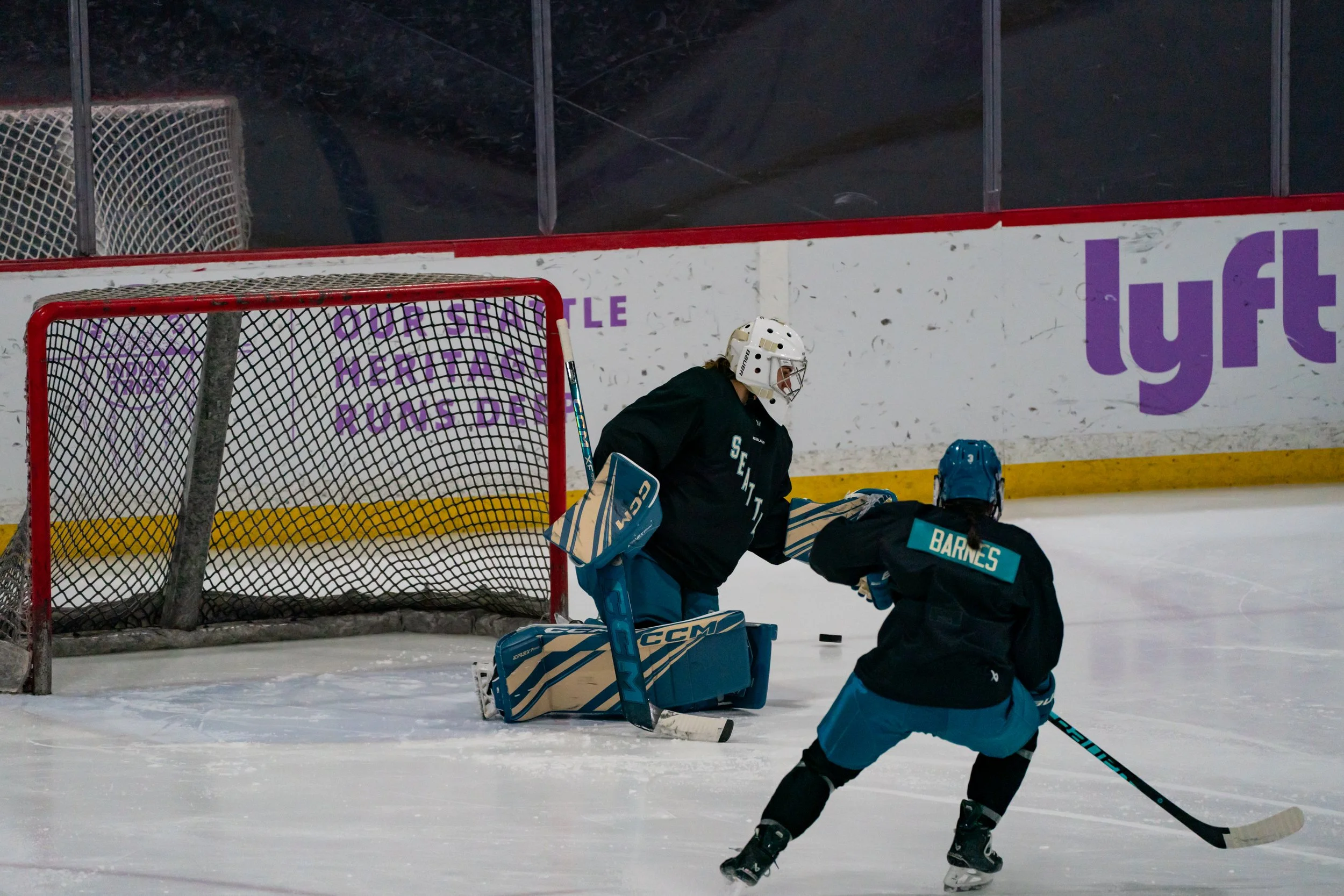
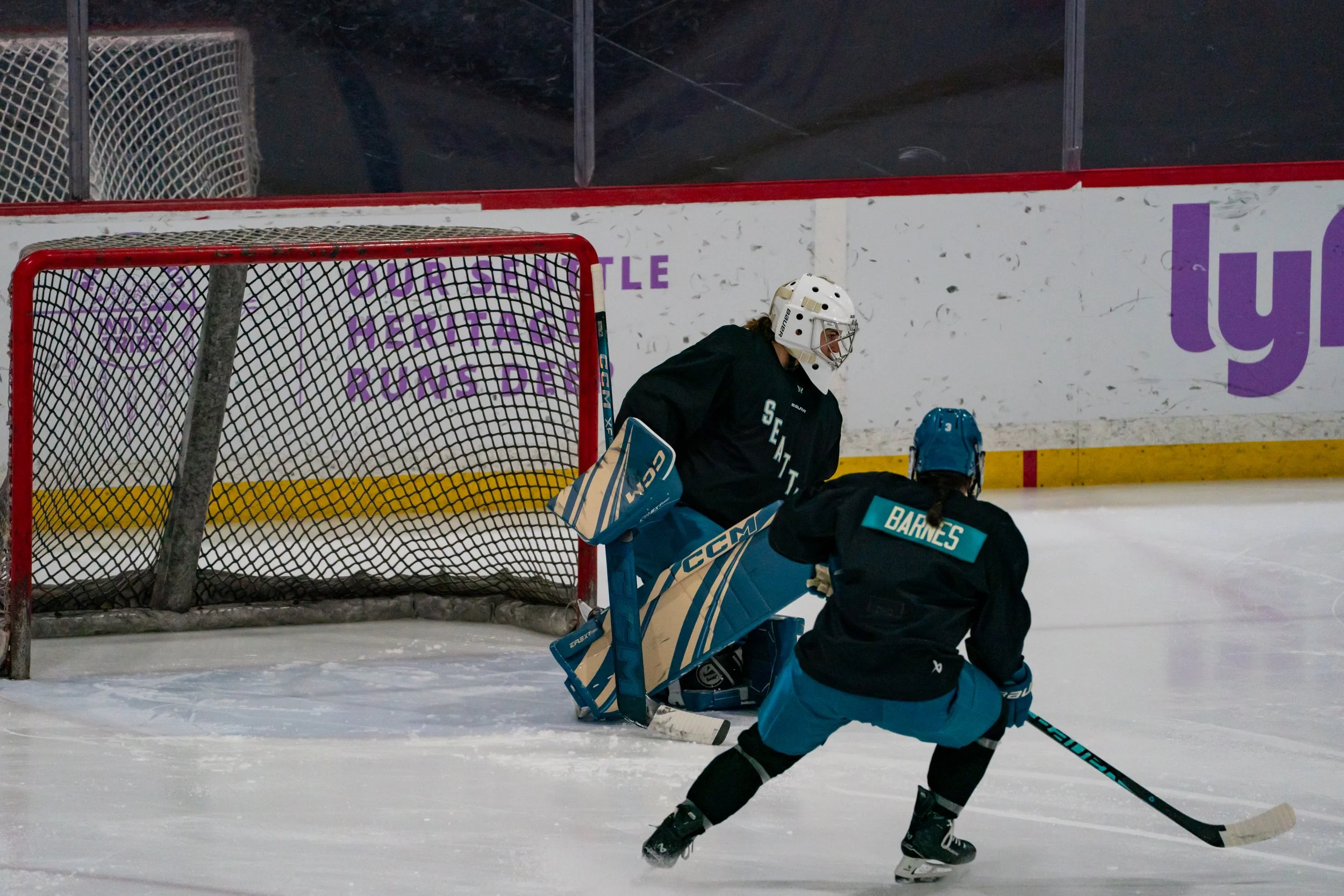
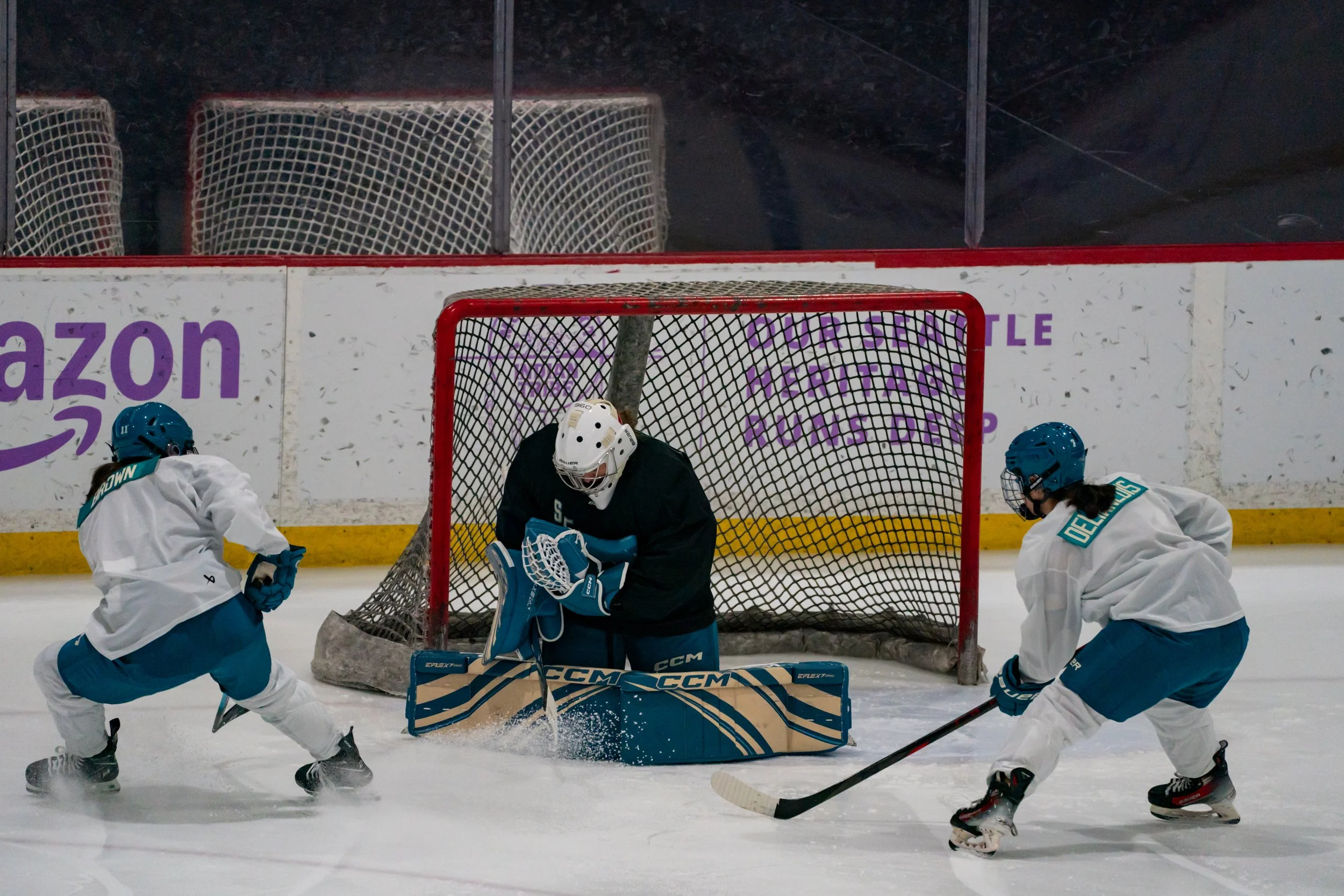
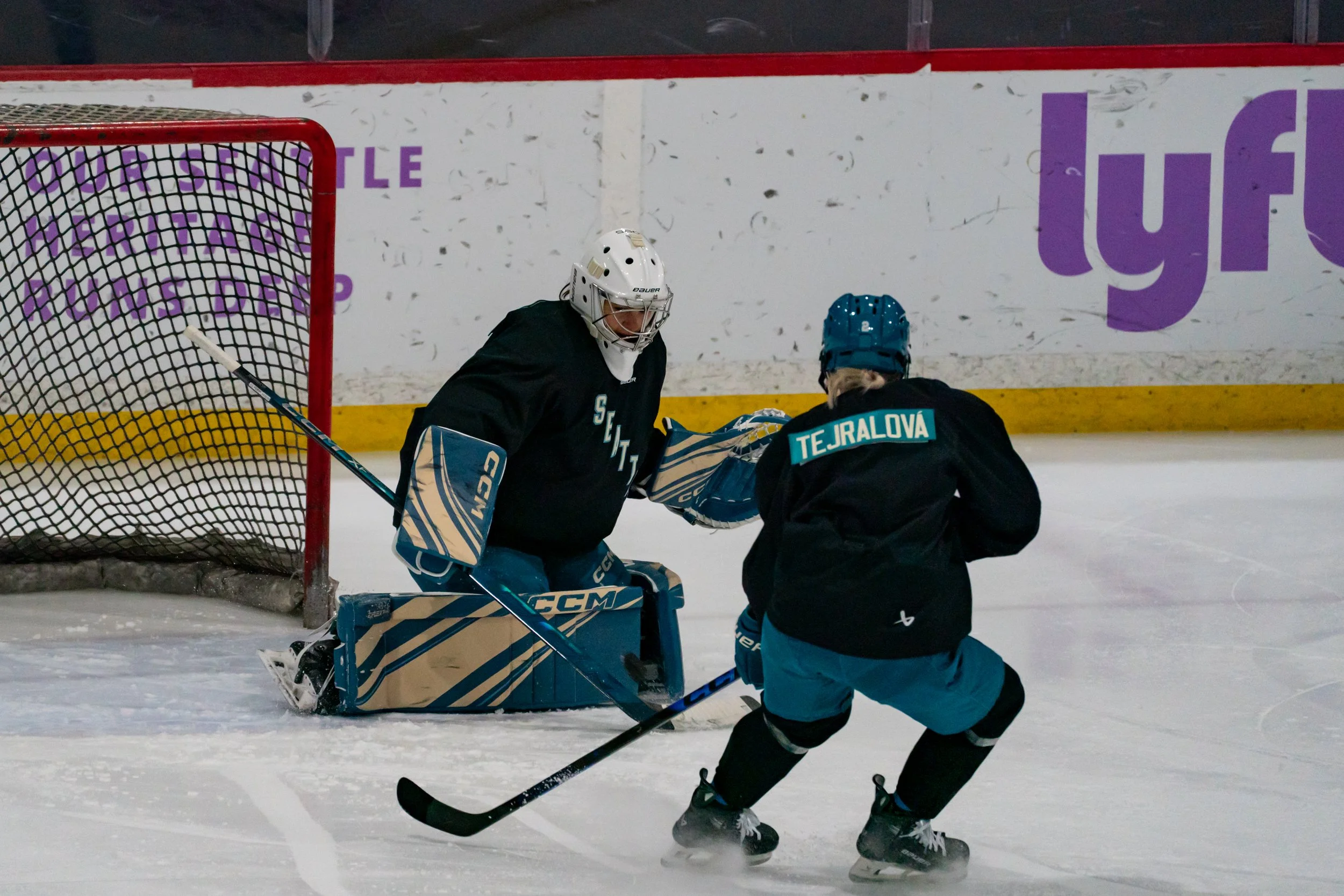
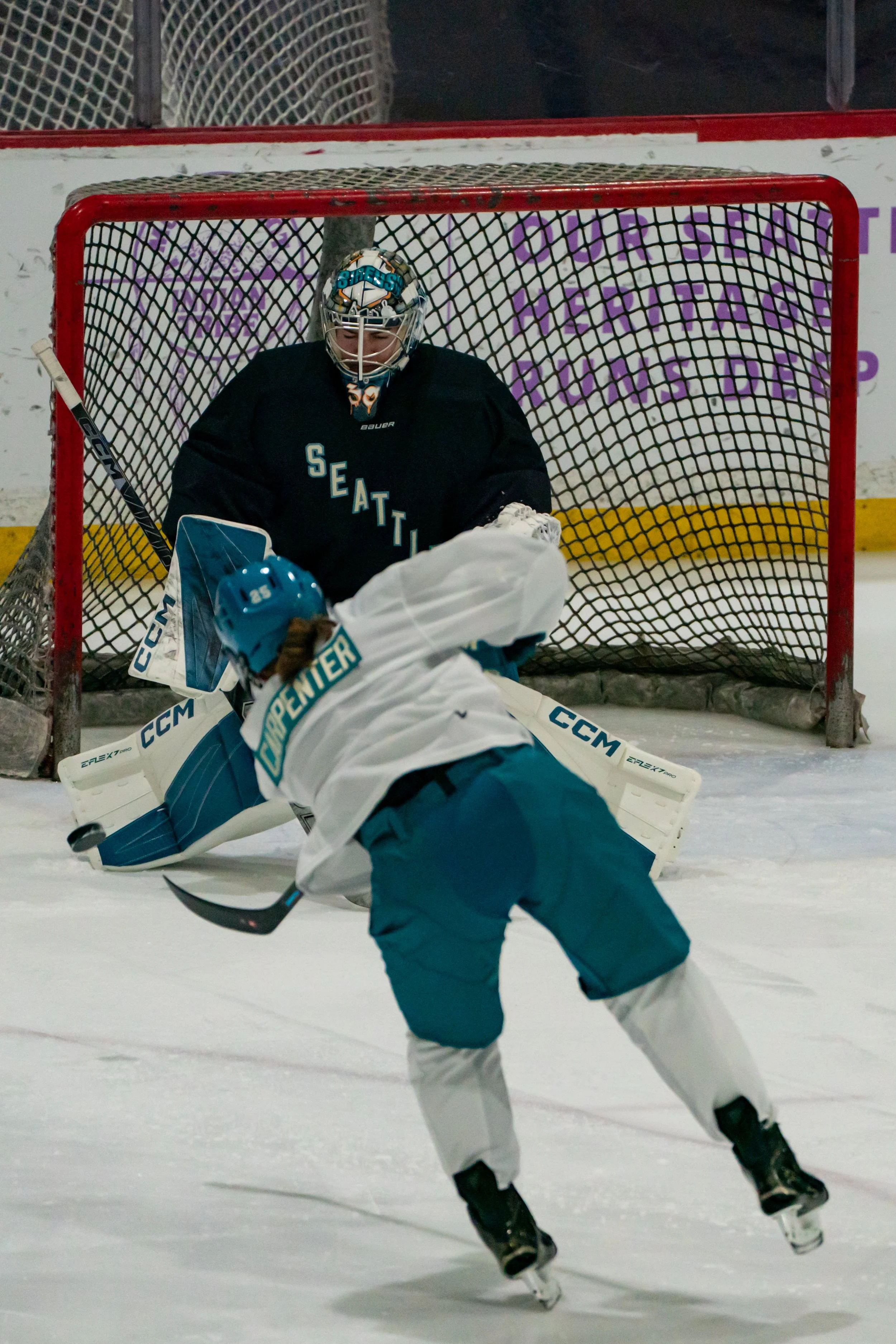
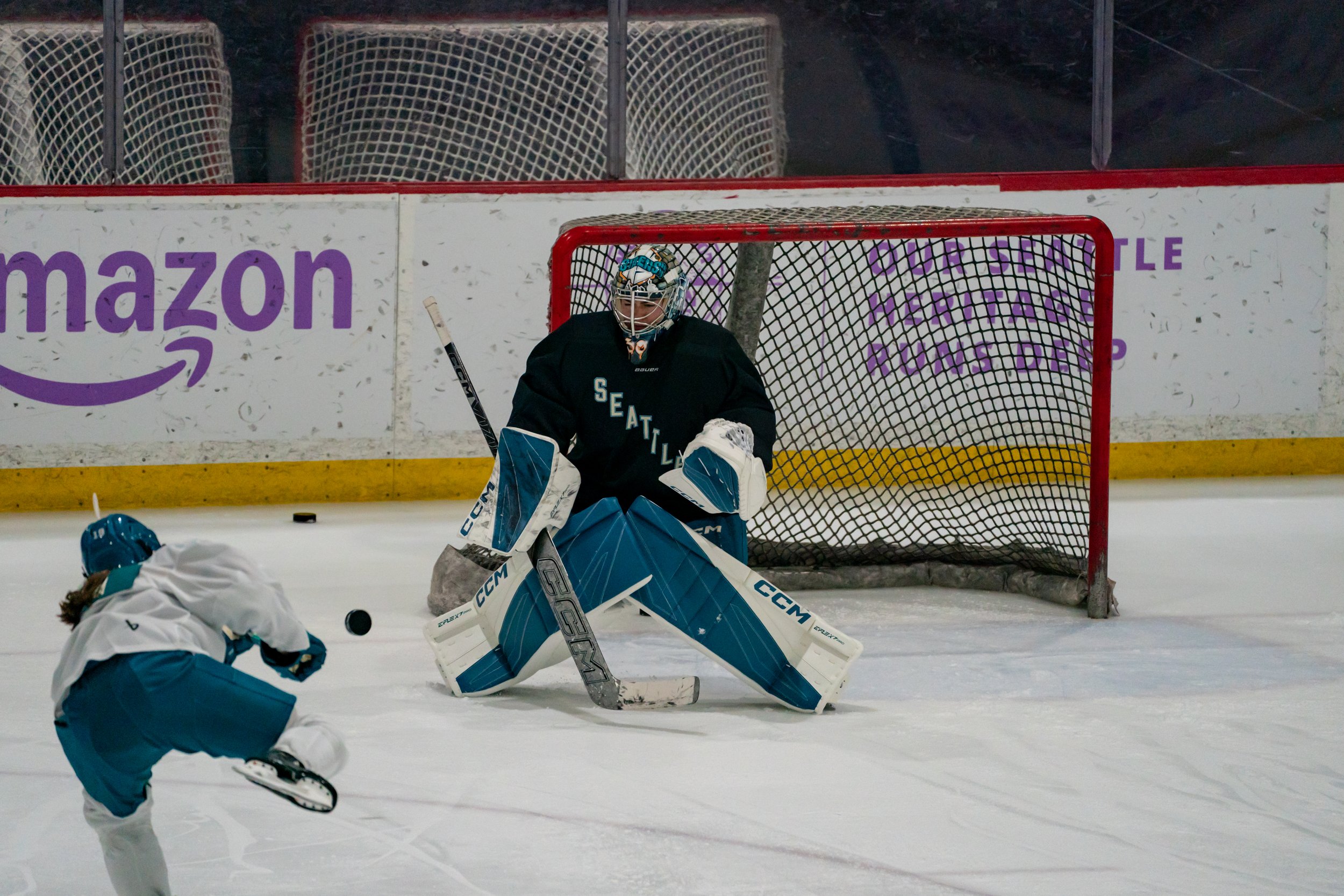
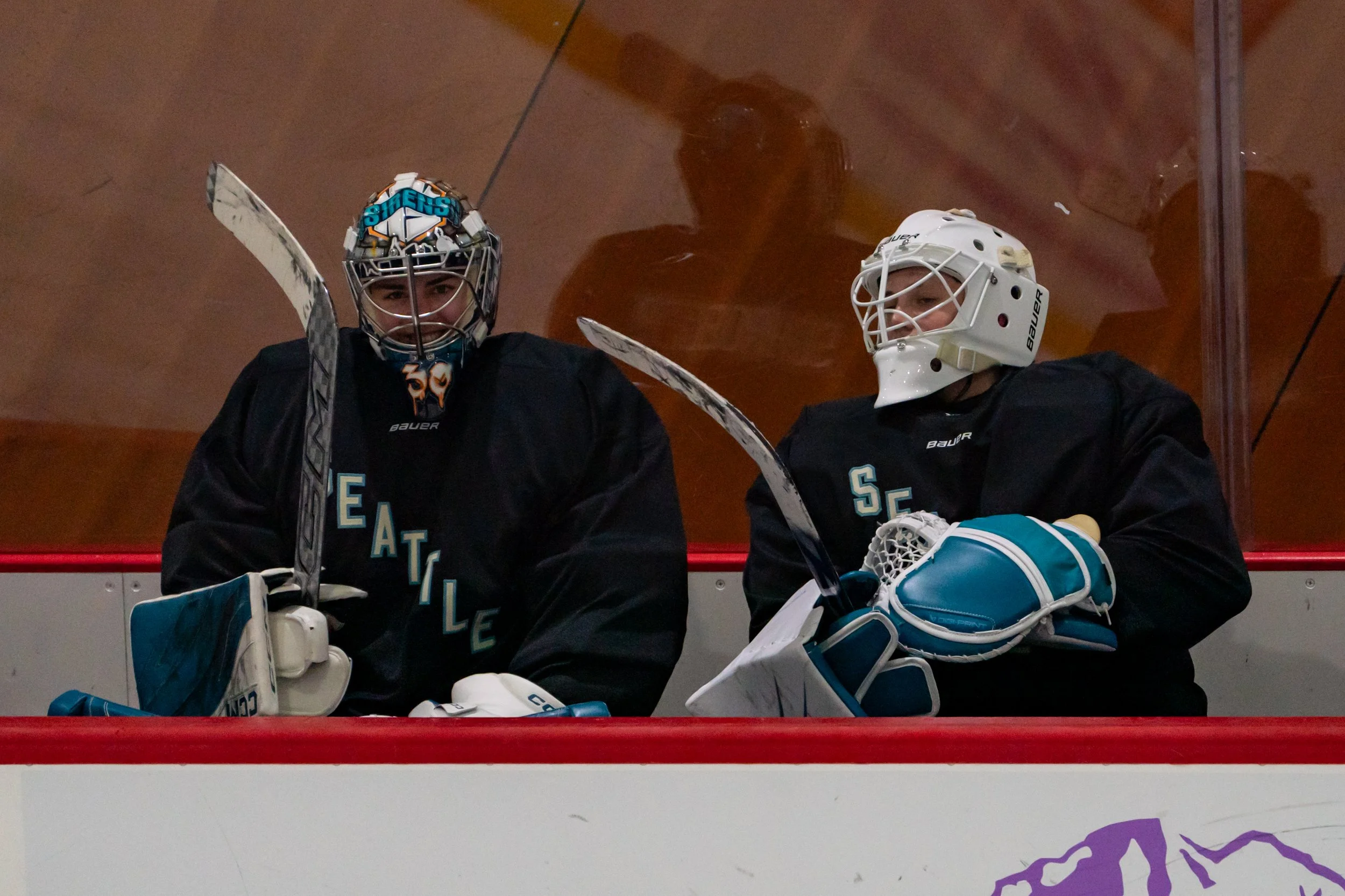
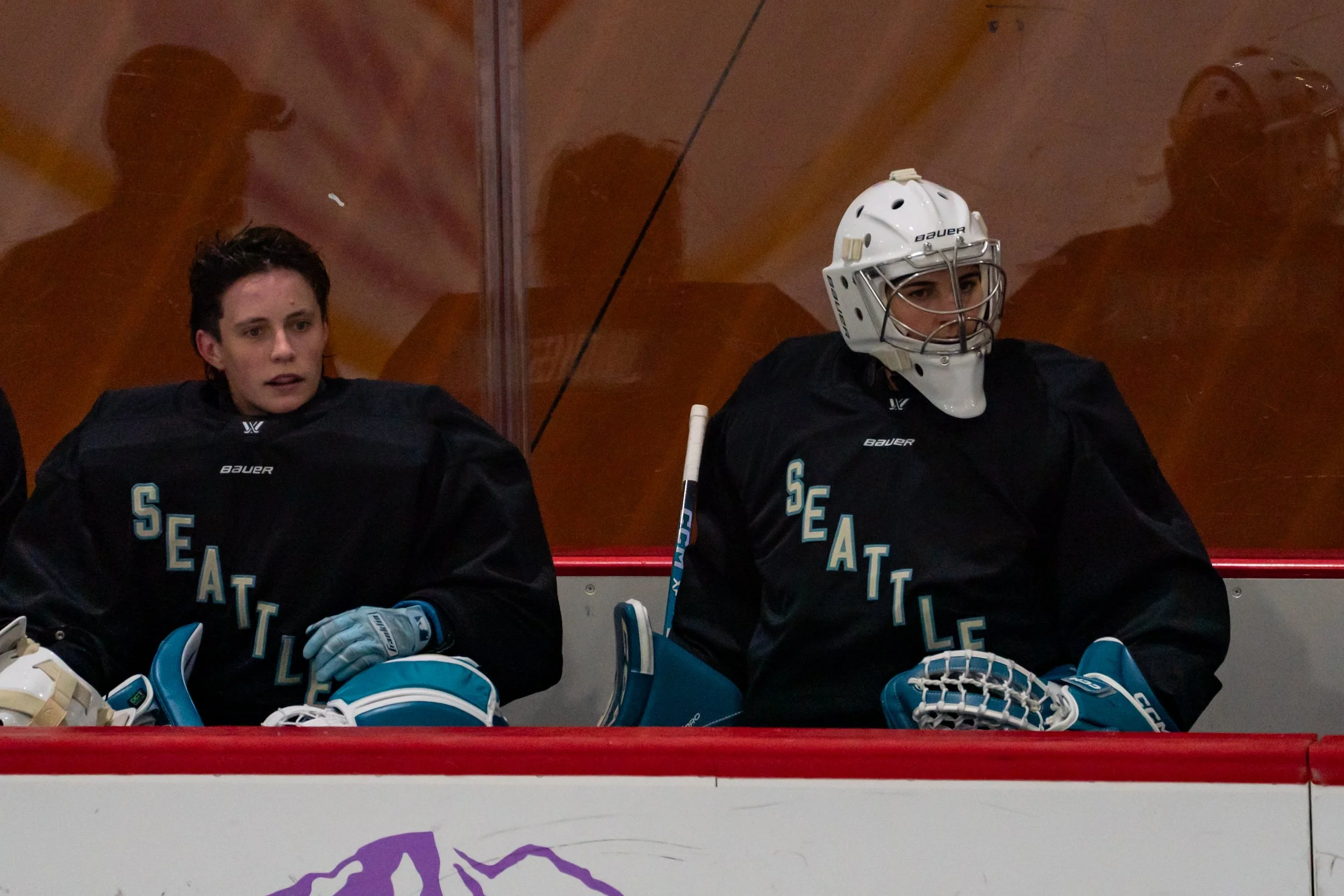
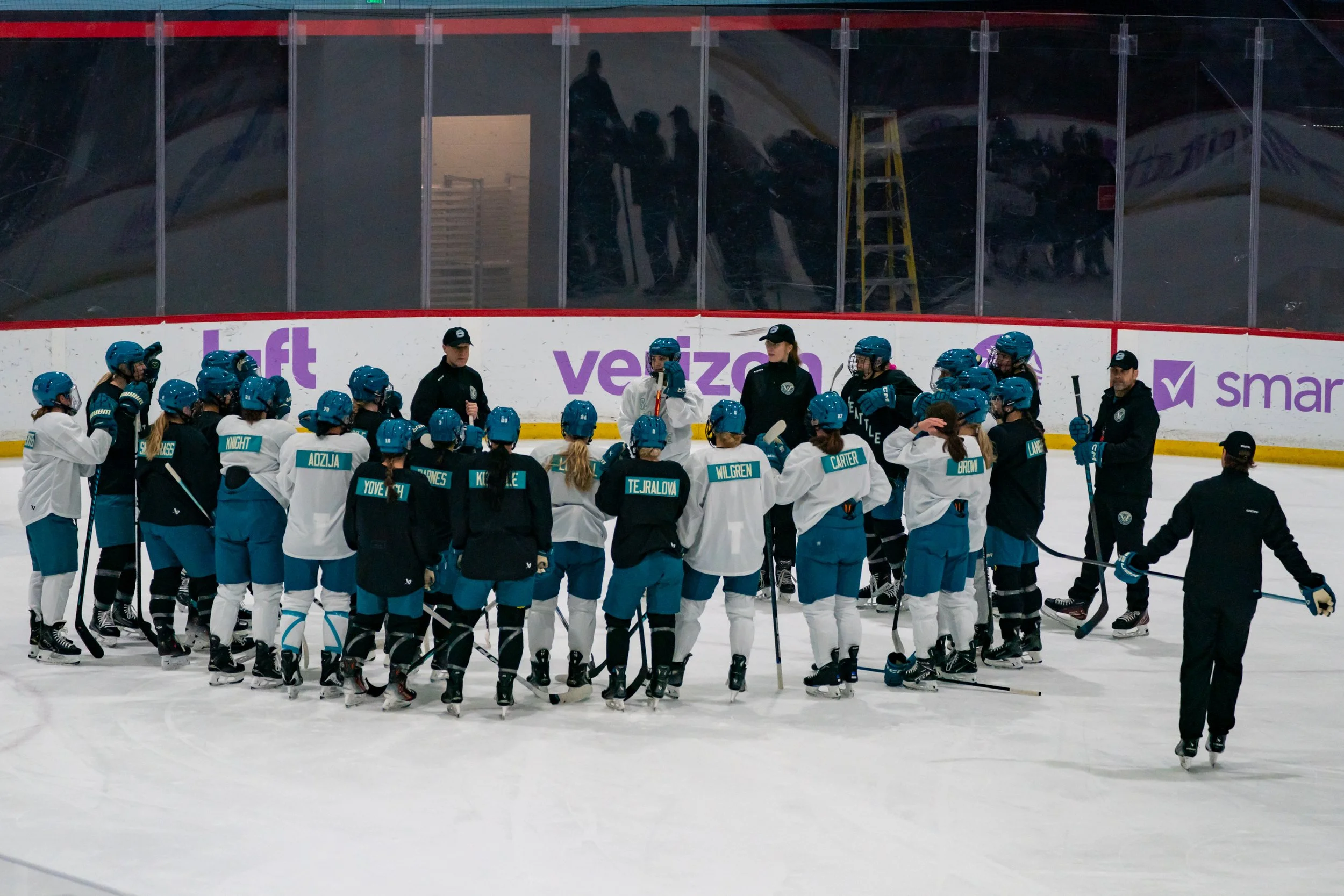
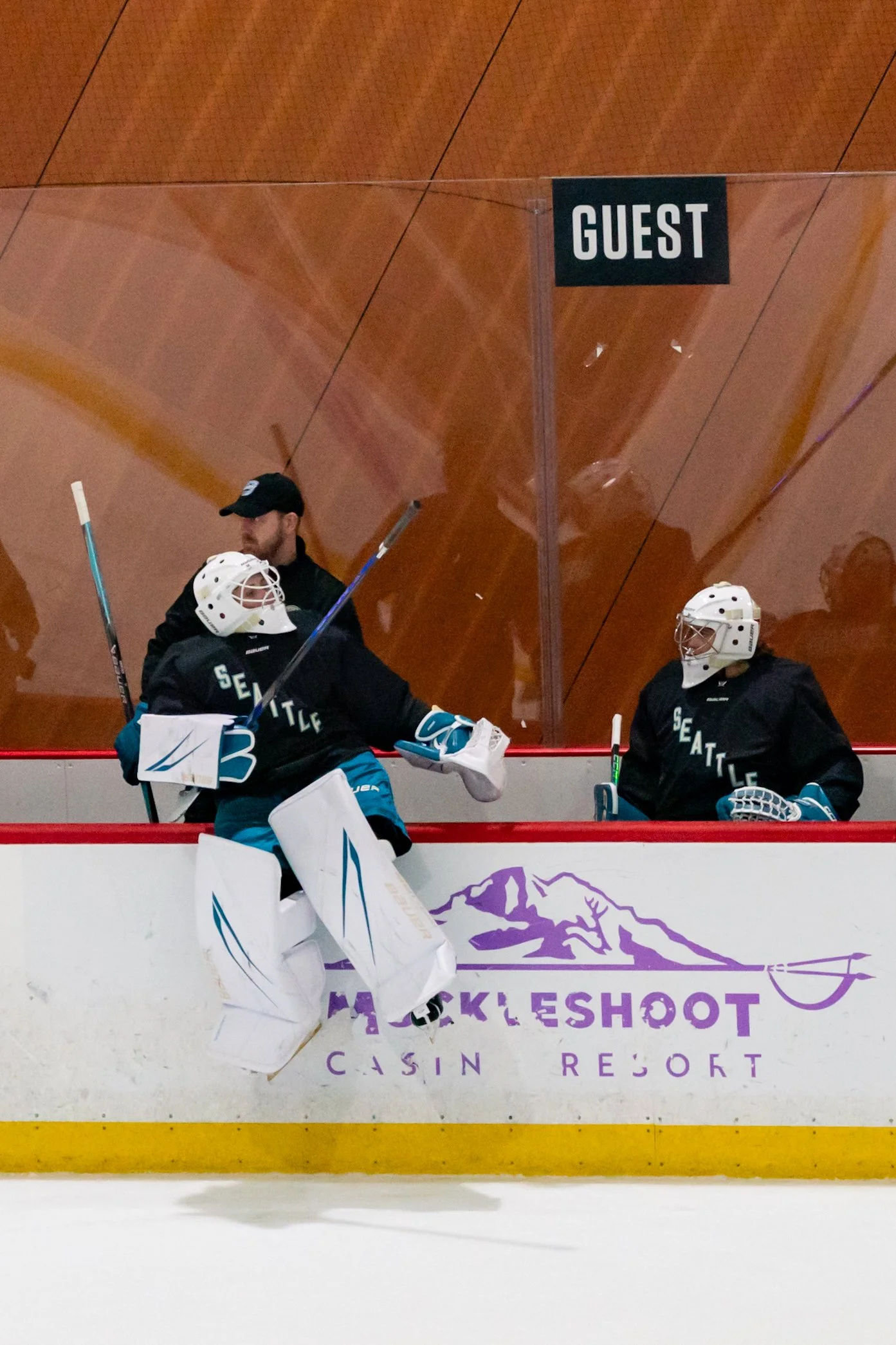
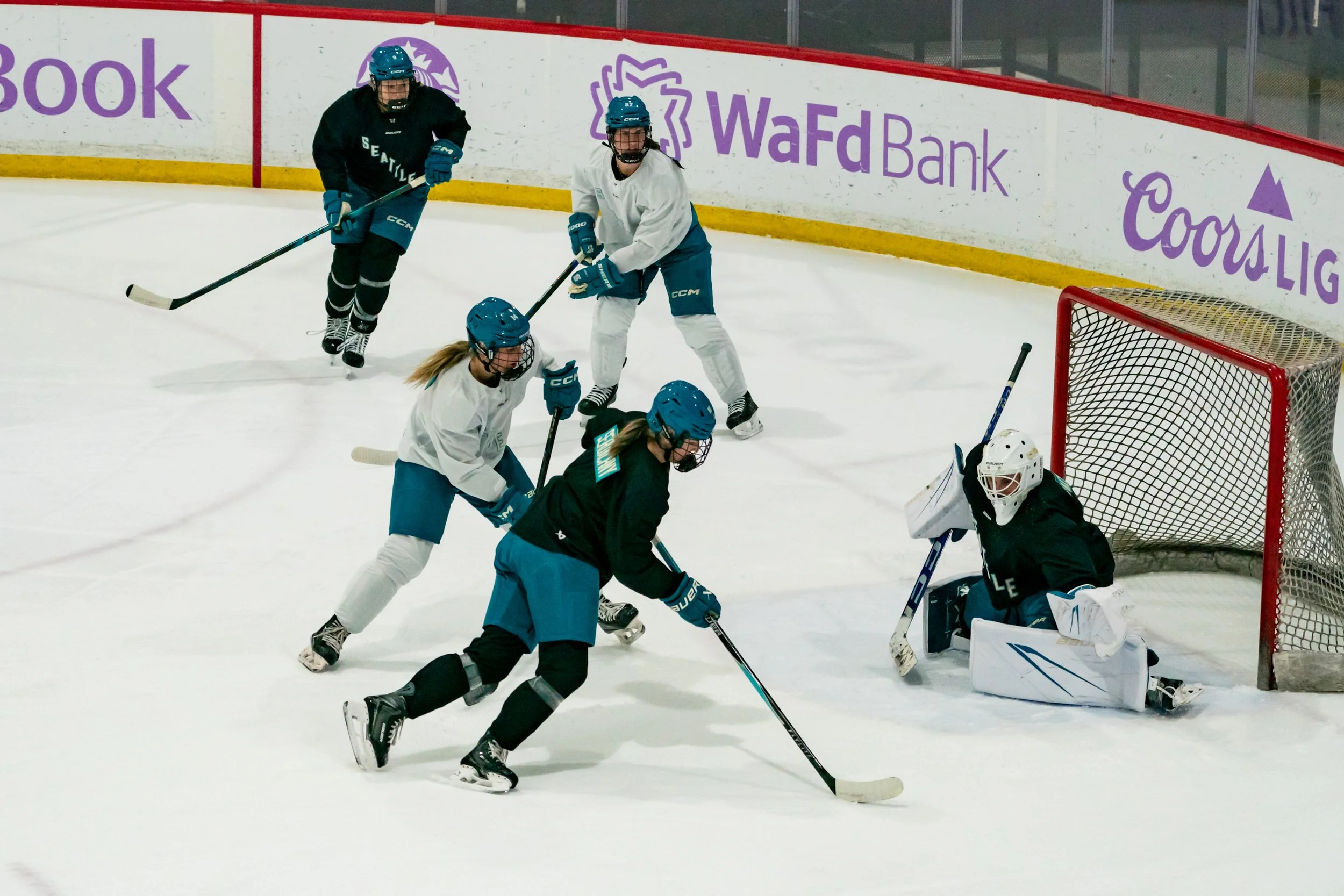
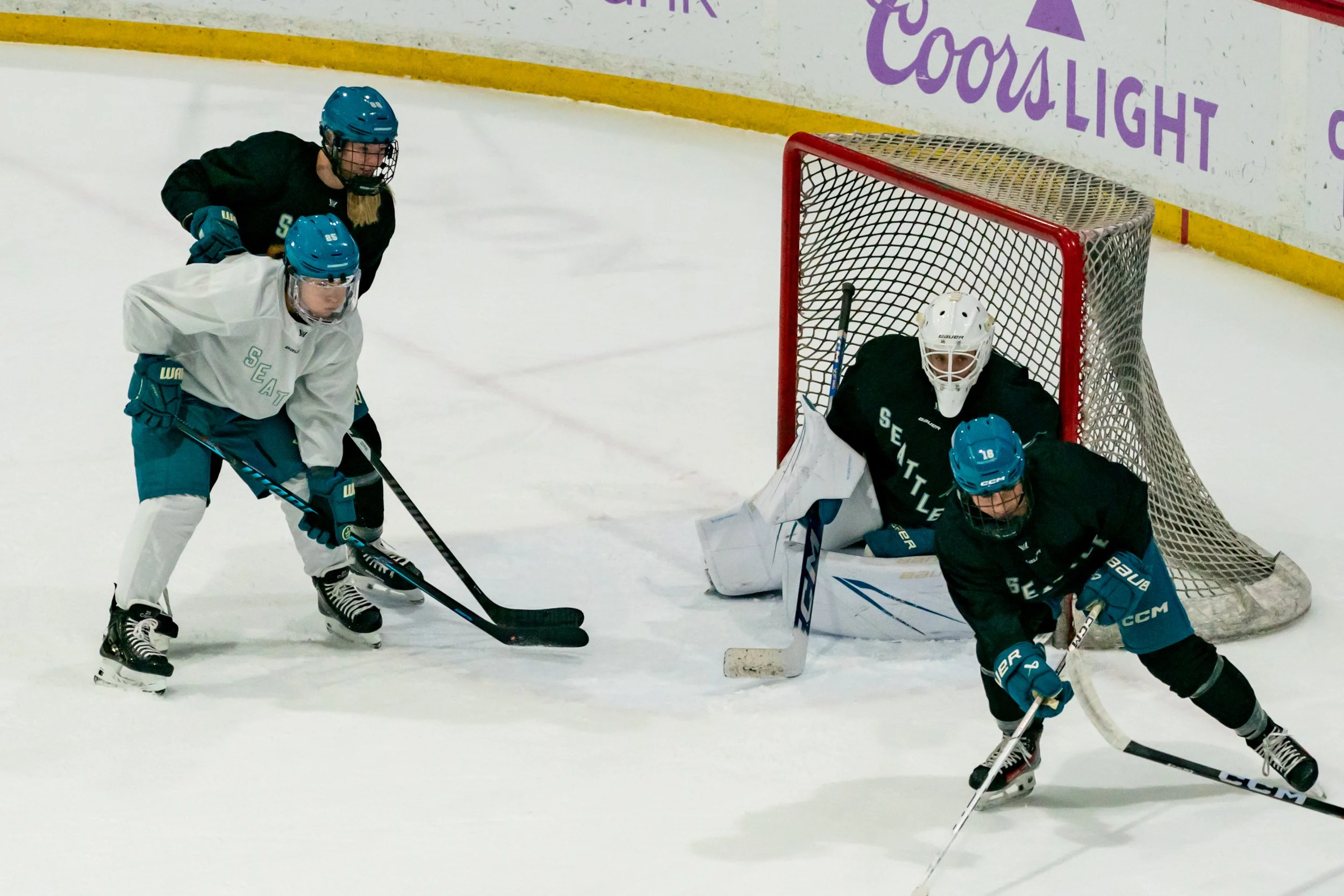
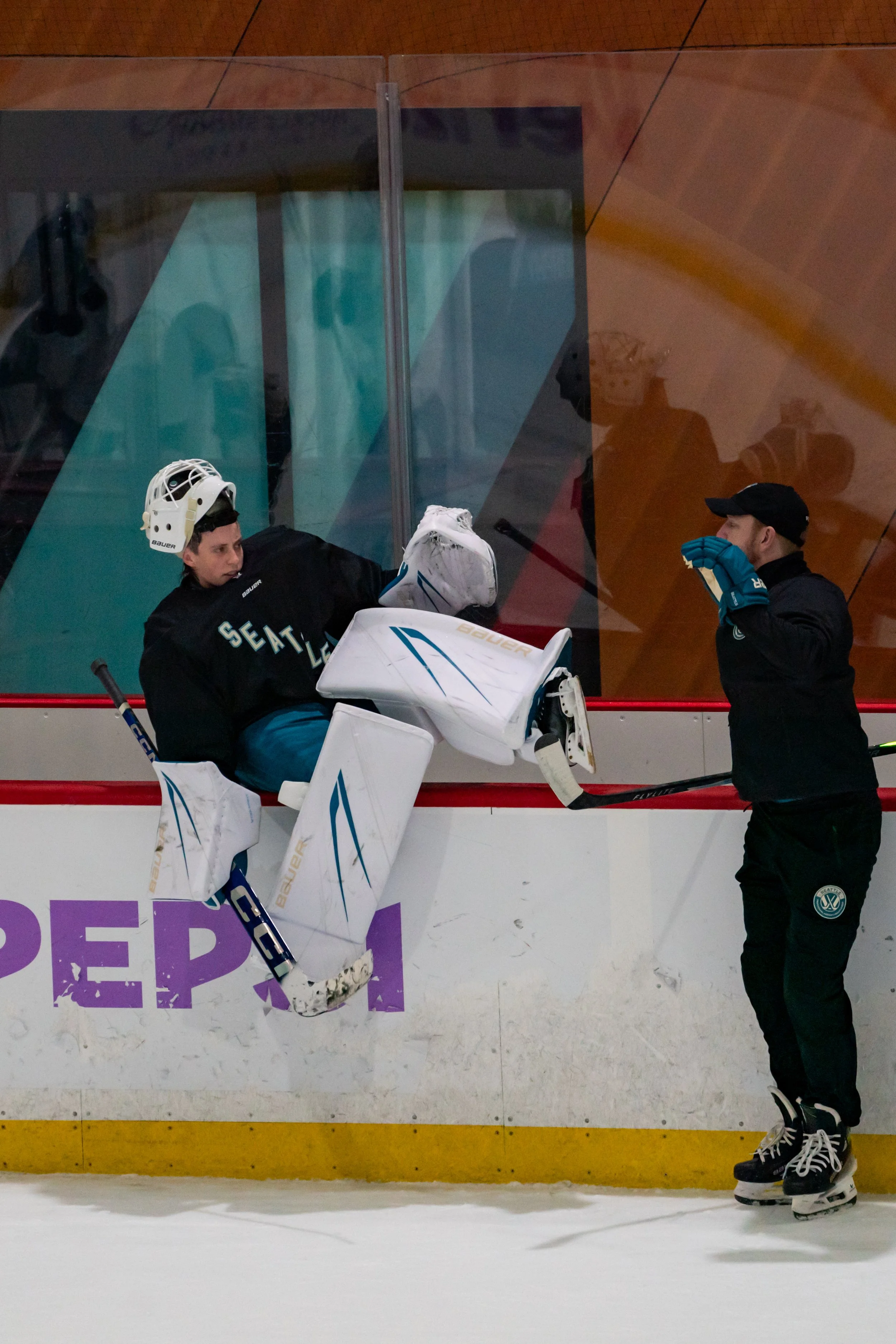
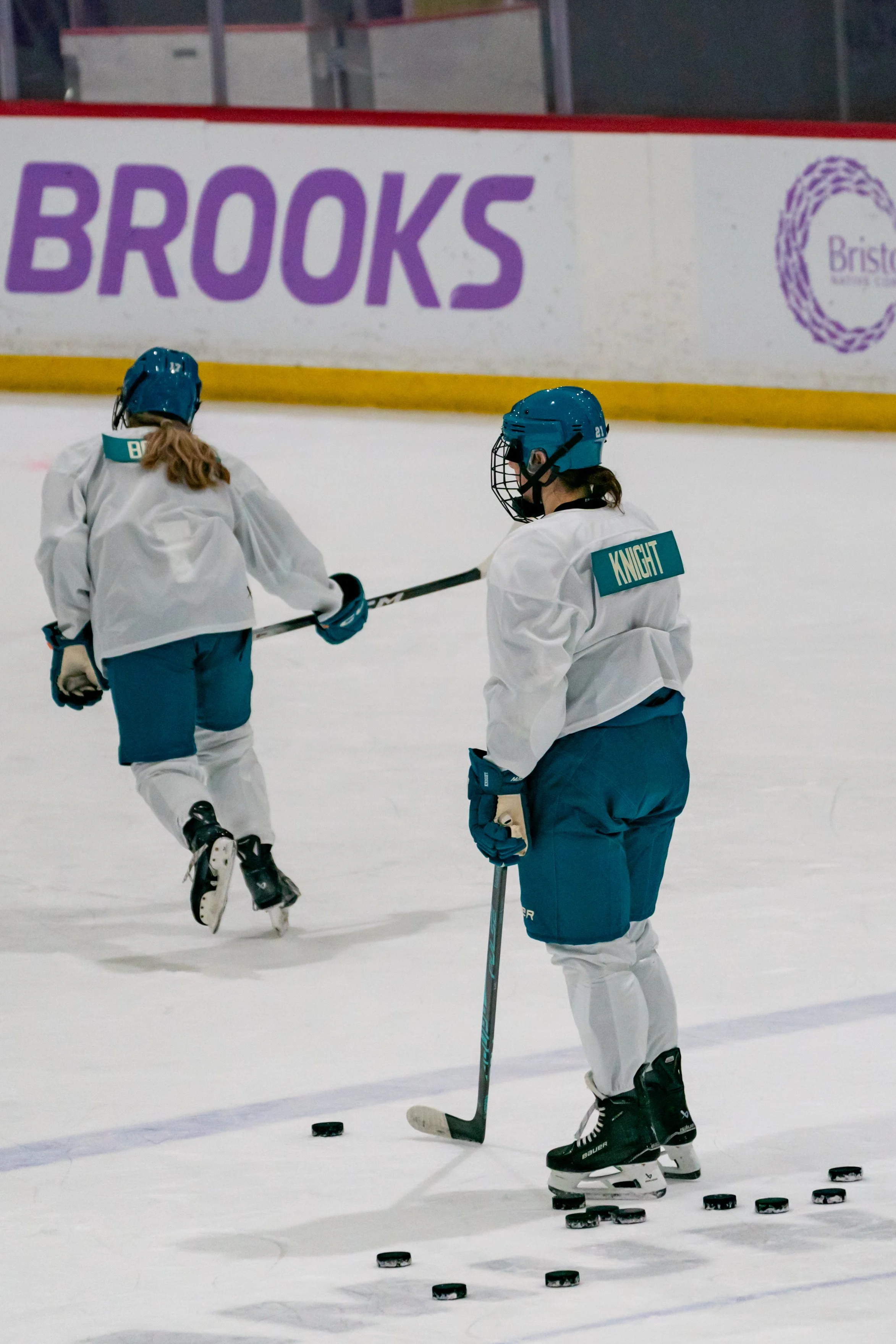
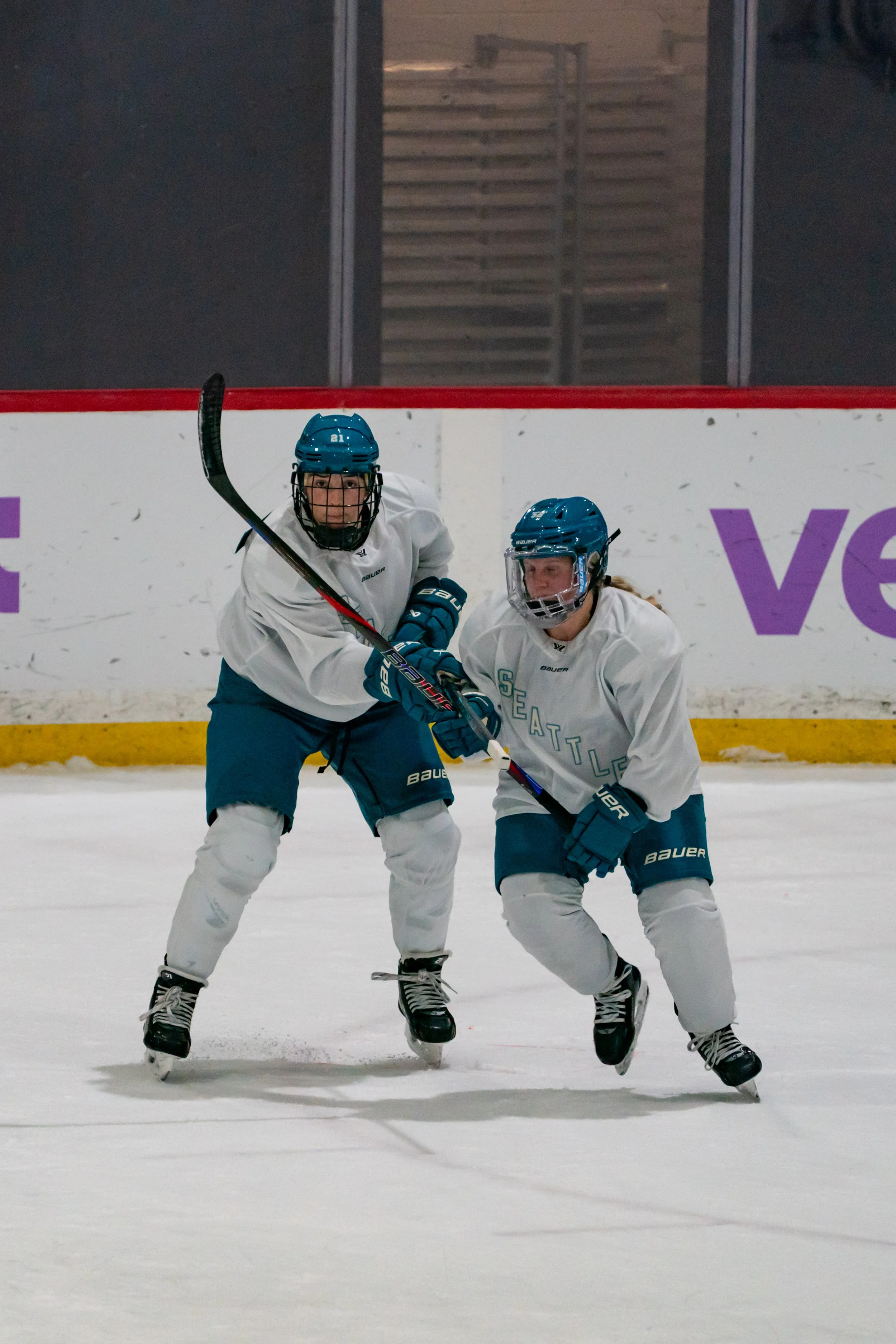
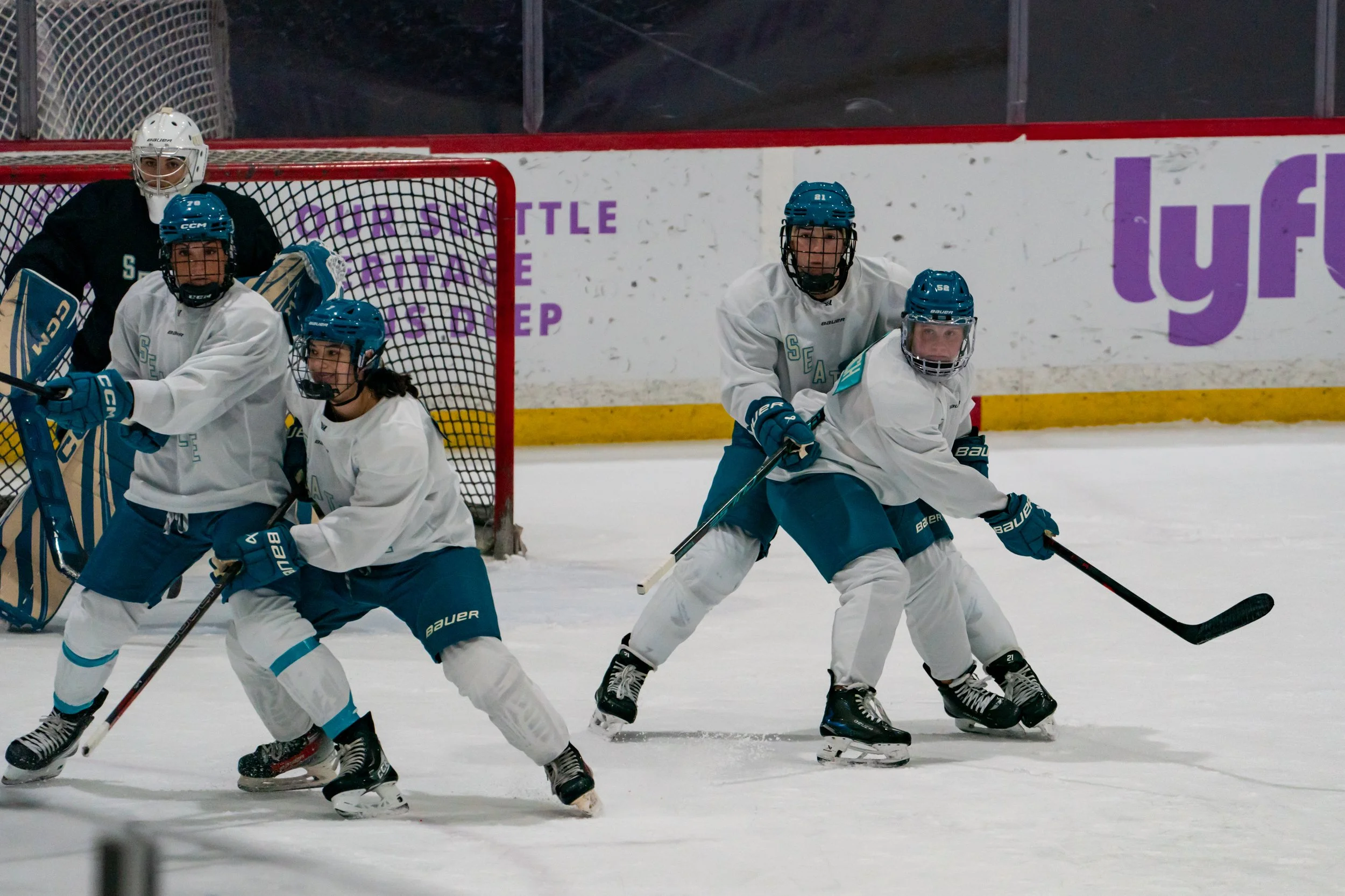
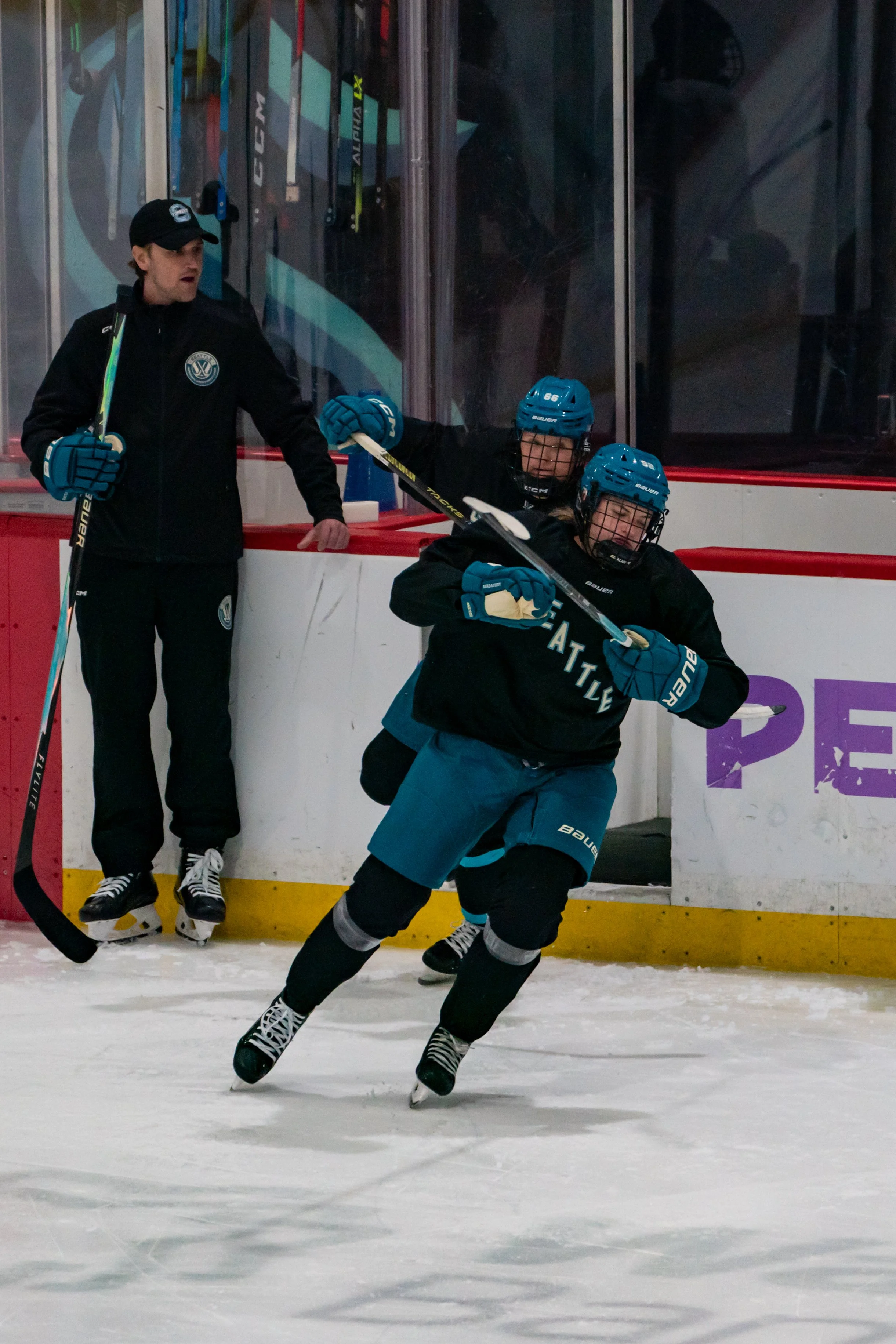
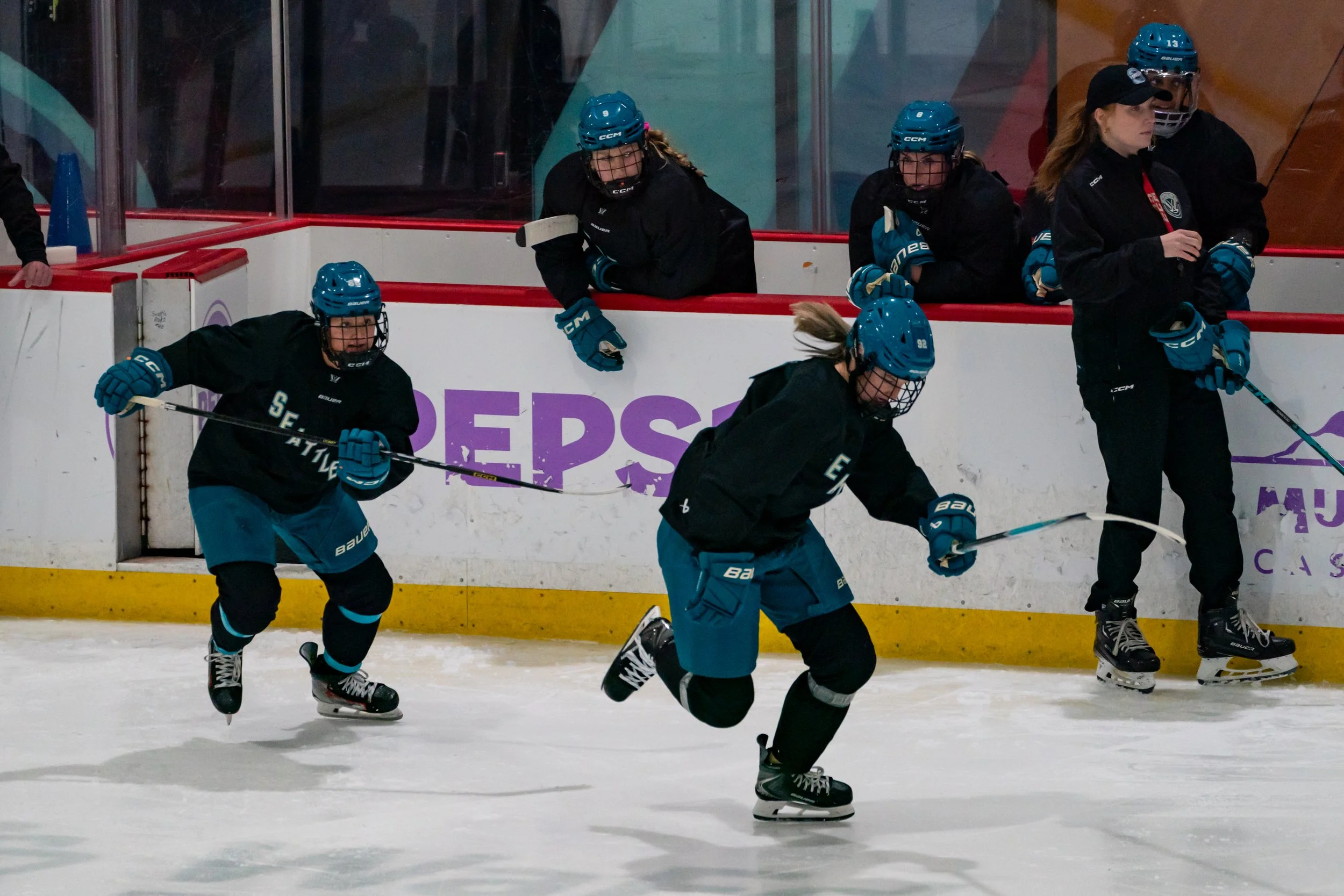
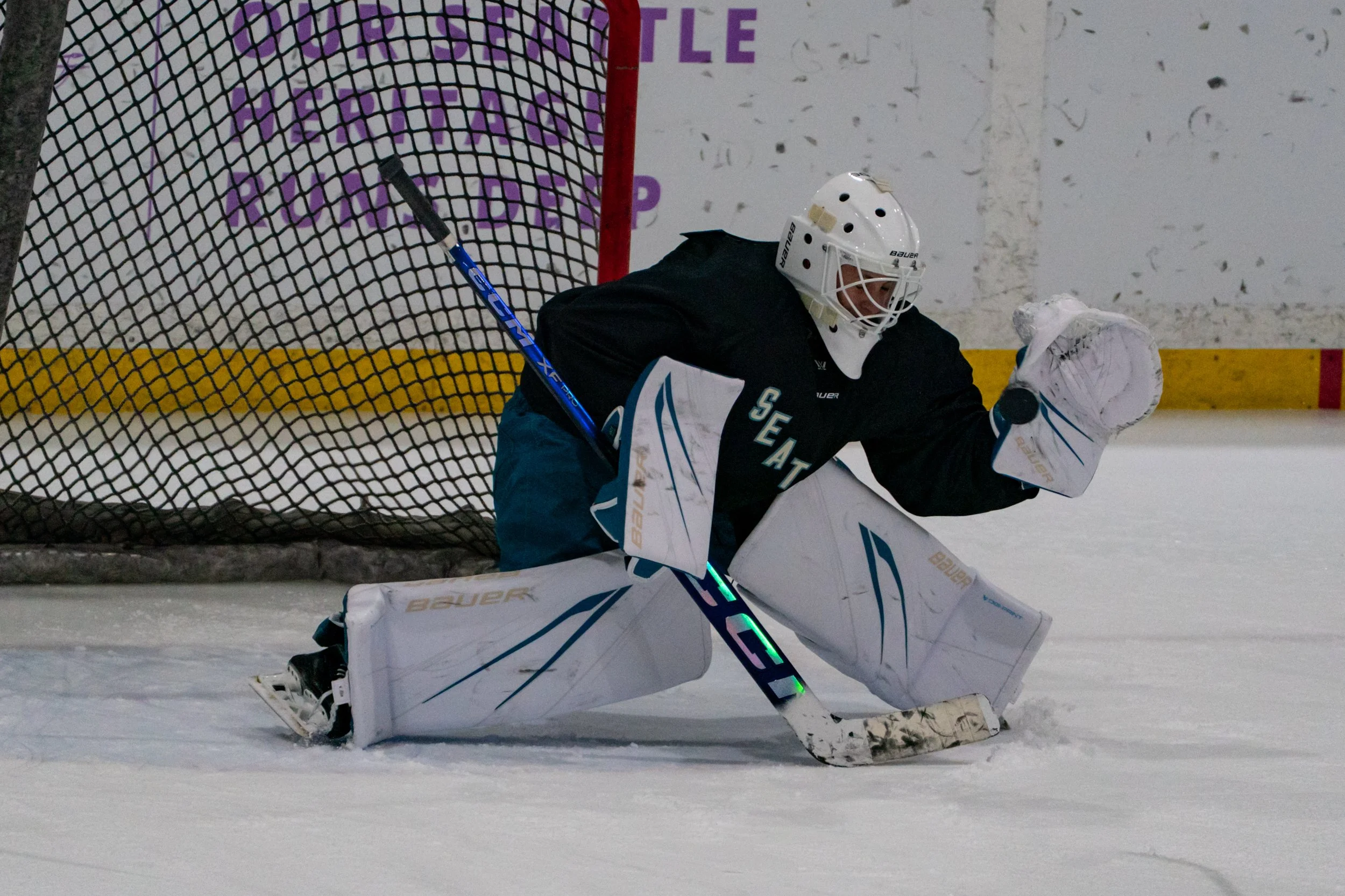
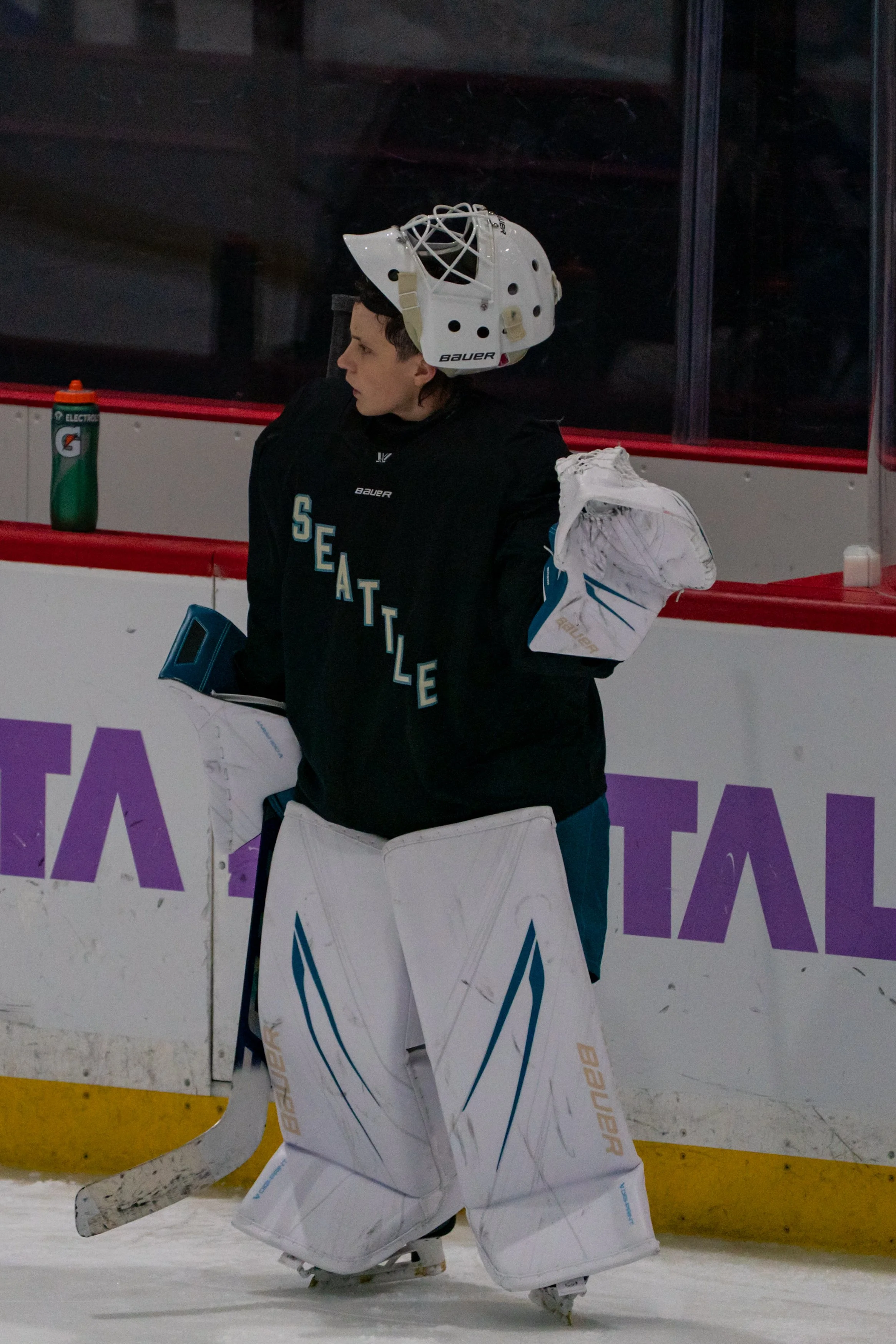
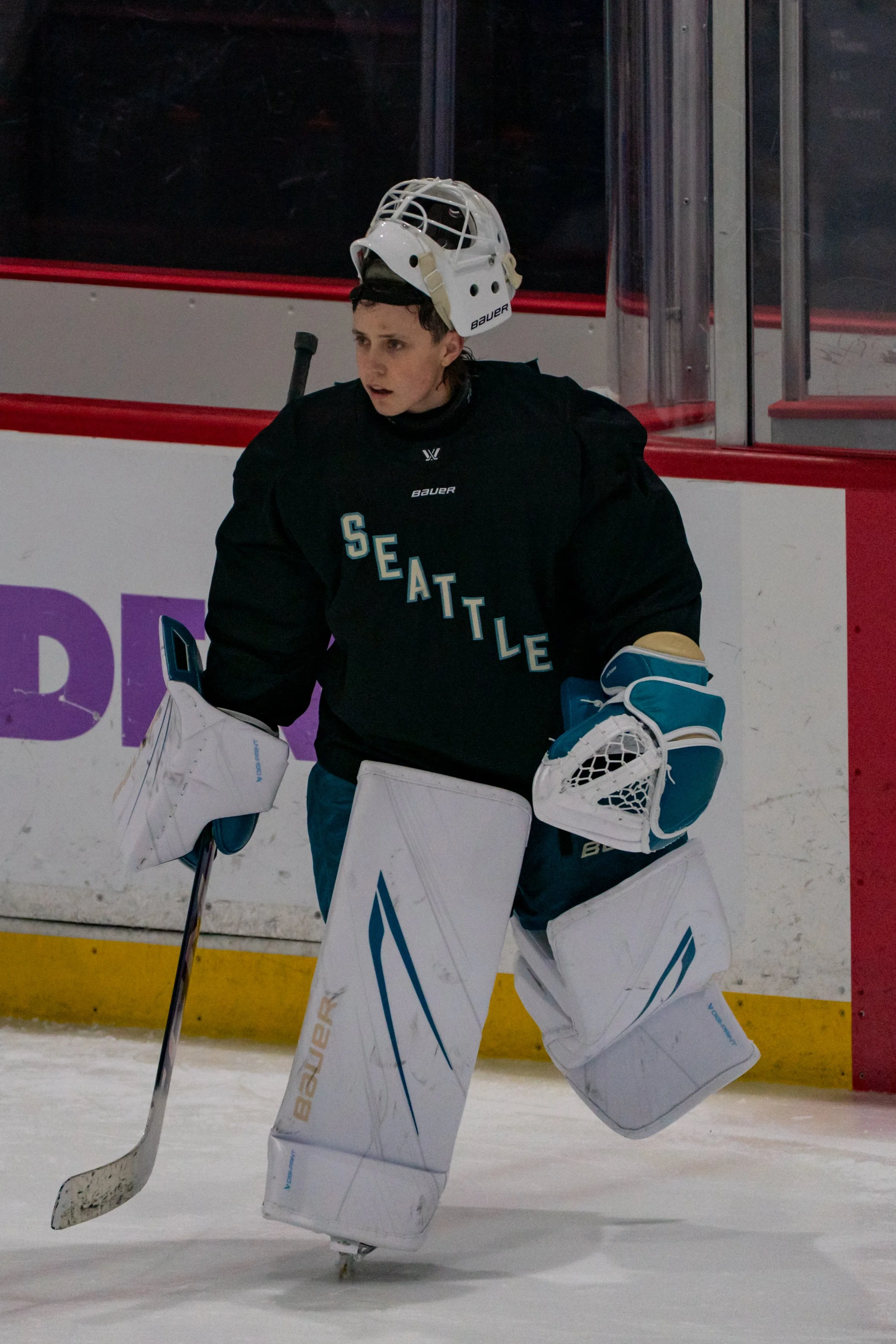
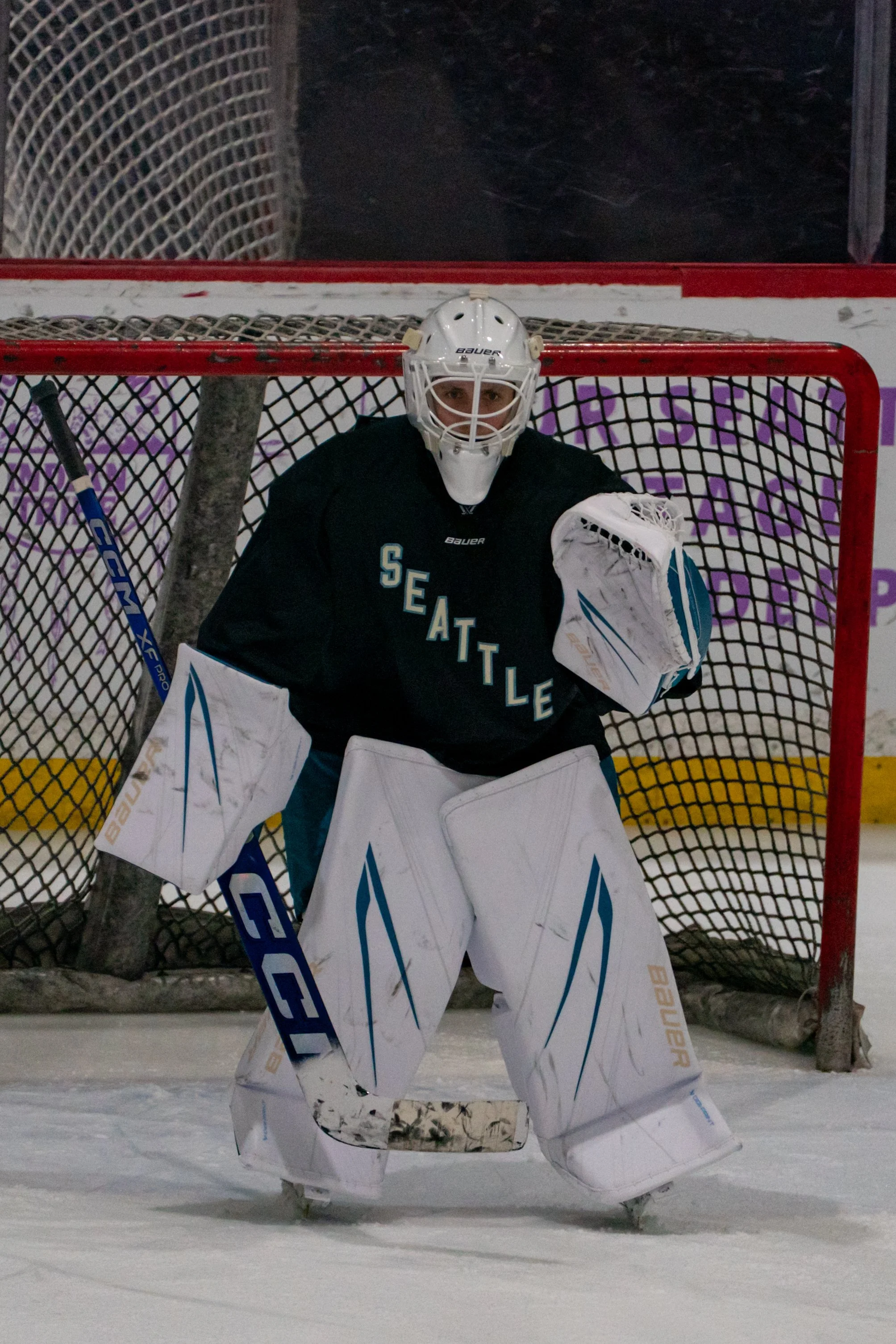
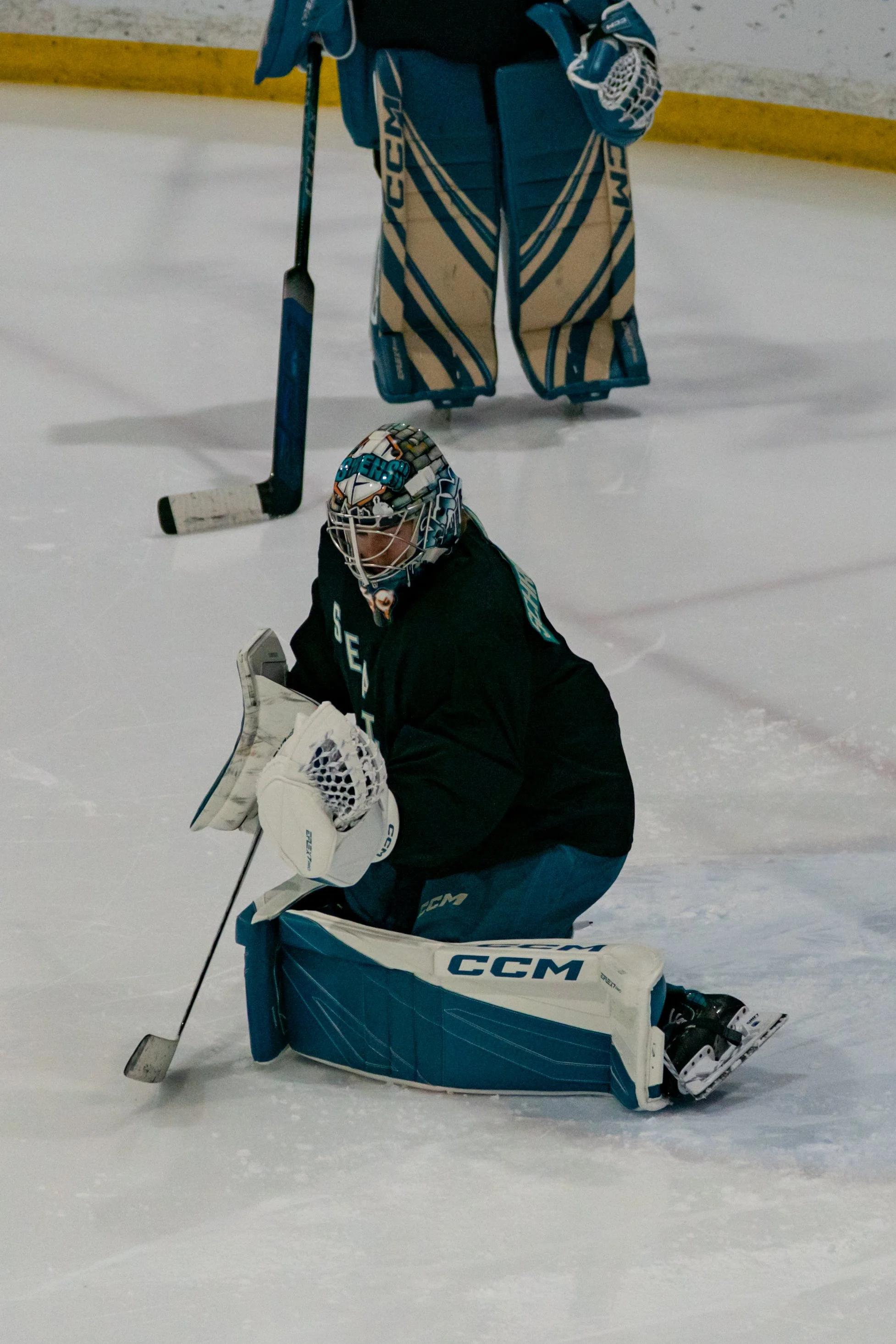
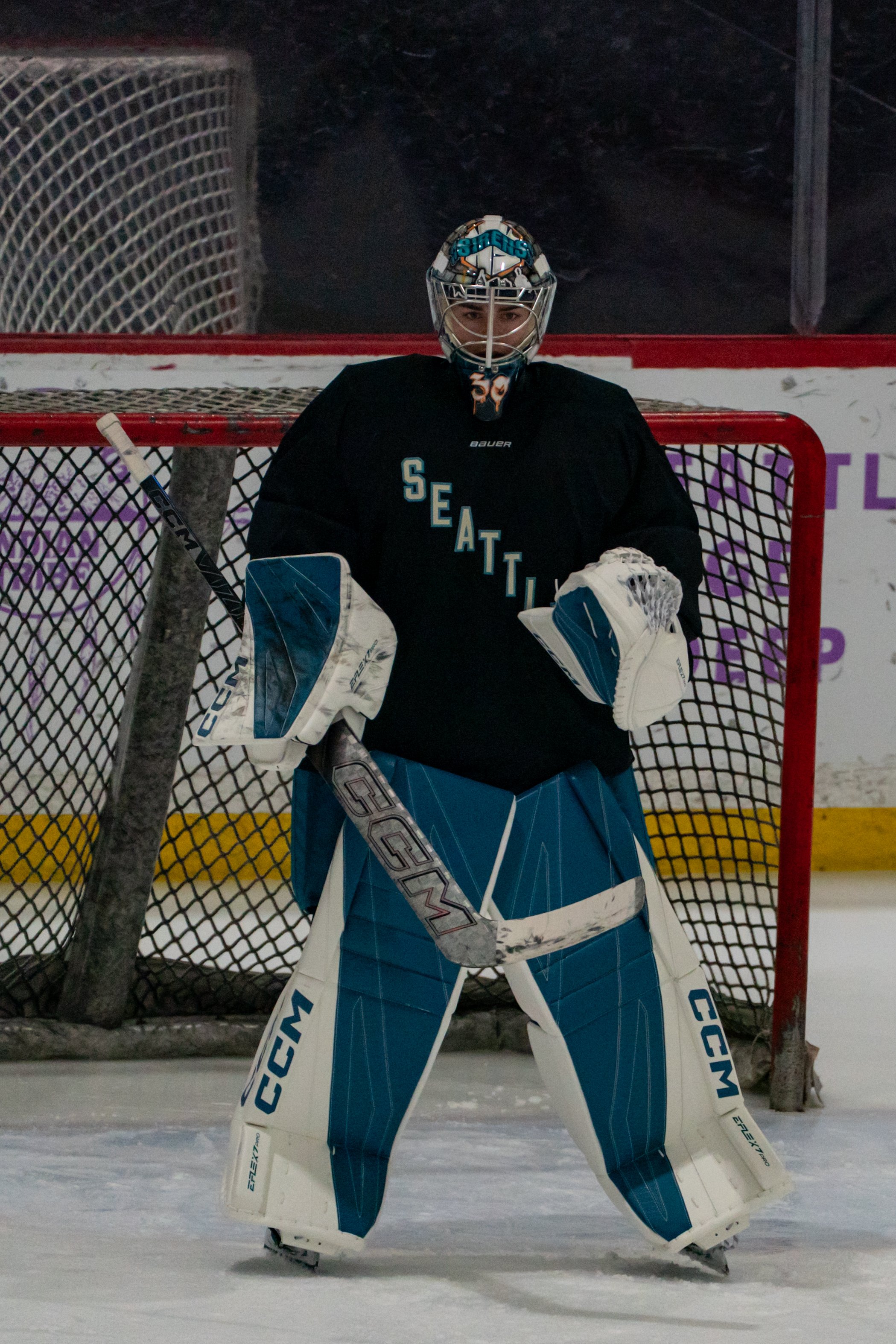
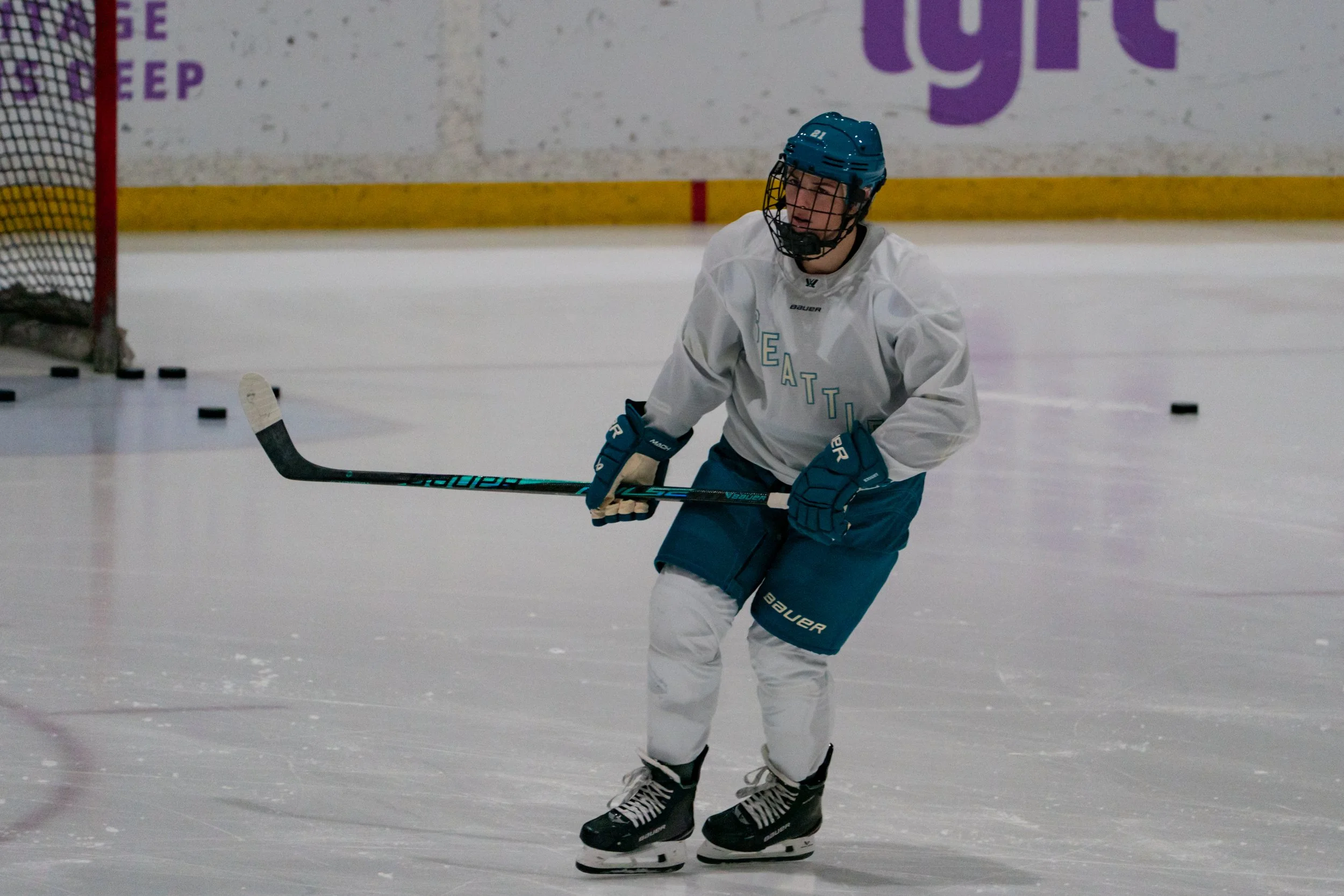
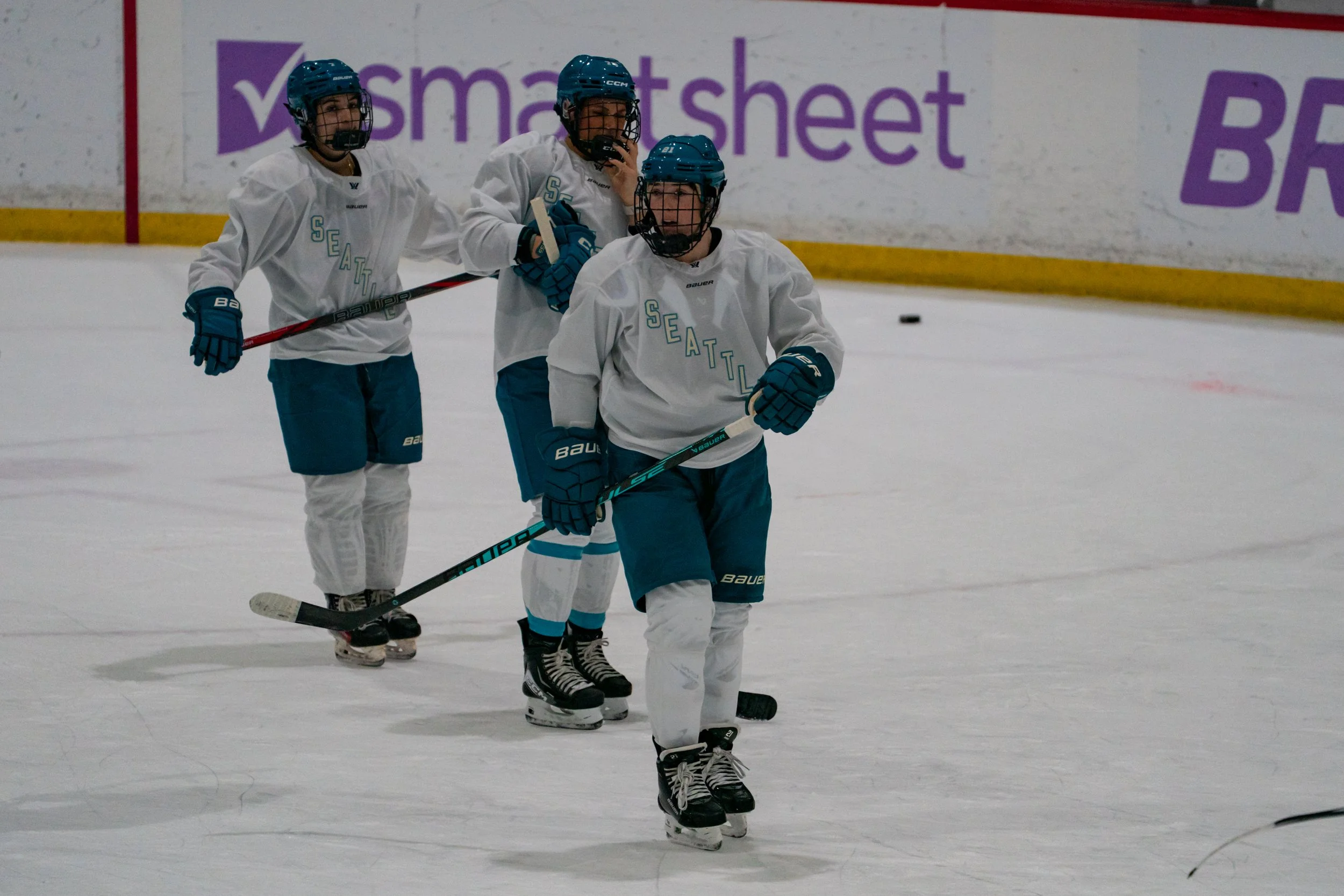
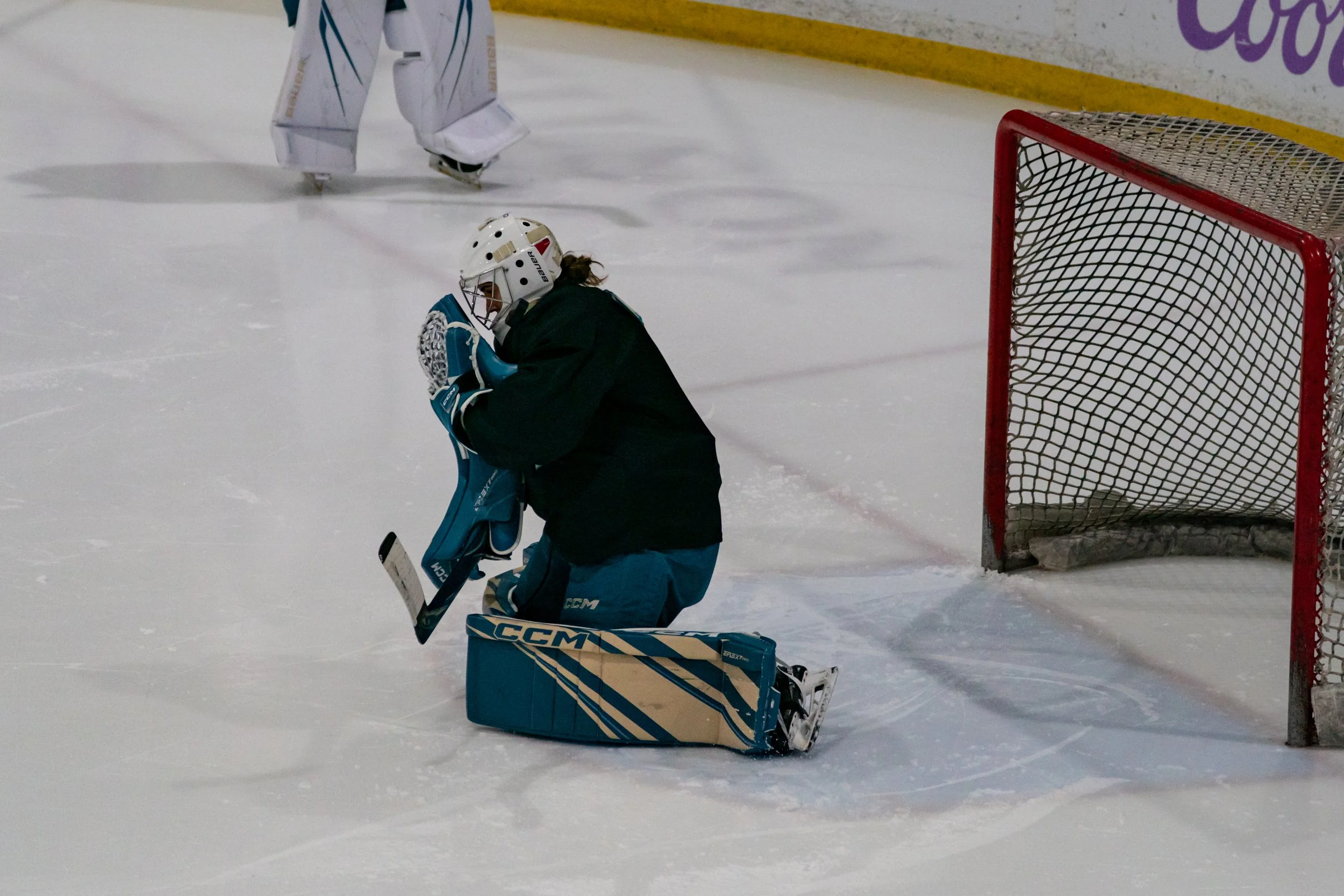
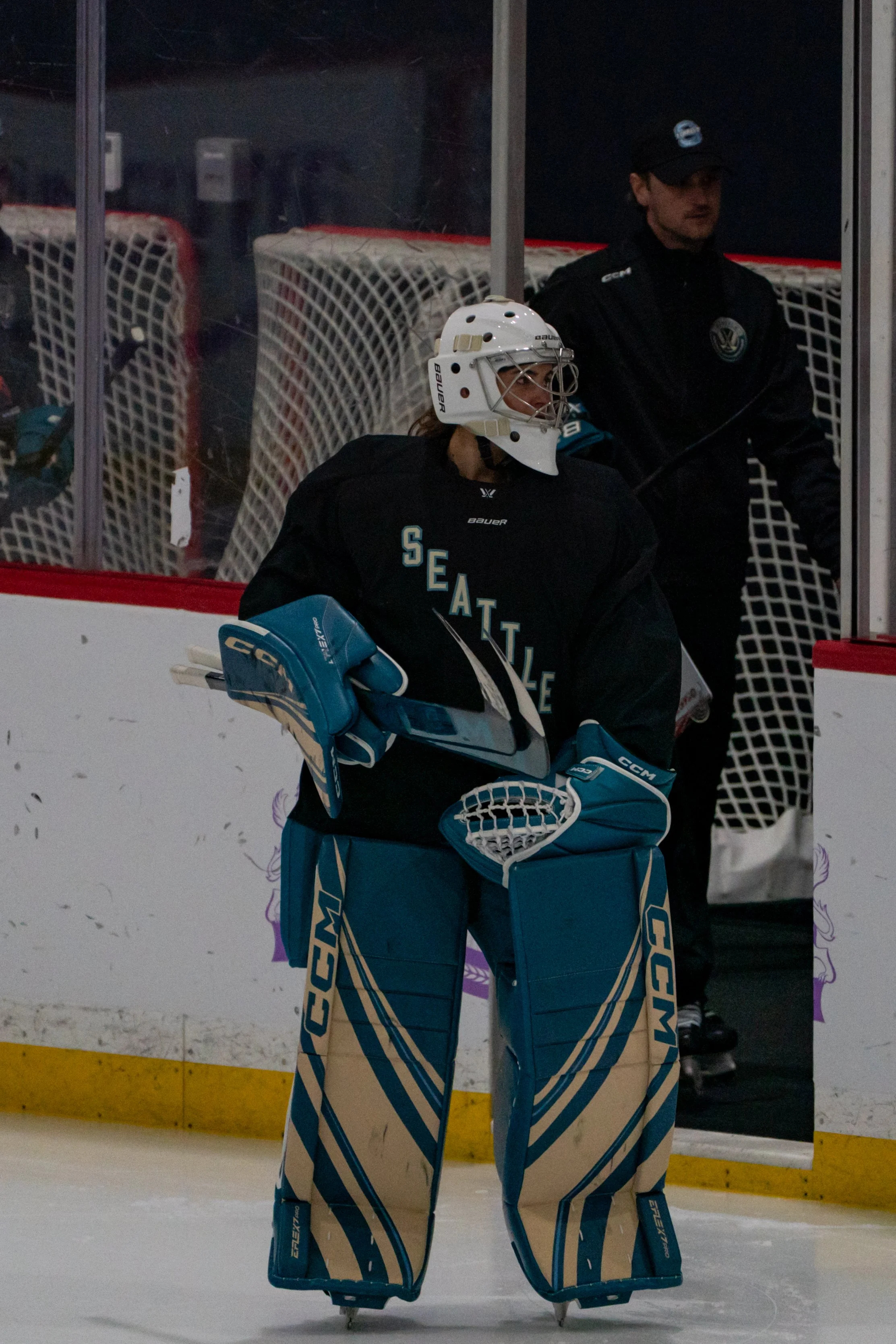
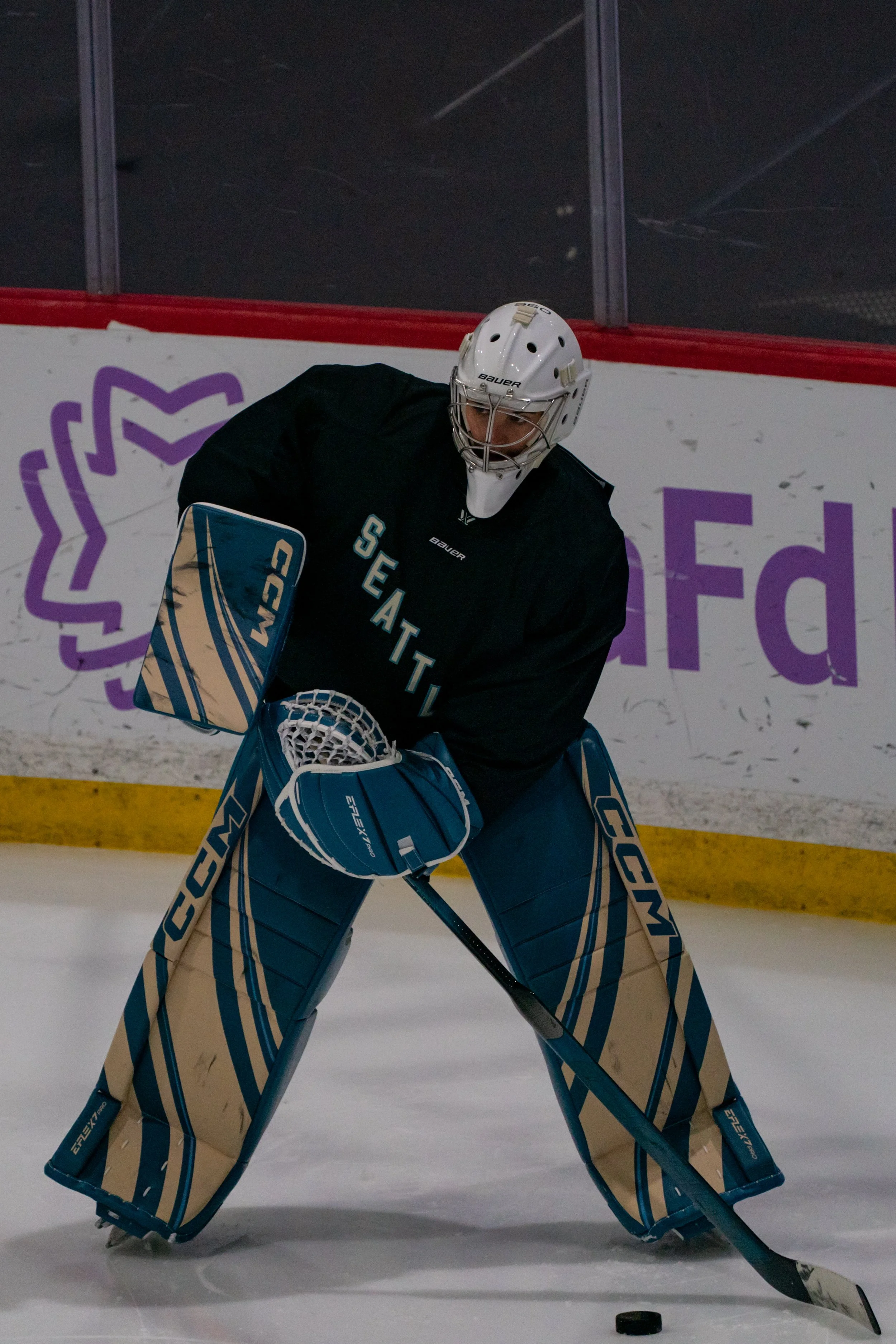
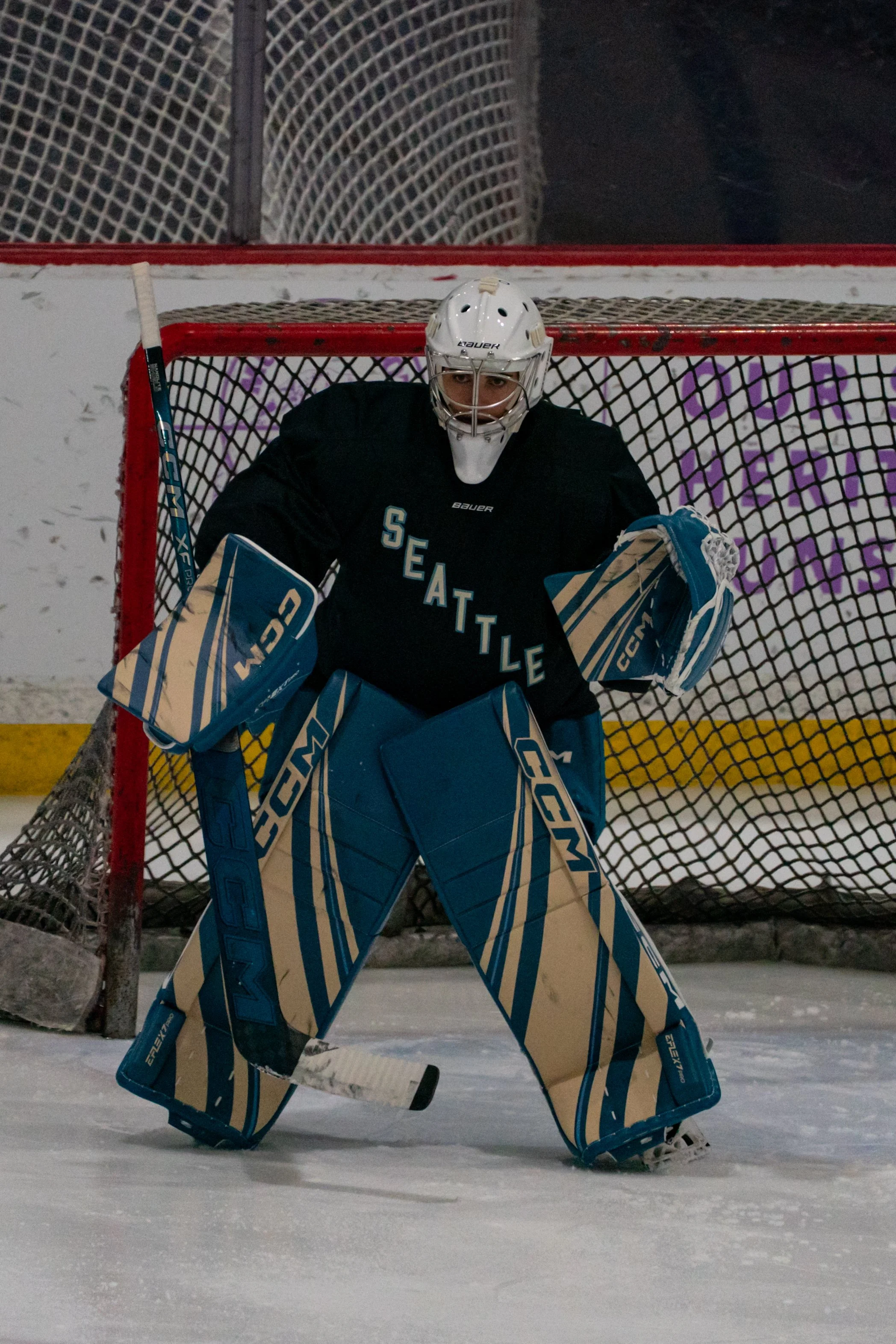
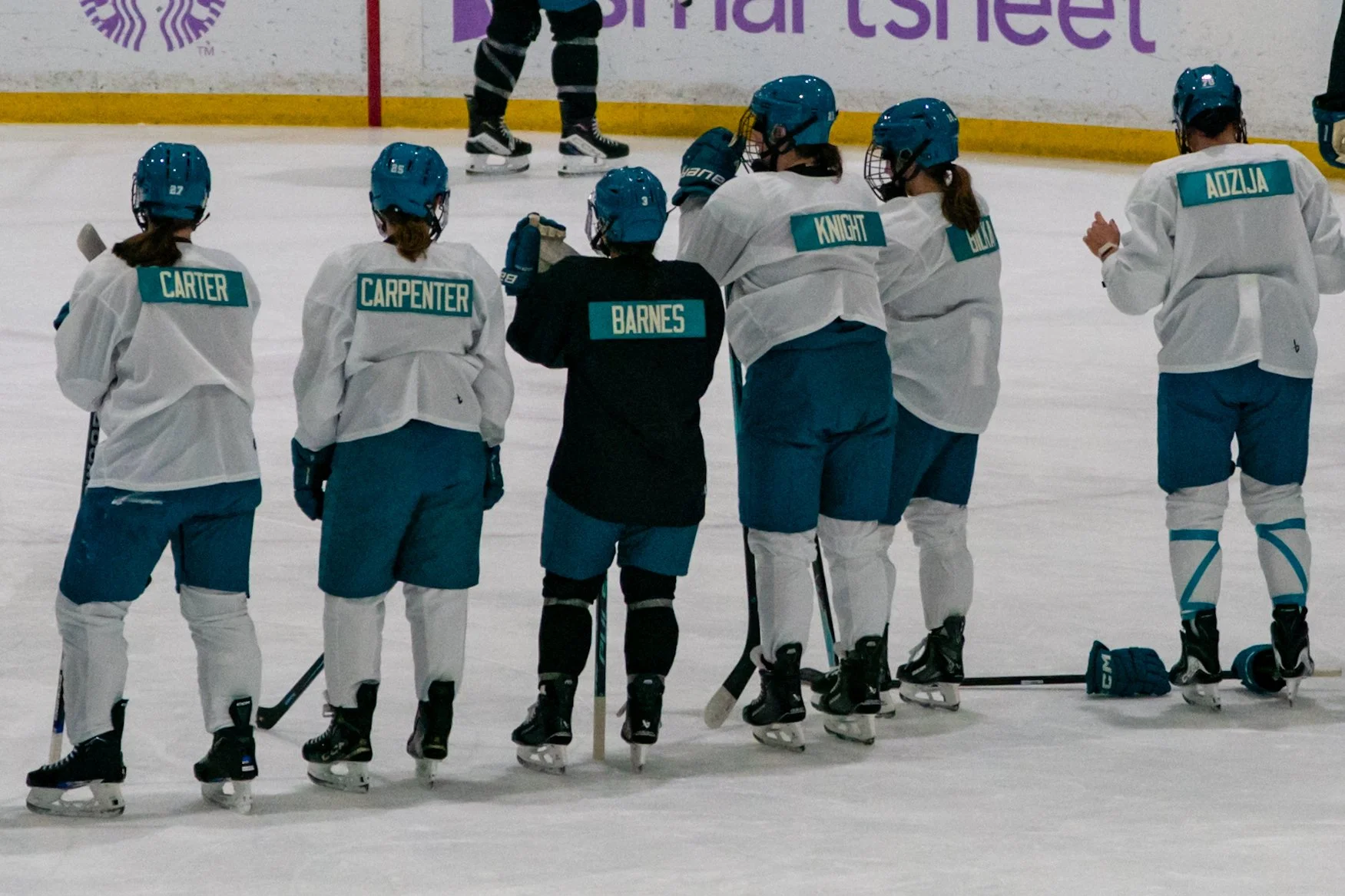
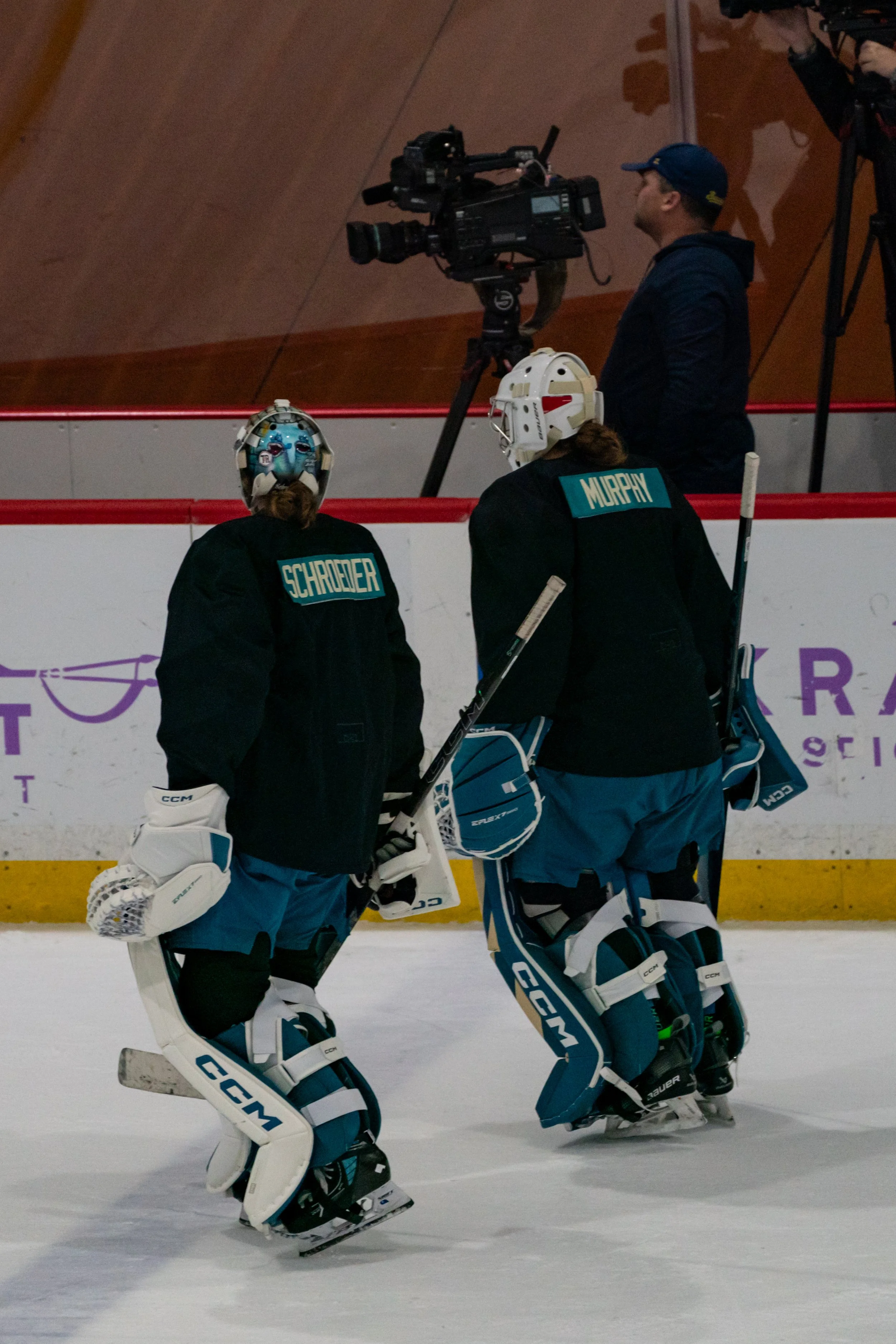
Seattle Torrent training camp scenes at the Kraken Community Iceplex. (Photos by Nick Lyons for Circling Seattle Sports)
CSS: How encouraging was it to see the immediate response from the Seattle fanbase?
Turner: It makes home ice advantage really, truly an advantage. I think it also set the standard across the league. We were a year-one expansion team, and to your point, the Seattle fans just showed up from day one and broke a record on opening night. Maybe something that will provide a good anecdote: We had a photo of a graphic in our lounge that has the broken record from our opening night, and it was broken so quickly thereafter that everyone walked by and someone put a sticky note with the new number on it. It's like that number just kept getting obsolete, you know, as the games went on, and that's a huge testament to our Seattle fans.
Practices, just the appetite for this team, and people wanting to get to know the players, and really loving the team from day one. The players really latched onto that. They'll still have some of their Torrent chants, like the cheerleaders that came into CPA, and they'll be on the street during the grouse grind ( a hiking trail) or wherever they are, like chanting the T O R R E N T chant. So the players loved it. Our staff loved it. It's a big point of pride for all of us.
Whether you're at ice level looking up, or in the rafters looking down, you get to see a full Climate Pledge Arena every single night, breaking records, night in and night out, and people that want to be there. Not people that are just like, ‘oh yeah, I'll go watch women's hockey.’ It's like no real, true fans, and I think that makes it really, really special. And you see it at these season-ticket member events. You see it in practice. People showing up just around KCI. So it's been incredible, and I know the players really love playing in Seattle and for this fan base. It’s a huge point of pride for all of us.
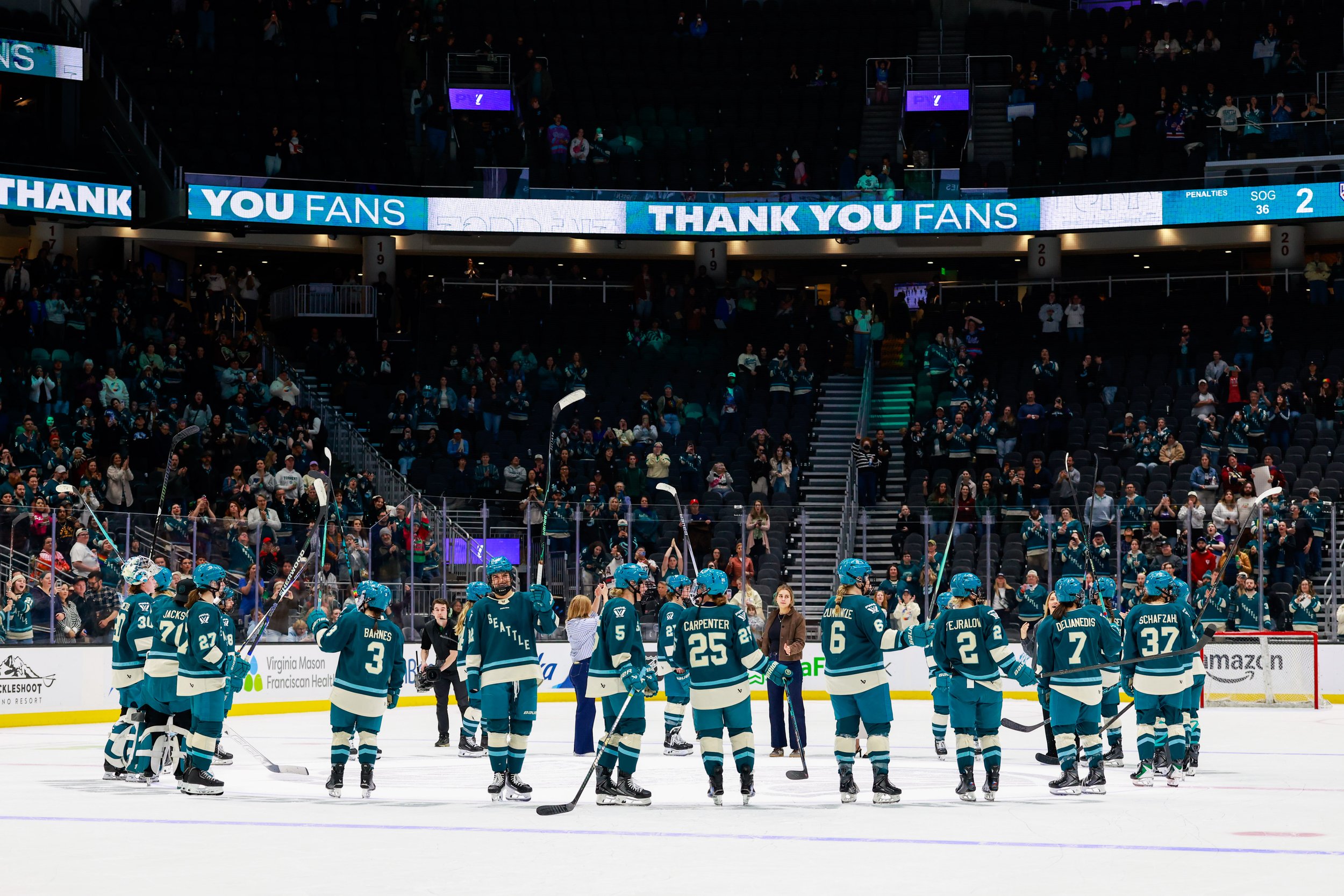
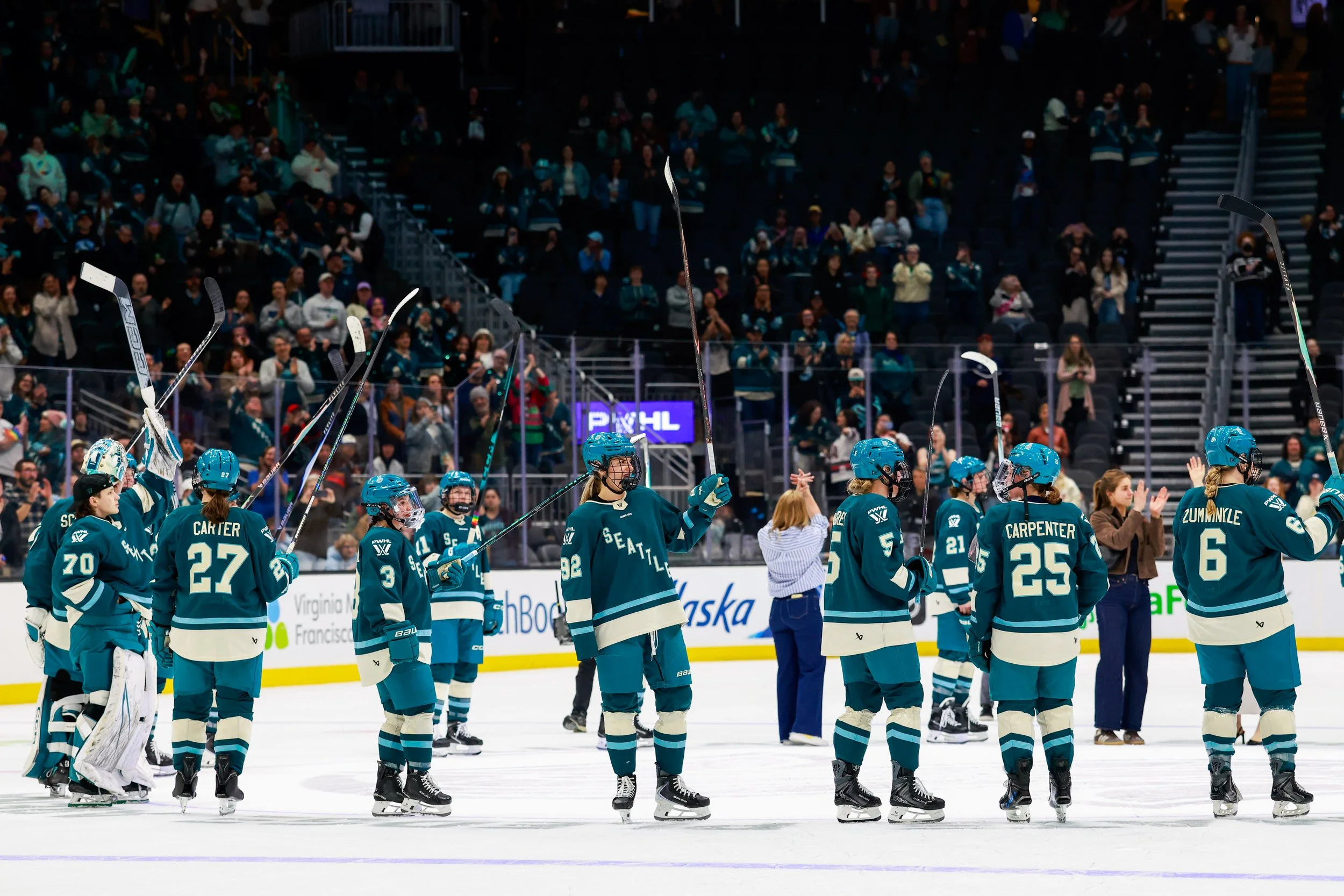
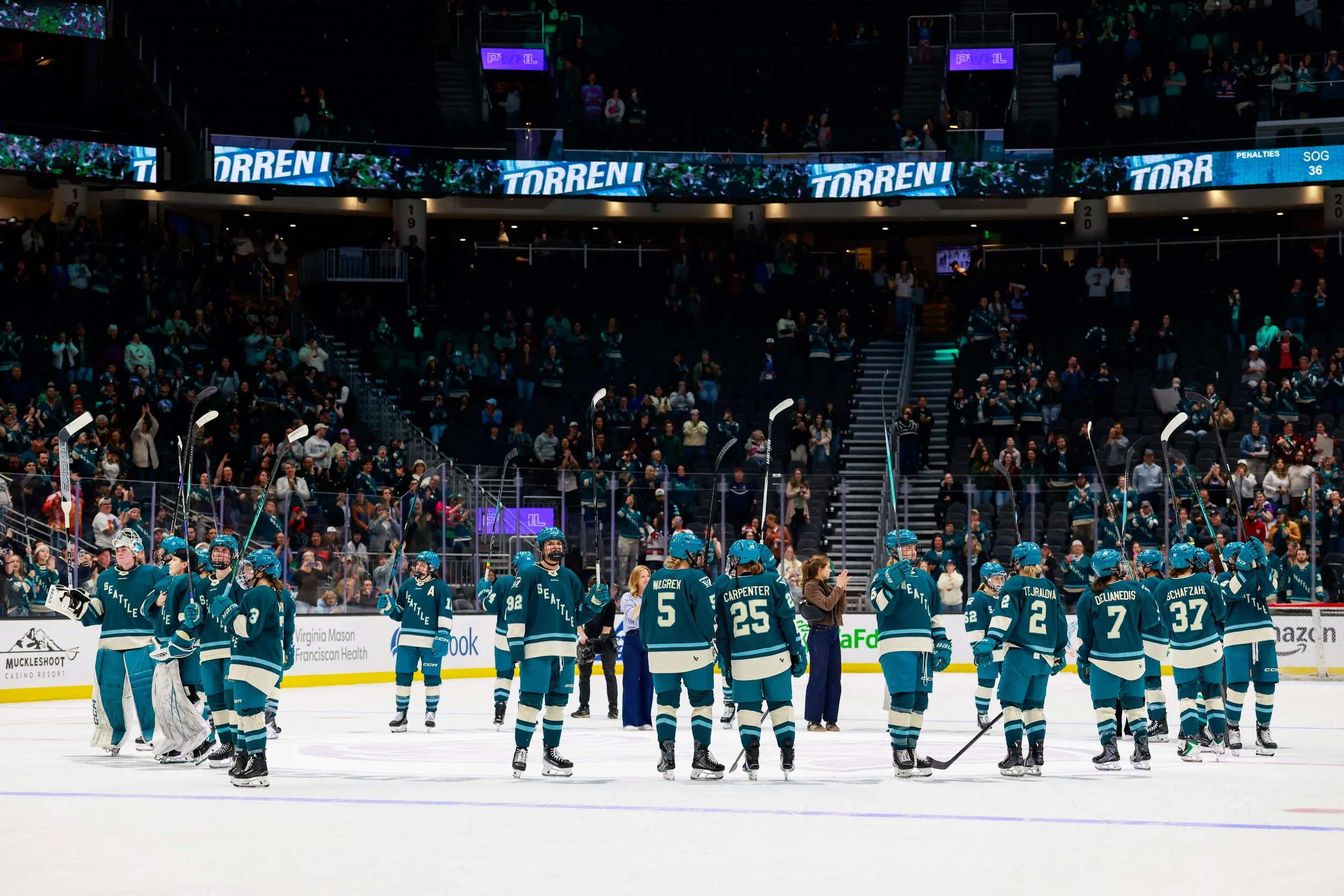
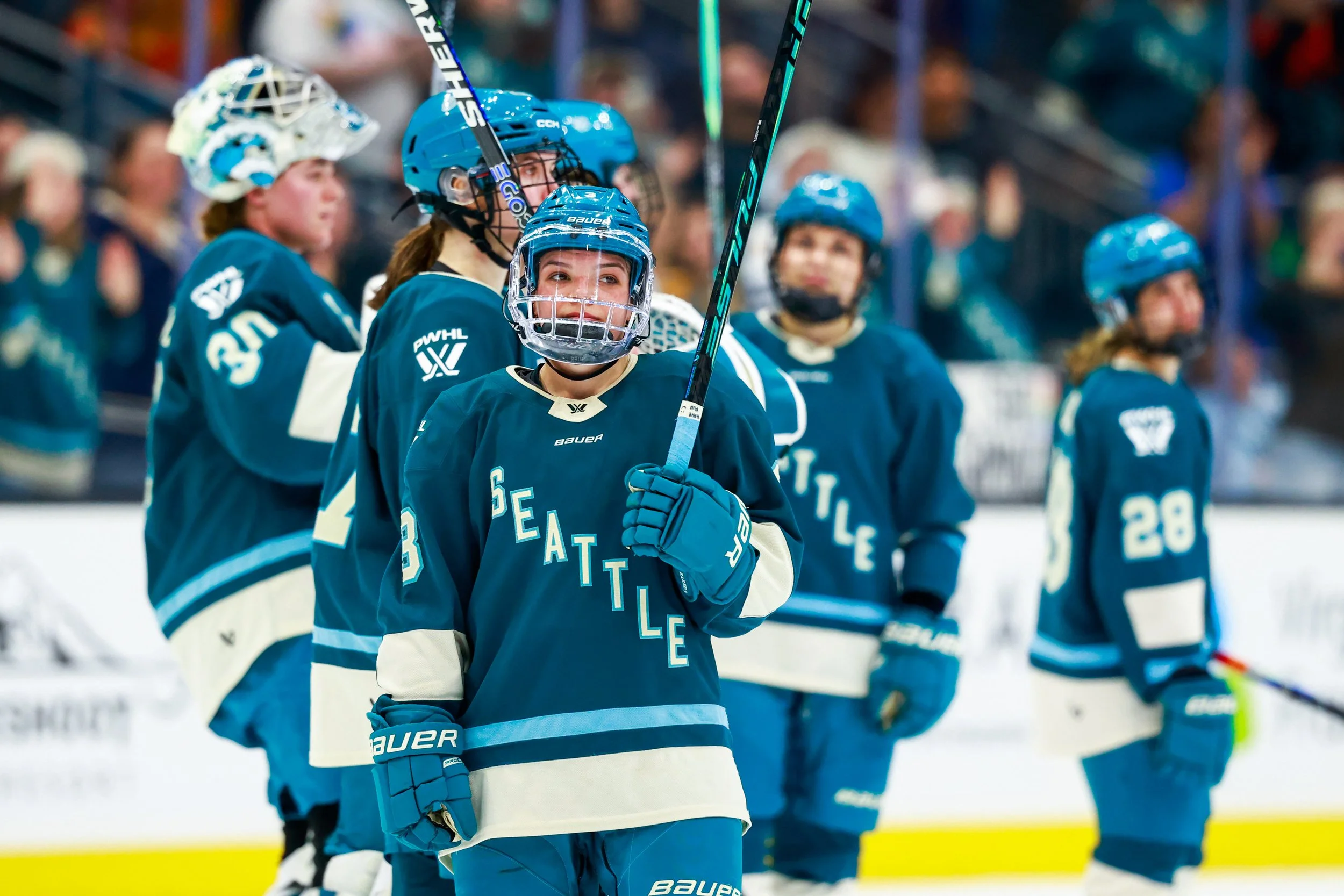
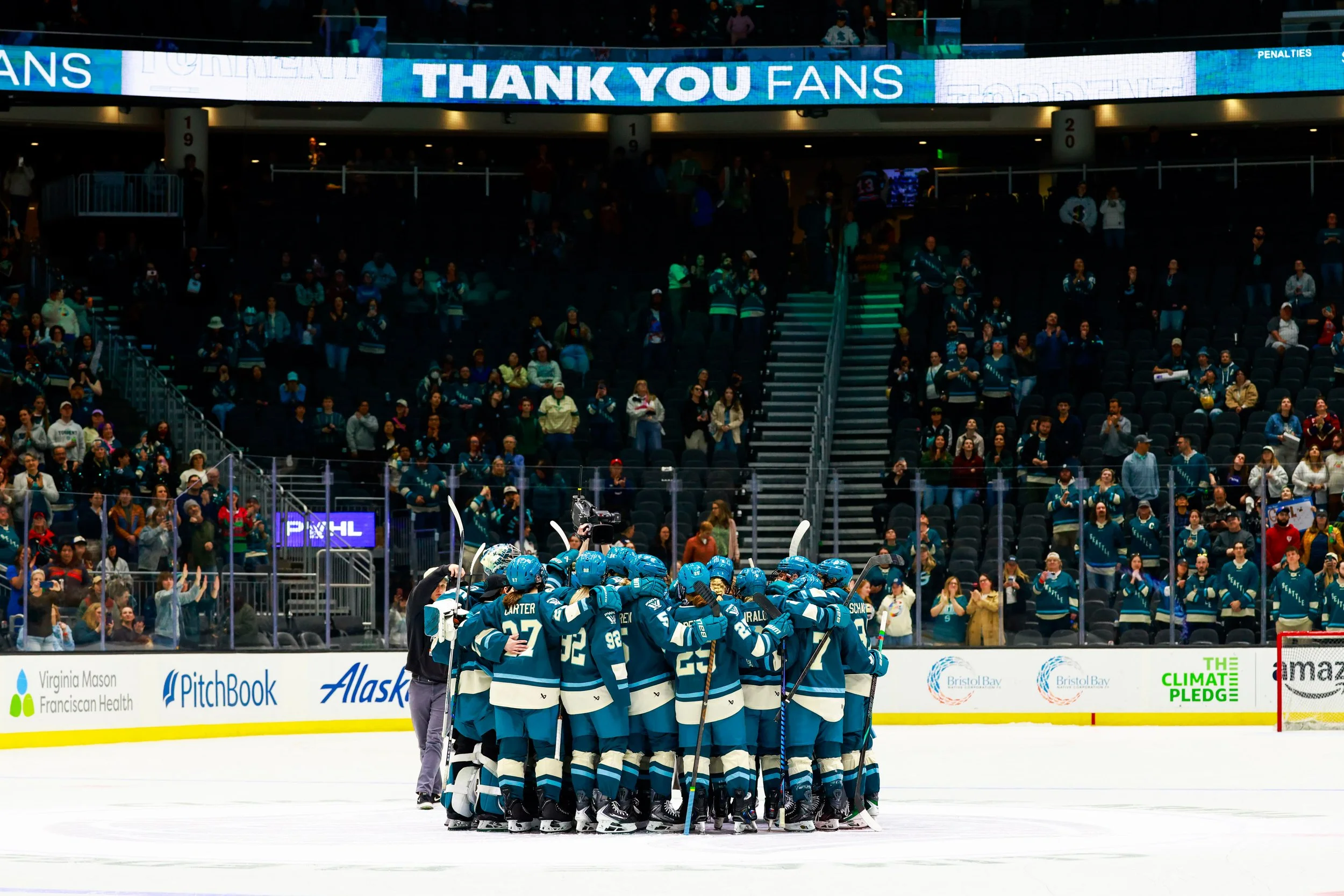
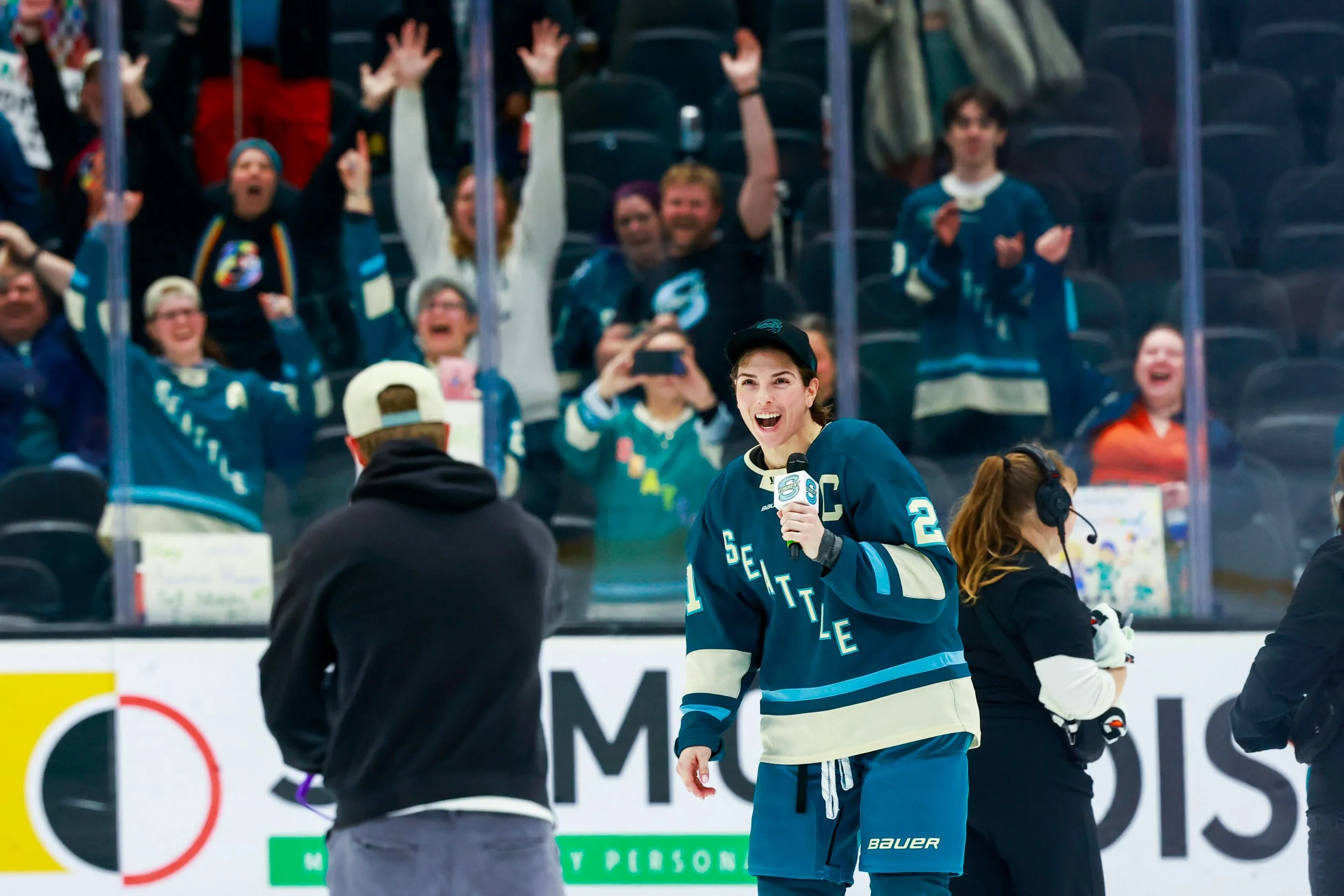
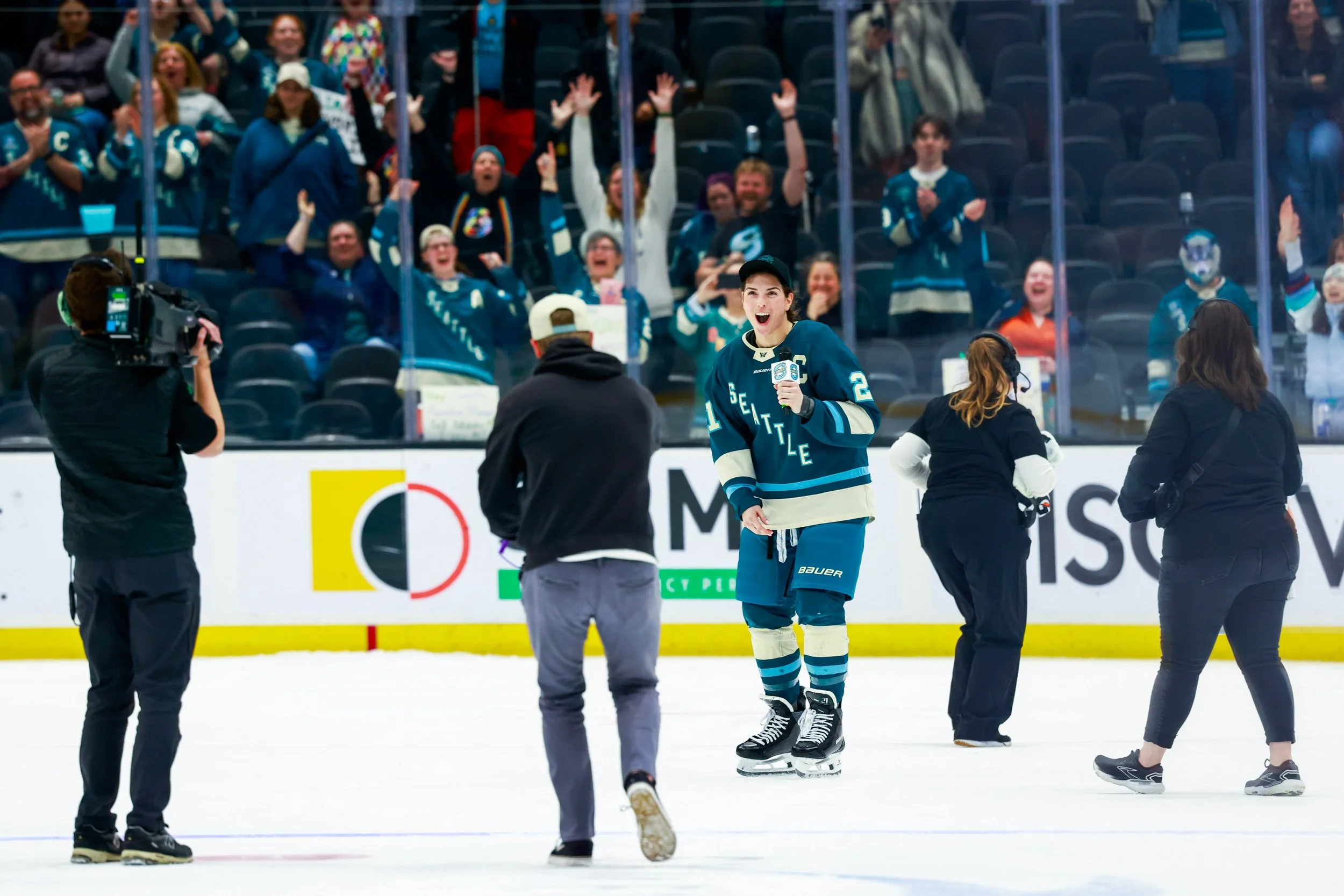
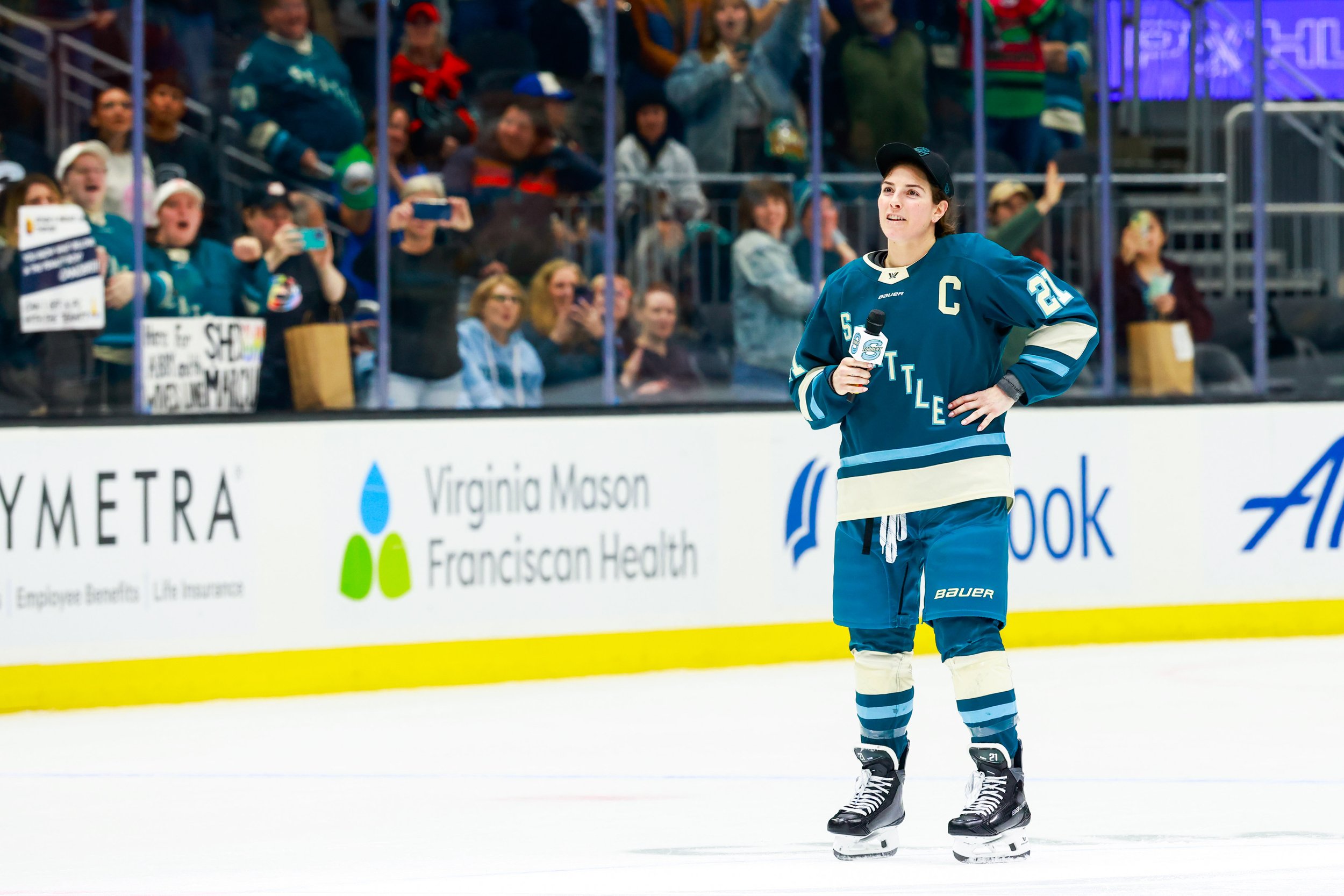
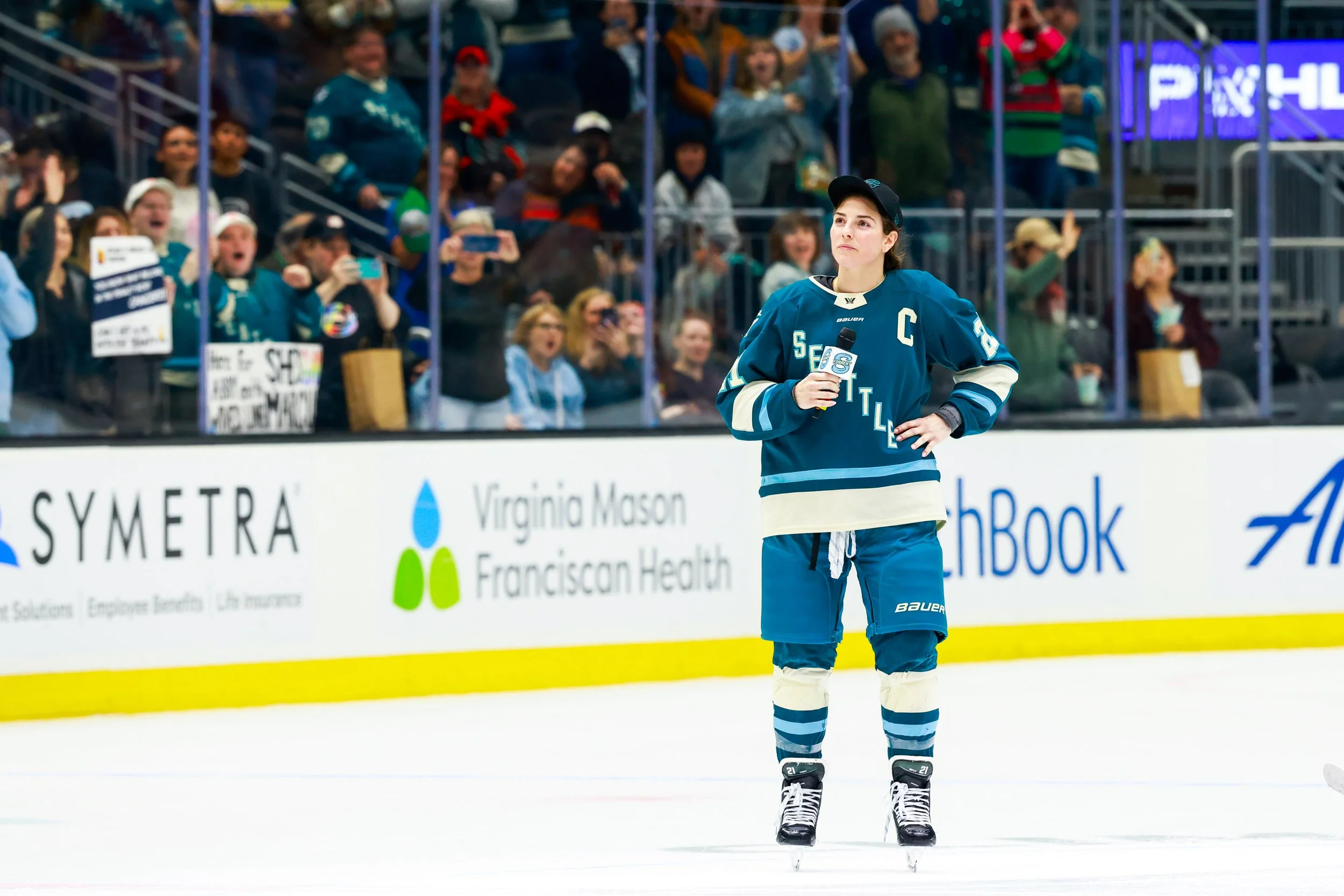
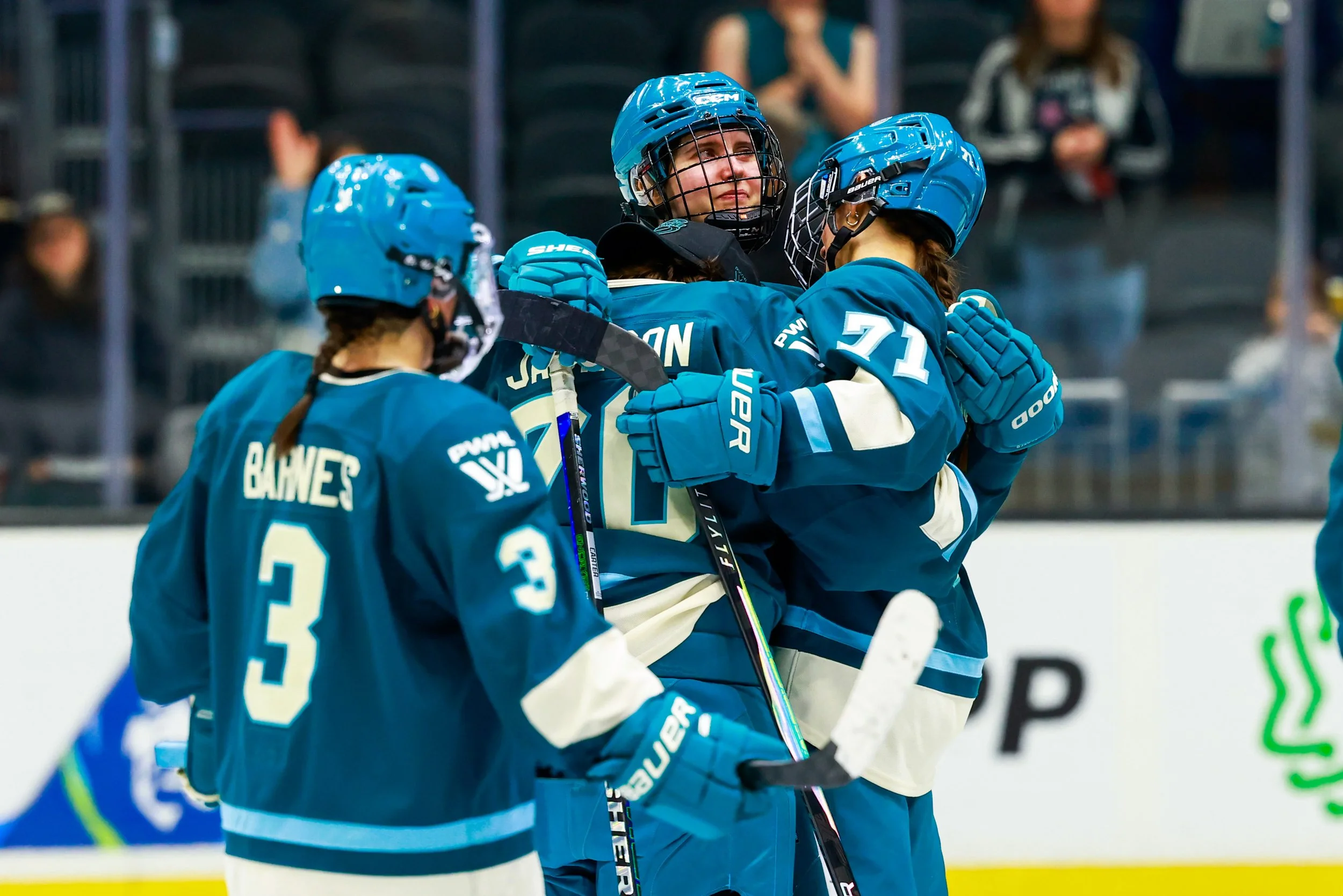
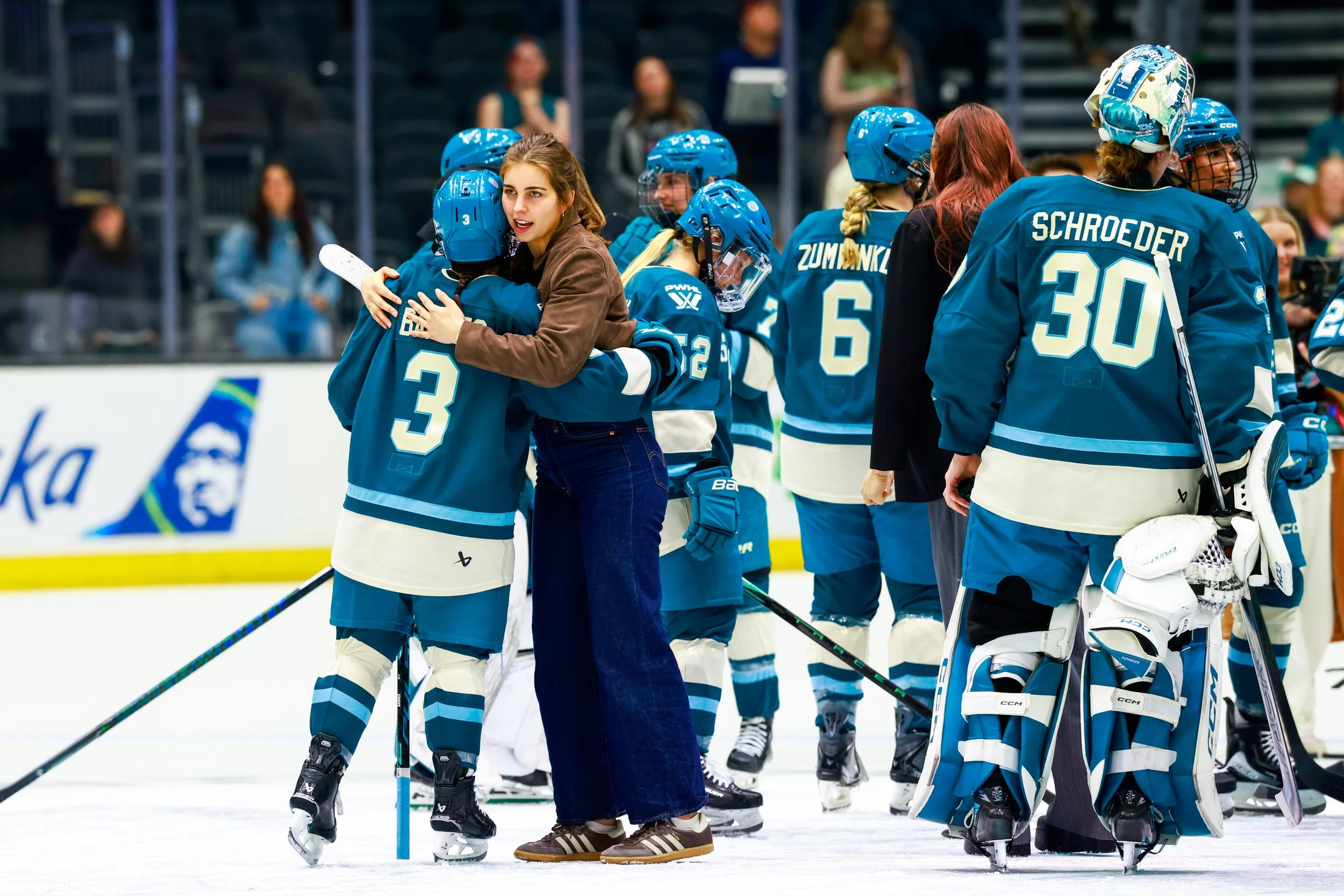
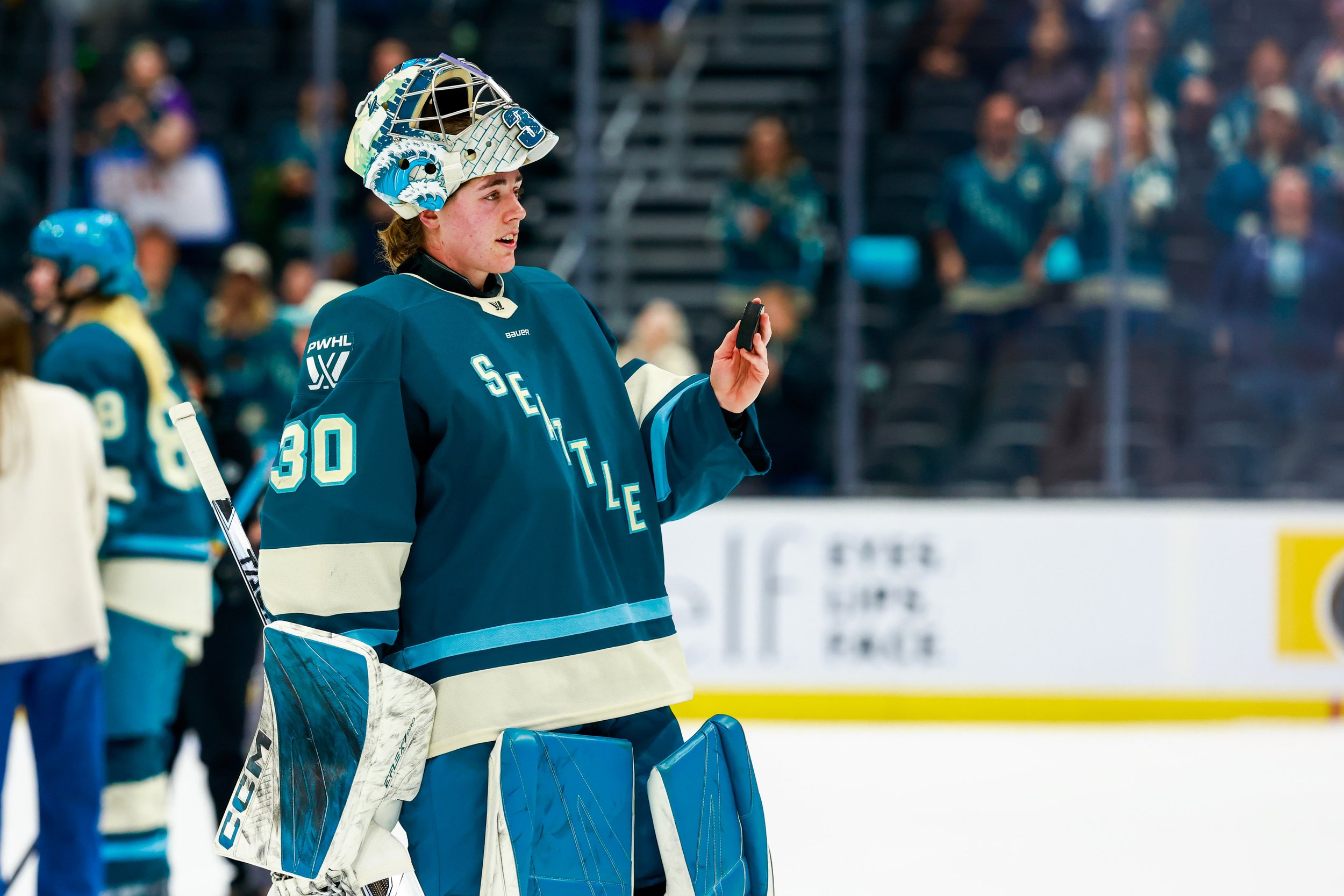
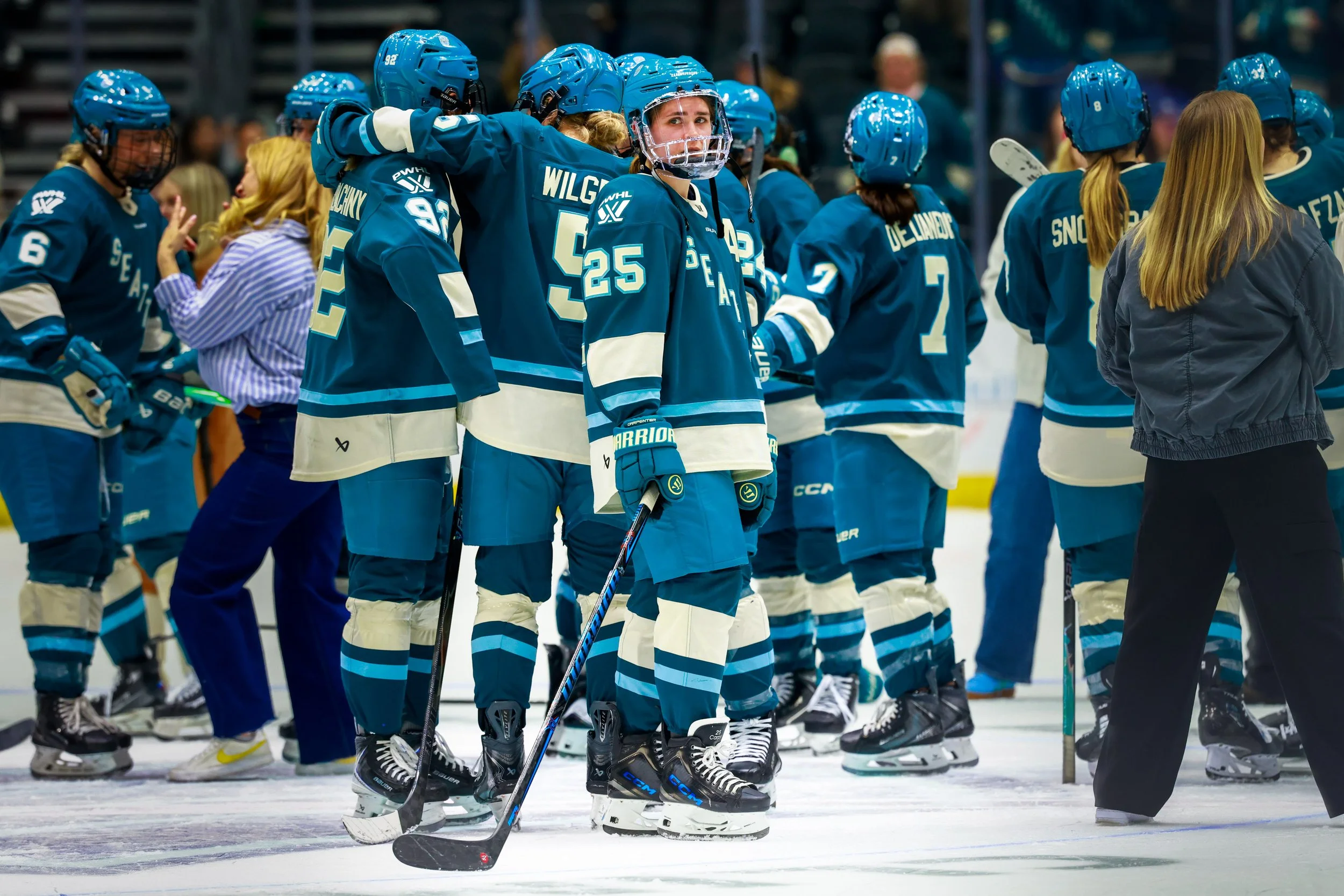
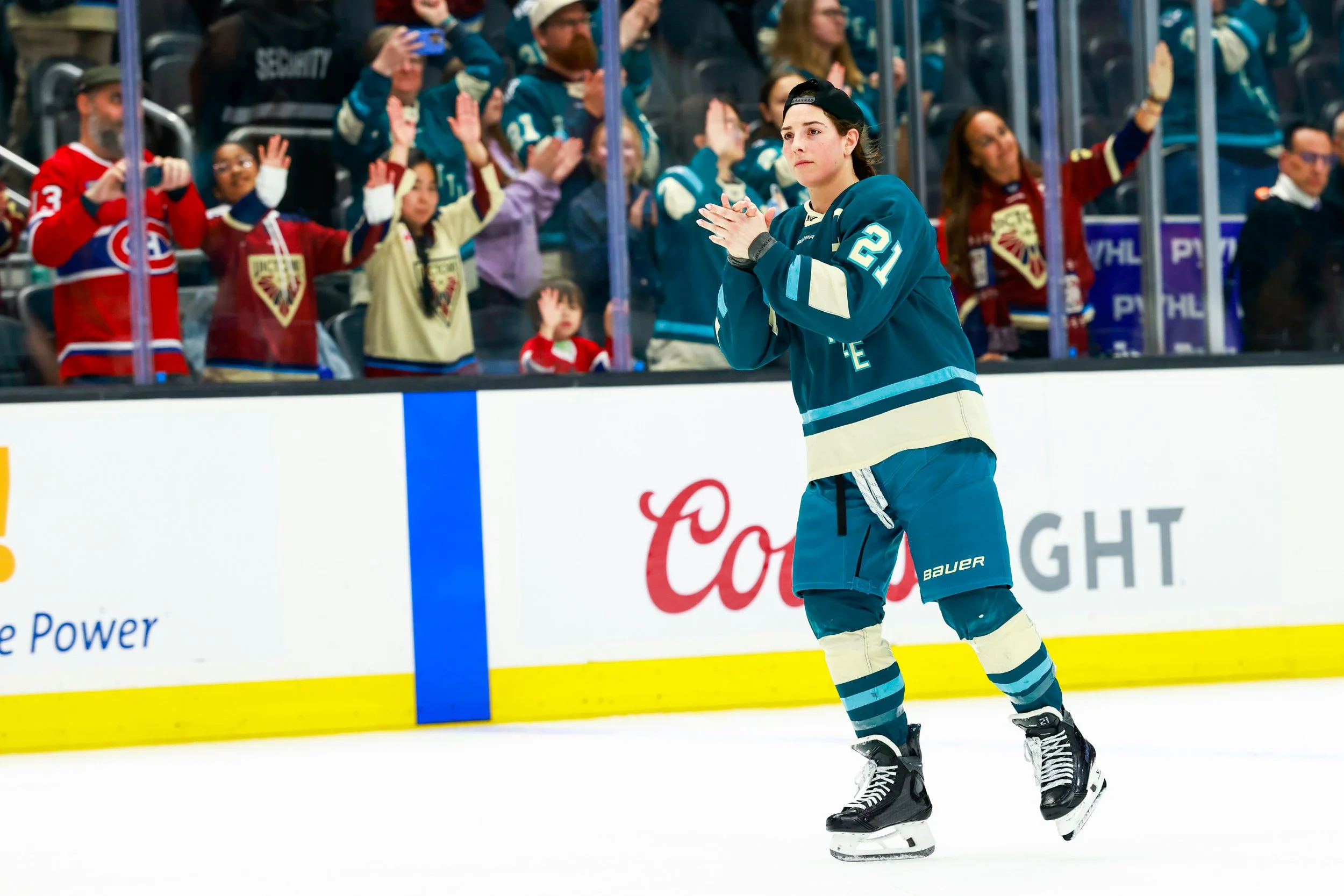
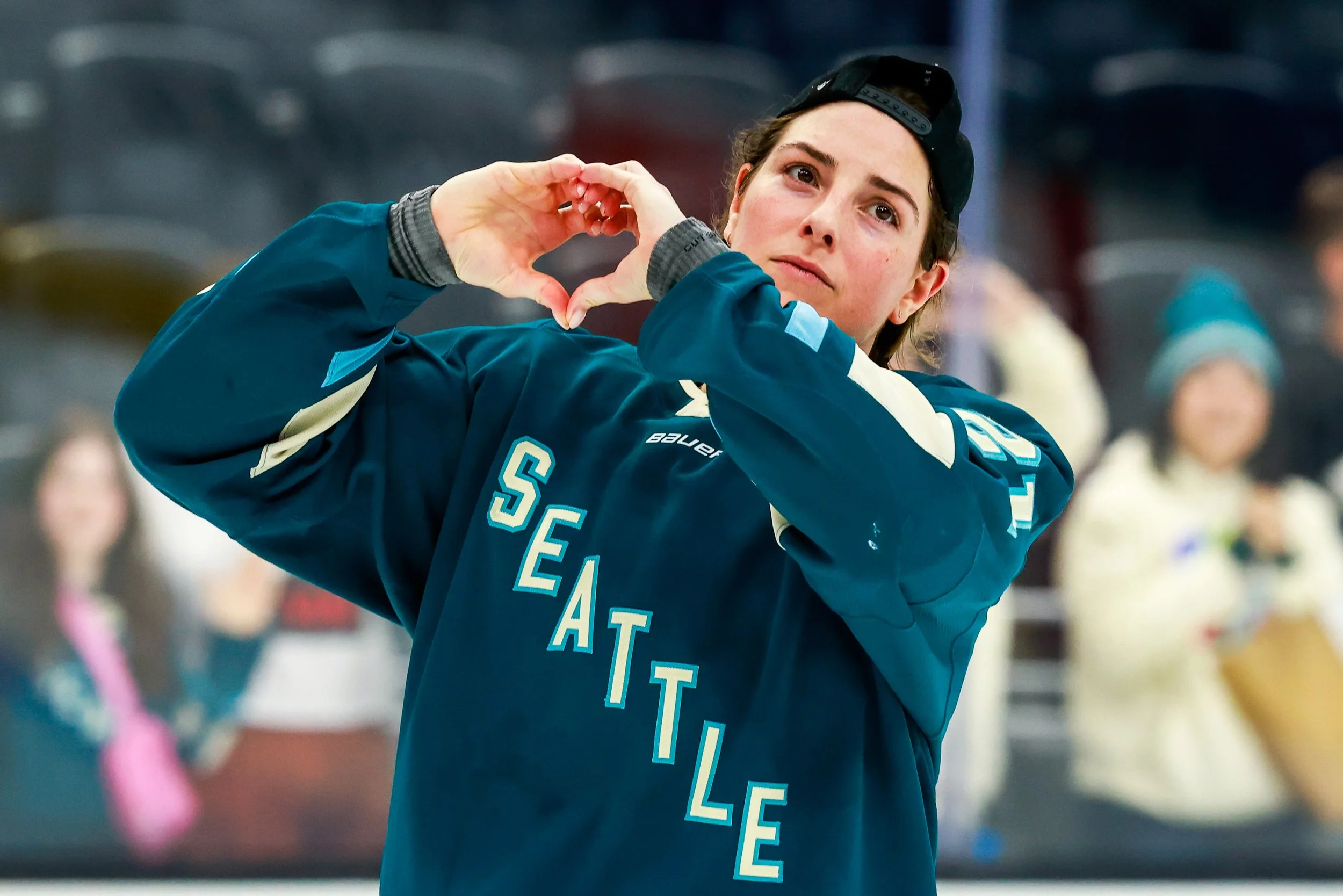
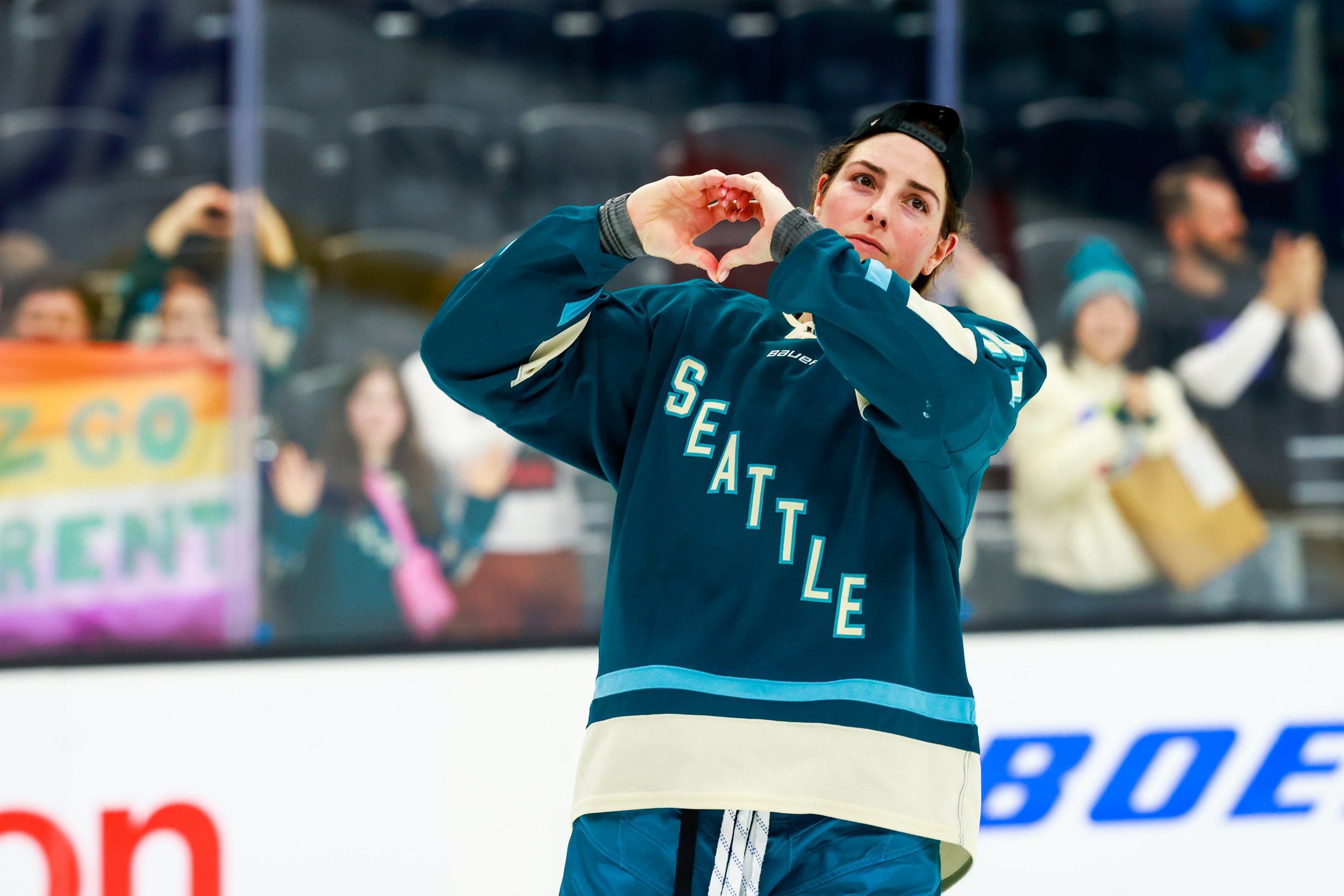
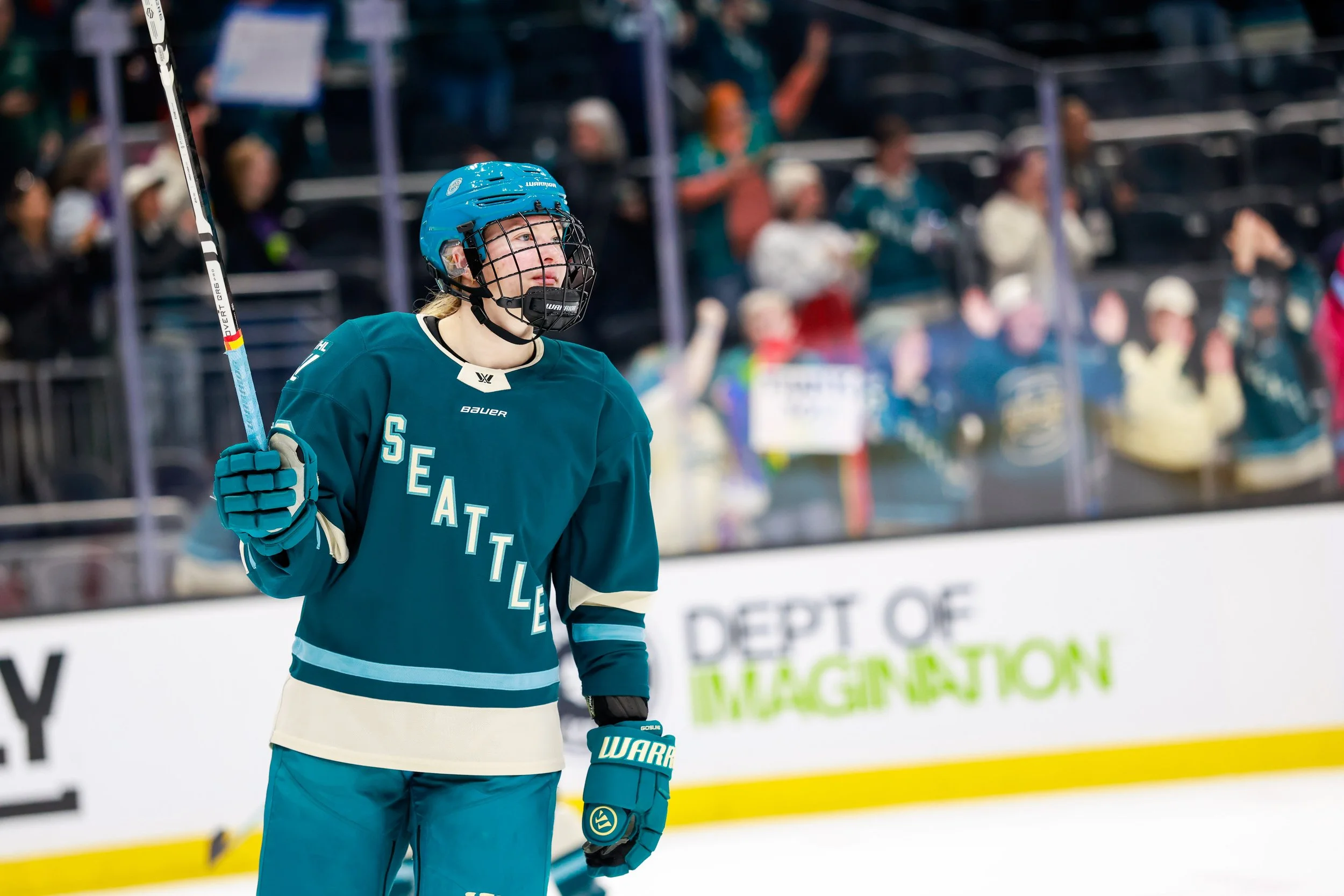
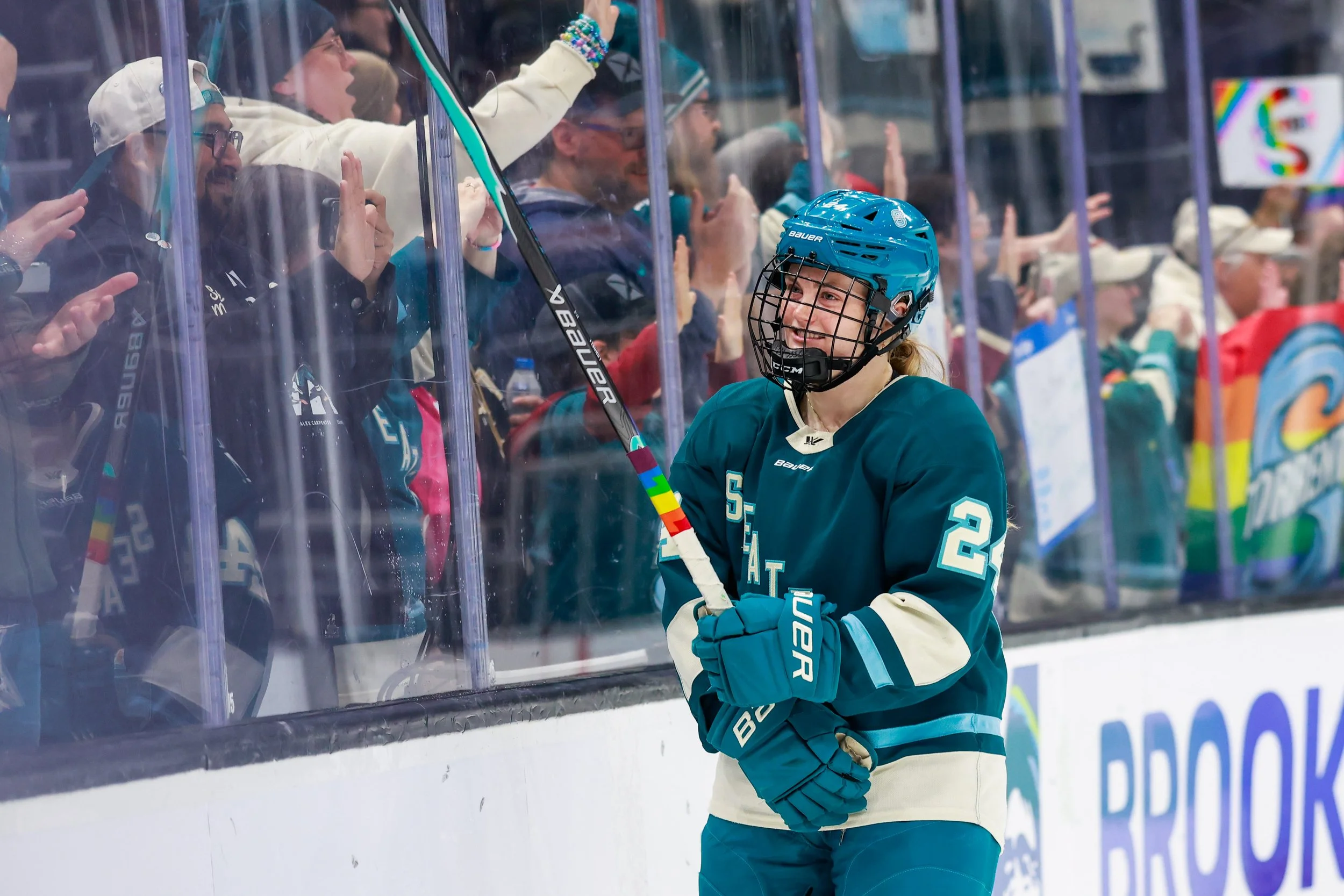
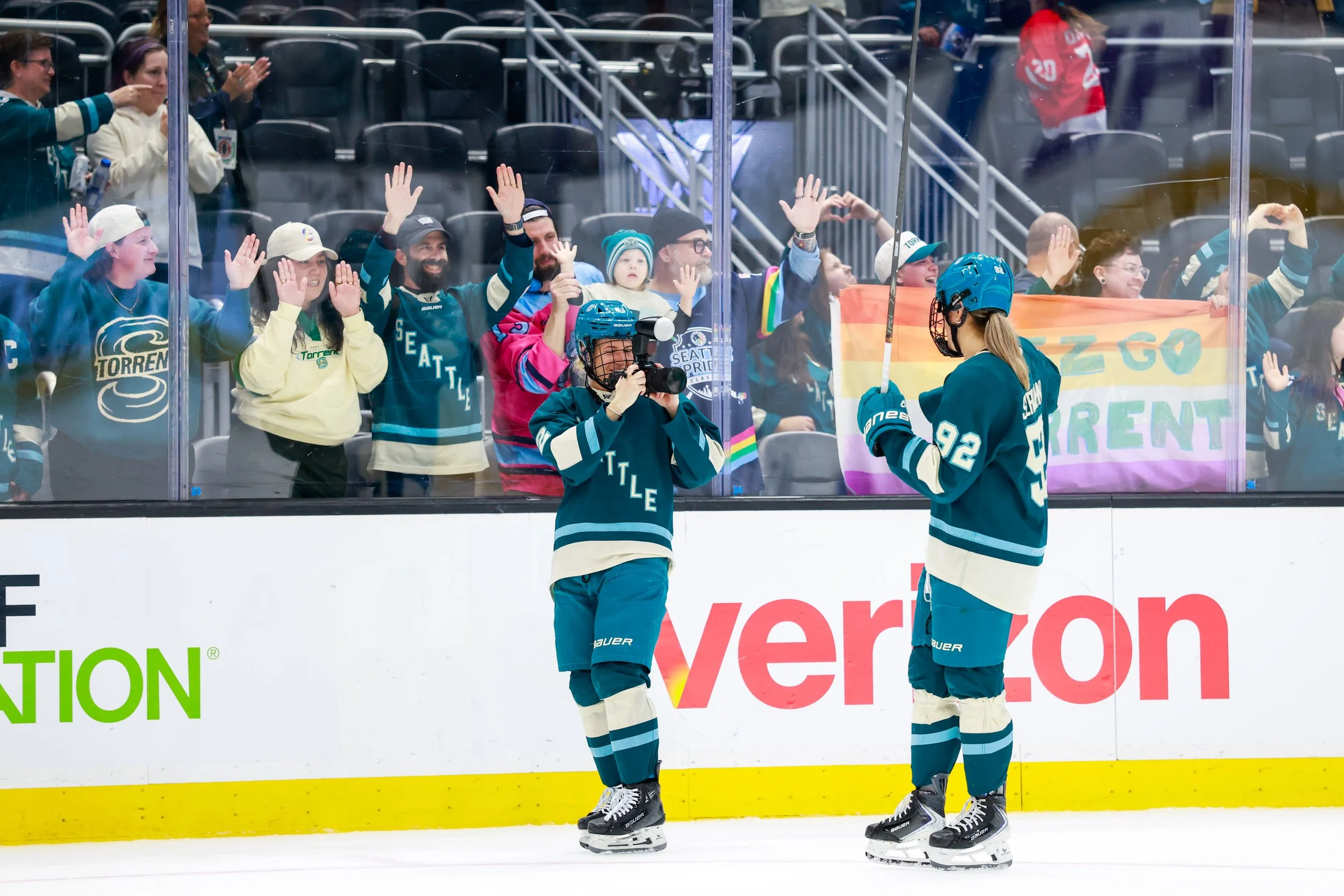
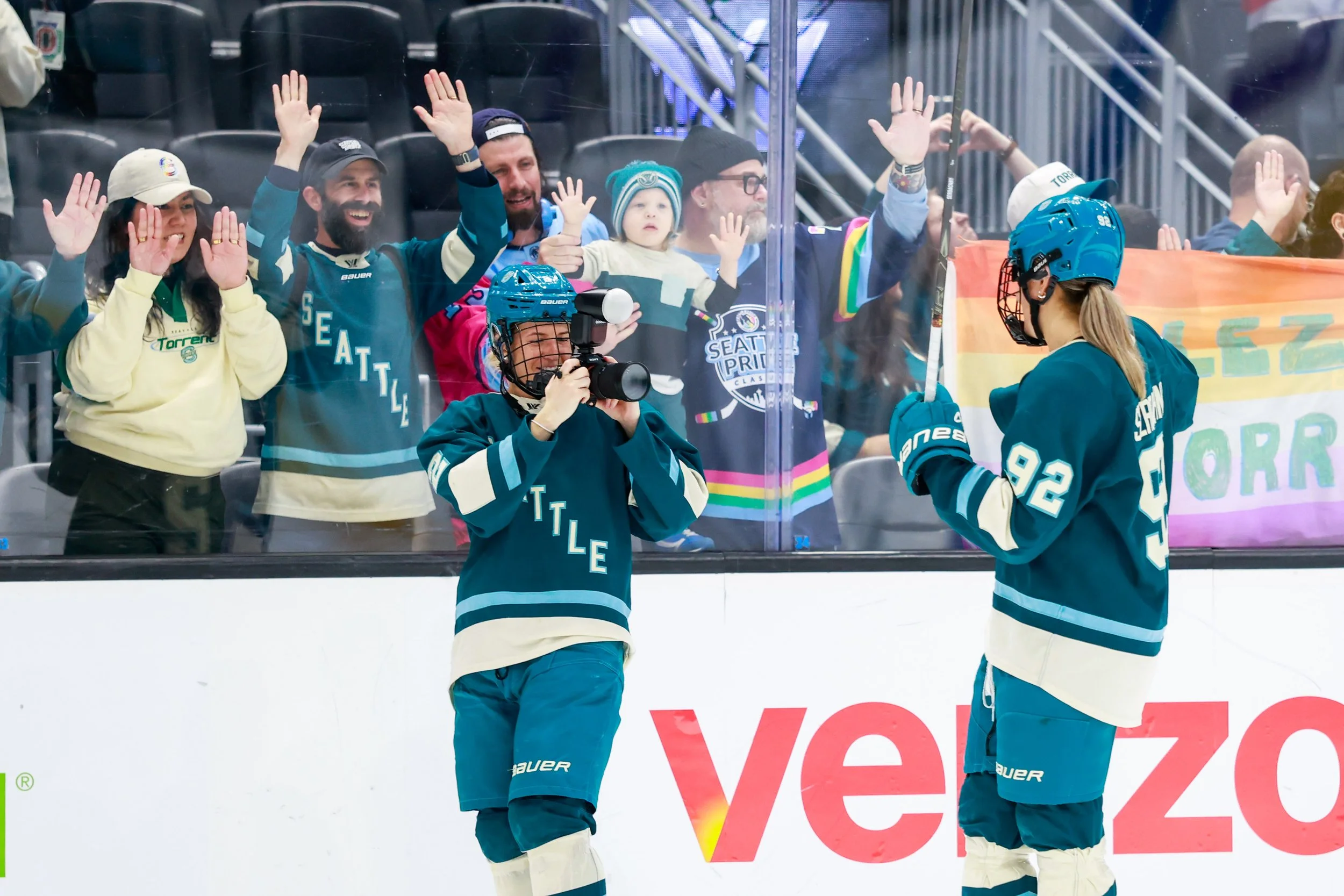
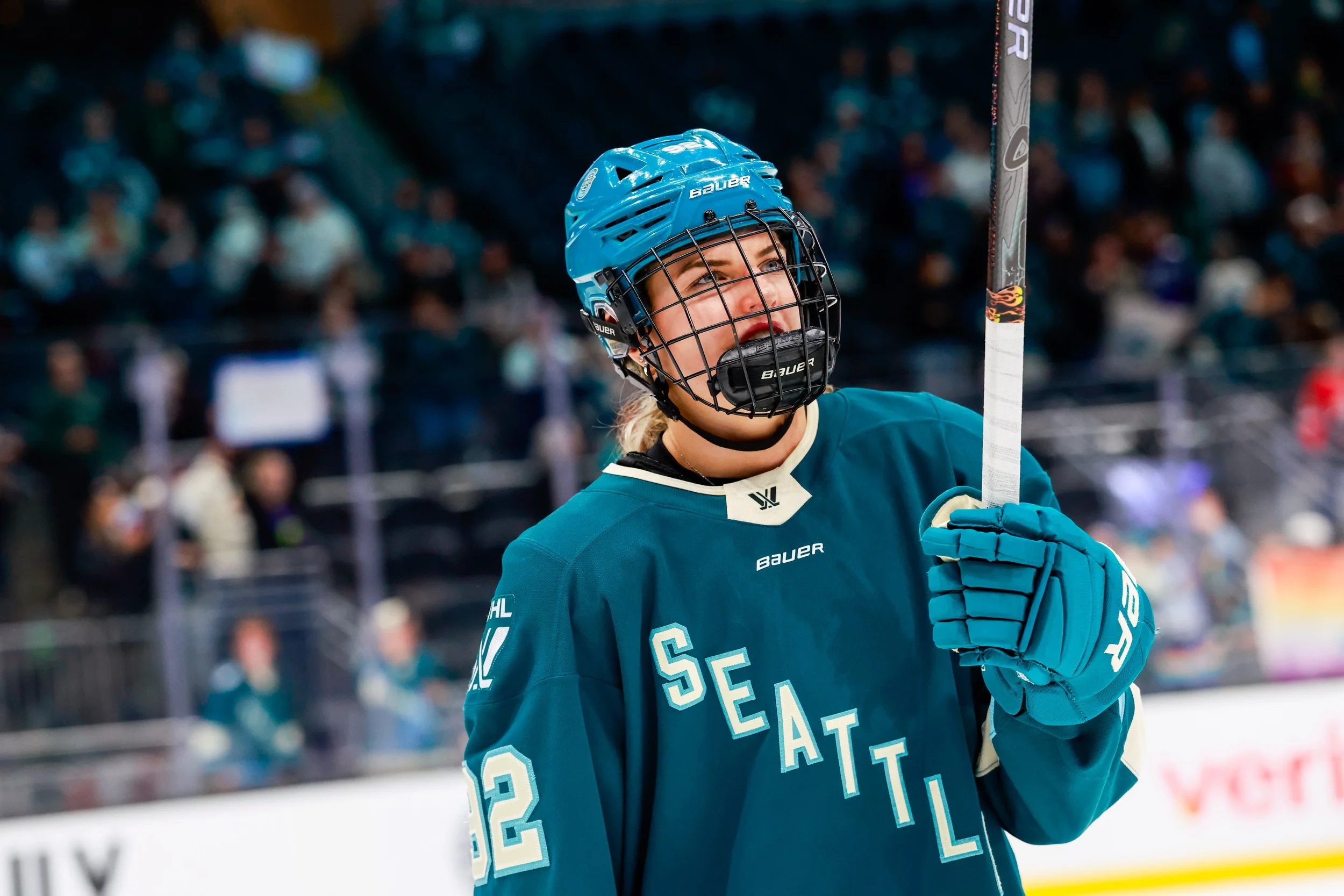
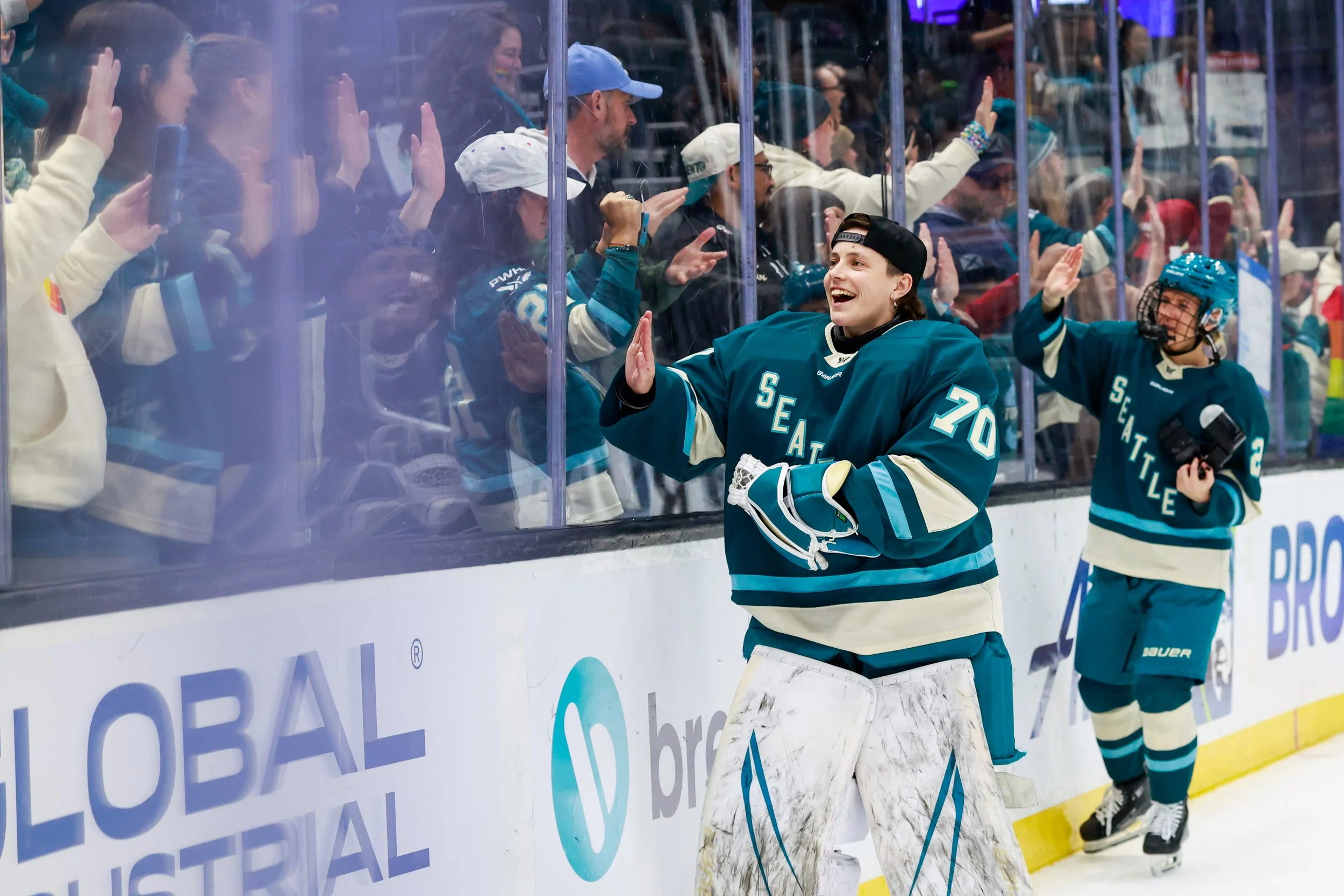
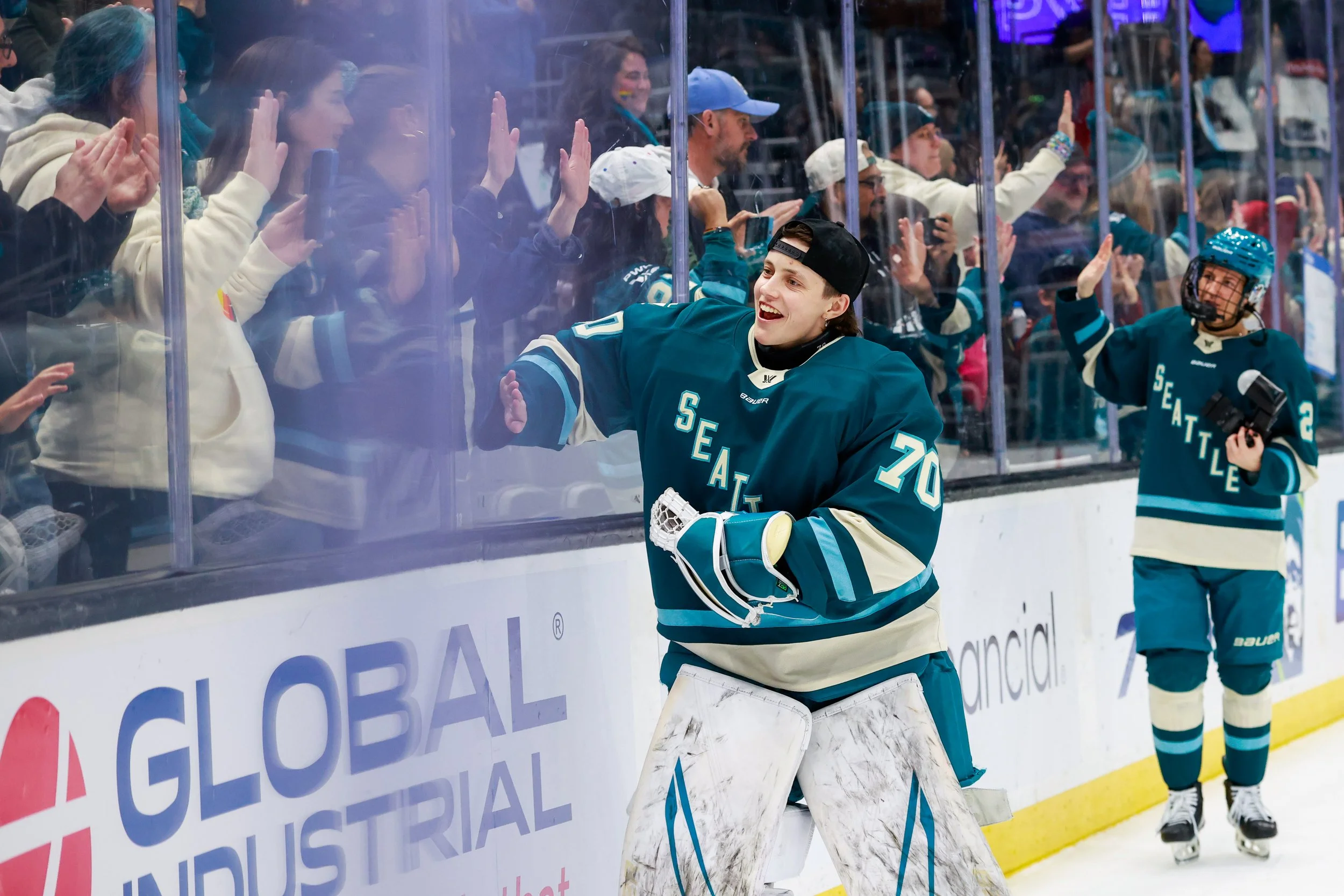
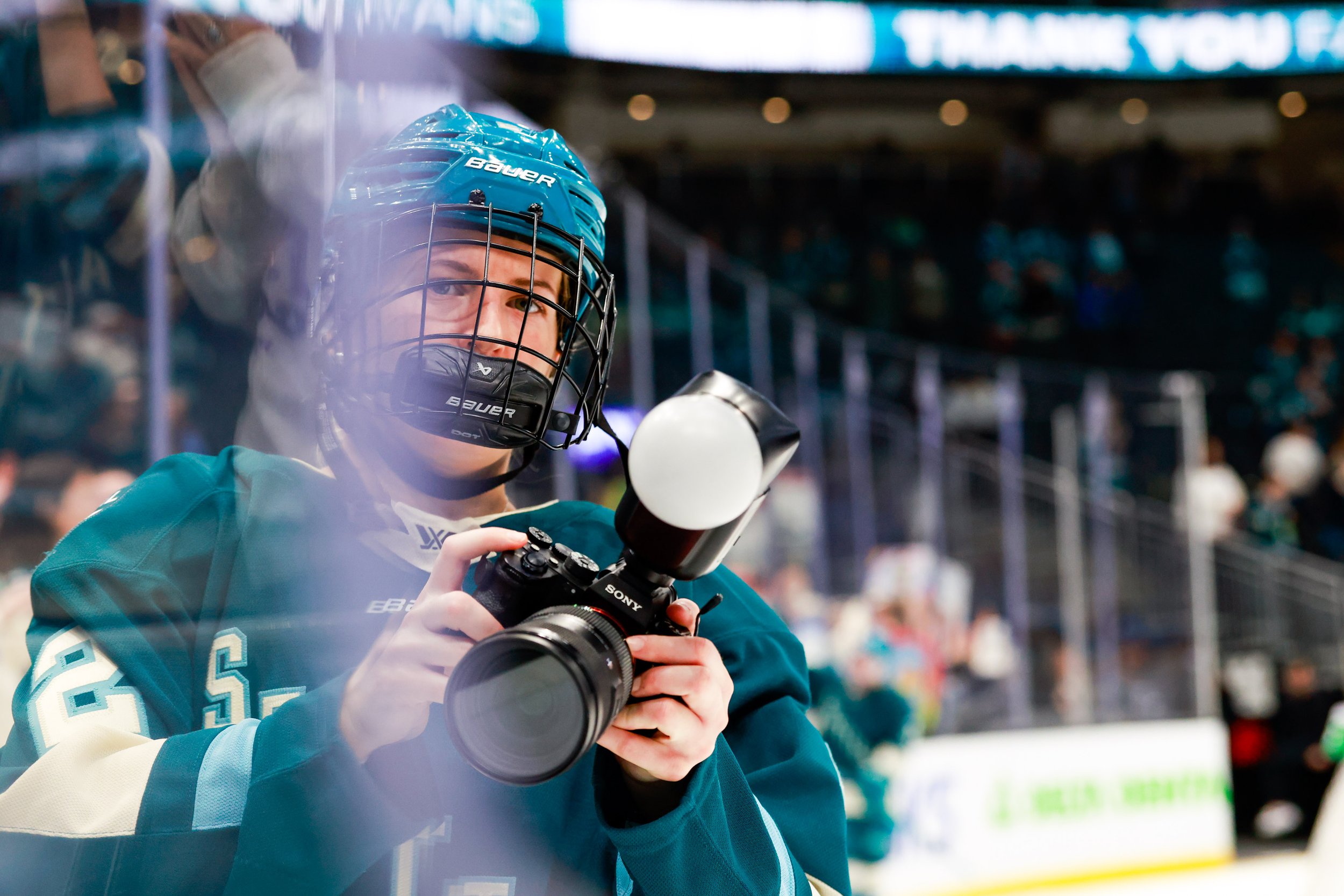
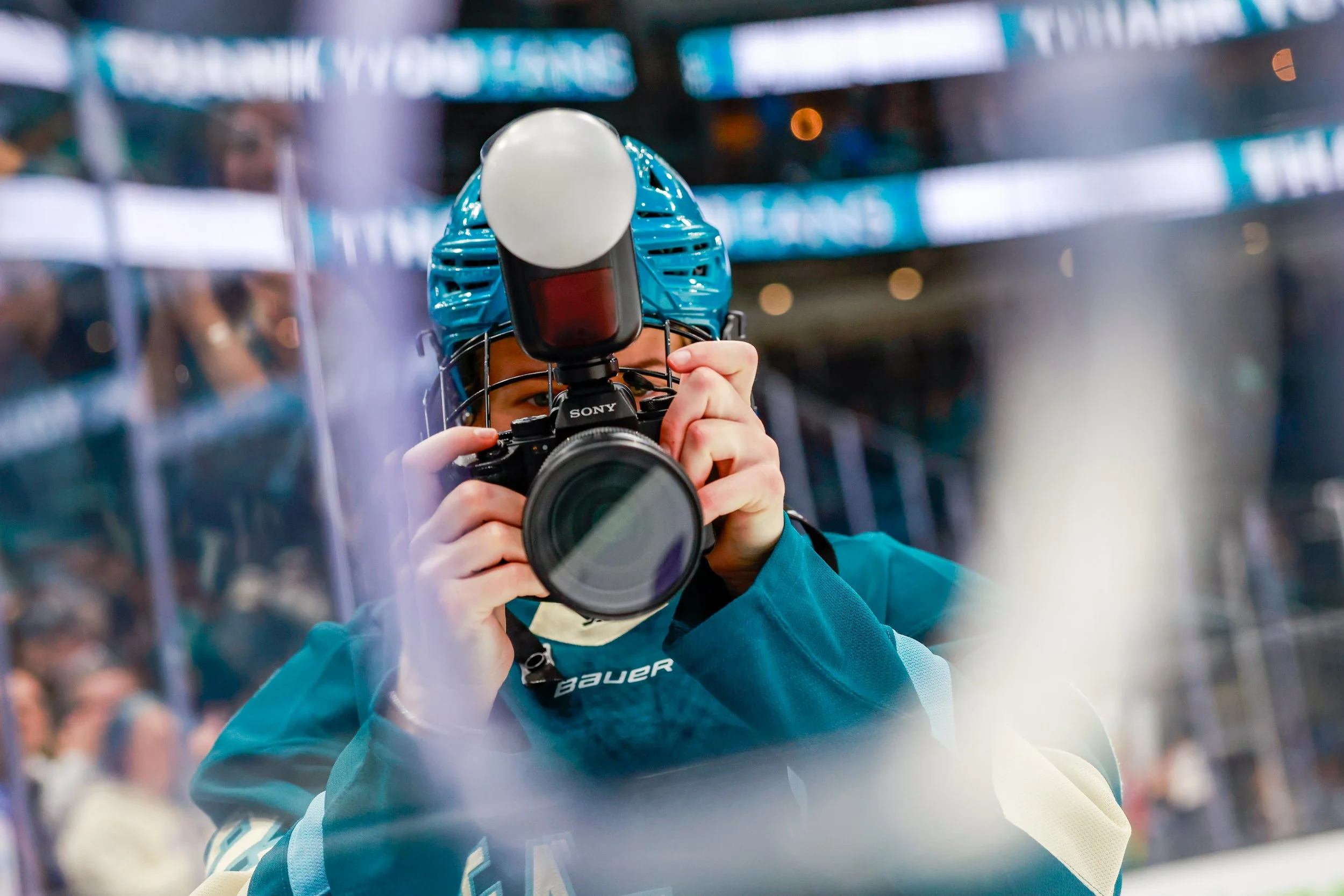
Sights from after the final buzzer of the Seattle Torrent’s last game of their inaugural season at Climate Pledge Arena. (Photos by Liz Wolter for Circling Seattle Sports)
CSS: What challenges did the expansion process pose for you and your staff?
Turner: I think beyond the just the uncertainty of it all, which which takes a toll, especially on the players really not knowing whether they're going to get picked up or have a choice and kind of where they go, although the league did as best of job as they could managing player choice in this this process, with kind of balancing the priorities of the league and making sure we have four solid and competitive teams. I think for the players, yeah, it's difficult, and there's a big part of me that wants to keep them, you know, totally in the loop all the time, but things change so quickly that you kind of have to be mindful of just, you know, managing those expectations throughout the process.
It's difficult just to manage the relationships and communication with everyone throughout that process, and then, yeah, challenges. I guess I kind of compare it to last year a bit as far as the landscape of what contracts were this year? We had a lot of players on expiring contracts. You have twice as many teams coming into the league; you have four new teams rather than two. Not to say last year was easy for anyone; I know it was very difficult, so no comparison of difficulty levels, but I think just this year, something that was unique was that you did have a lot of player choice that went into it, you know, for a number of reasons, and it was good and necessary.
I think for us, it made it difficult to project out where people would go and where players would go, so I think just last year there's kind of a defined pool of players that you knew were on multi-year deals that were going to be subject to the expansion draft, and then you'd go into the expiring contract signing window. This year it was kind of, you know, phased and just a bit more difficult to project, like where are we going to end up? We knew we had the three, so we were trying to balance. I think I've said this on other shows, but just to repeat it here: we're trying to balance who the core players are for us, while also considering where we can backfill between expiring contracts. Are we, like, what's the guessing game of what other teams' priorities are, from expansion teams to the existing teams, and then obviously, what does the draft look like, and where can we kind of fill in with draft selection? So there were a lot of variables that went into it, and so it was kind of taking it day by day and phase by phase, and trying to project as much as you can, but also set yourself up to be able to kind of react as things progressed, because inevitably it wasn't always going to go as you projected.
So just trying to get prepared, you know, was a big task and obviously took time, so balancing that with prep for the entry draft was challenging, too. A lot of different challenges, but I think everyone took it in stride, and the players - it's difficult for them - but I think, you know, we're feeling good about this group and really excited about next year.
CSS: What was the hiring process like for your head coaching position?
Turner: We did a search externally as well, and obviously had Christine [Bumstead] interview as part of that search. She’s 30; she's young, I'm young, so we're a young staff. But I think what I had obviously seen from her last year, we had a lot of difficulties in the way that we played our game, but one thing that was pretty good relative to our lack of success was our power play, and that was something that Christine ran. And you can see the identity of the power play. You could see the looks that were there. And just the way that she ran that group and took that and owned it, I was really impressed by that.
She's a teacher by trade, and so the way that she teaches, she knows sign language and coaches deaf hockey. Like, the way that she can communicate, which I think is one of the biggest aspects of a successful coach, is that she's a good communicator, and I think she really, really excels in that way. So I knew going into the search that those were some of her assets and what she would bring to next year, but still wanted to go through the search nonetheless and see what other coaches might be qualified for the role.
Throughout that process, Christine's presentation was fantastic. Just the vision was clear. It was concise. It was connected, just like the, you know, connective tissue from the vision to how we're going to execute to the habits that we have on the ice. It all flowed, and it was very clear, clearly communicated. And you know, one presentation, I could regurgitate it back to you, however many months later, and tell you exactly what we're gonna do. And I think that is a really hard, hard thing for anyone to do: to clearly communicate a vision, then implement it, and show how they're gonna do it. And I think she just really had it. So I was really, really impressed by her during the interview process.
Obviously, I knew her last year, and what she could do, so I ultimately decided to offer her the position. Really, really excited about the way that she's going to build out this staff. I think she's really good at knowing, okay, where am I strong, where do I need some support? She's, you know, she's young, but she's got mentors who are around the game, and a pretty well-known family in the game, too. If she has questions or she needs a pulse check on something, I feel confident that she can go and ask people around her and get some of that influence from folks that might have some more experience in the game and in the head coach position, so I think that was also a big influence on our decision as well. Just her support network as a young coach outside of our organization. So yeah, really excited about what she's doing.
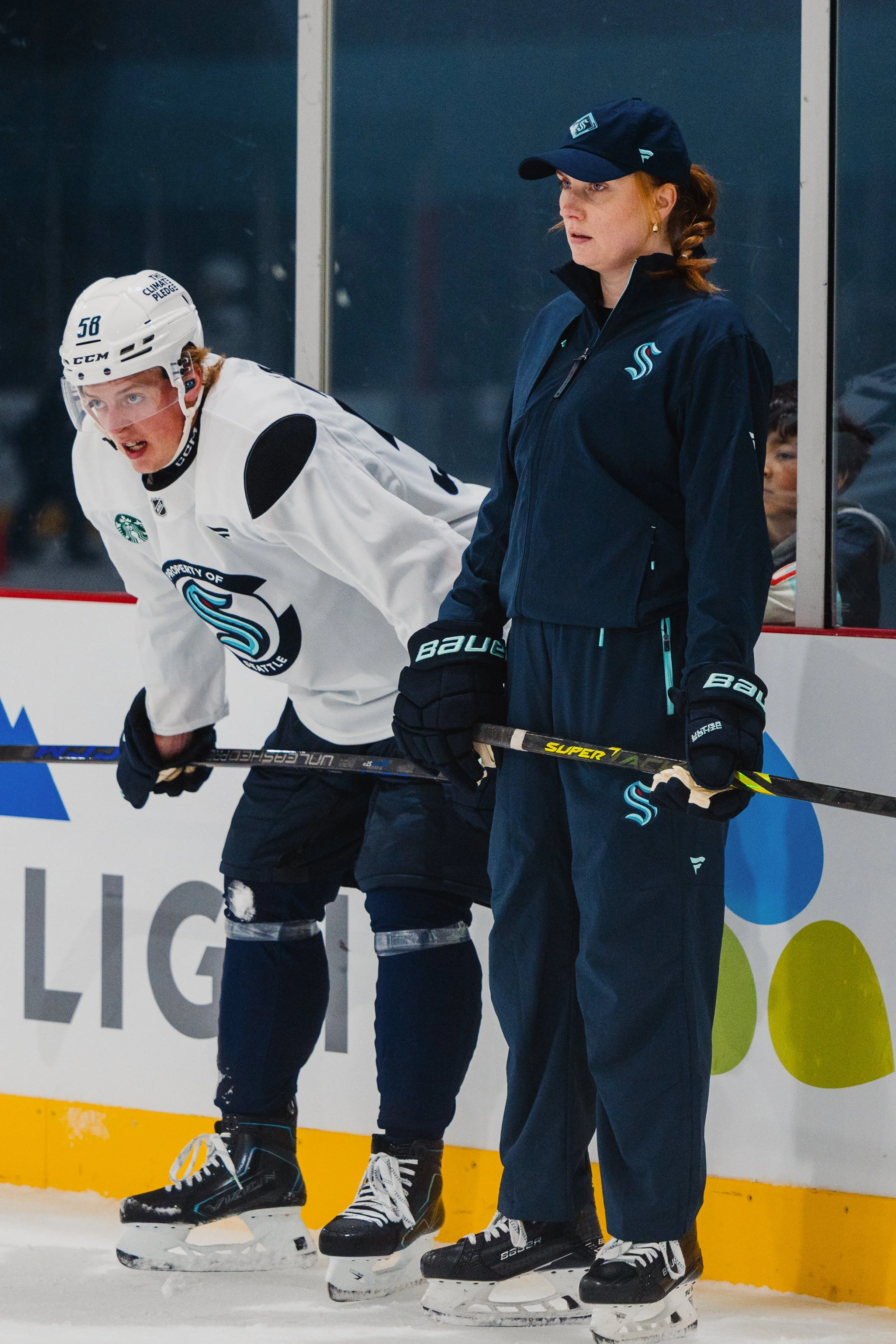
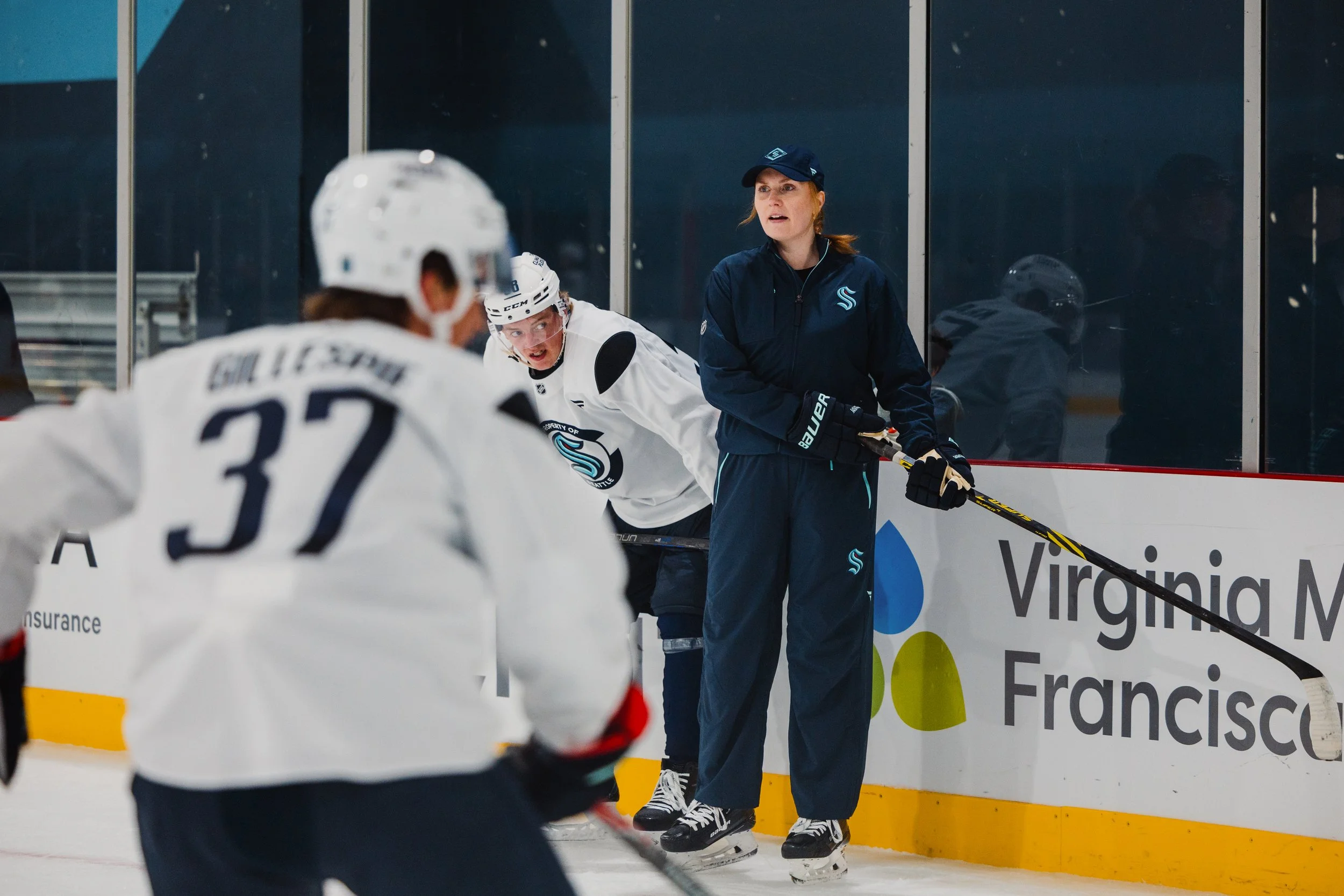
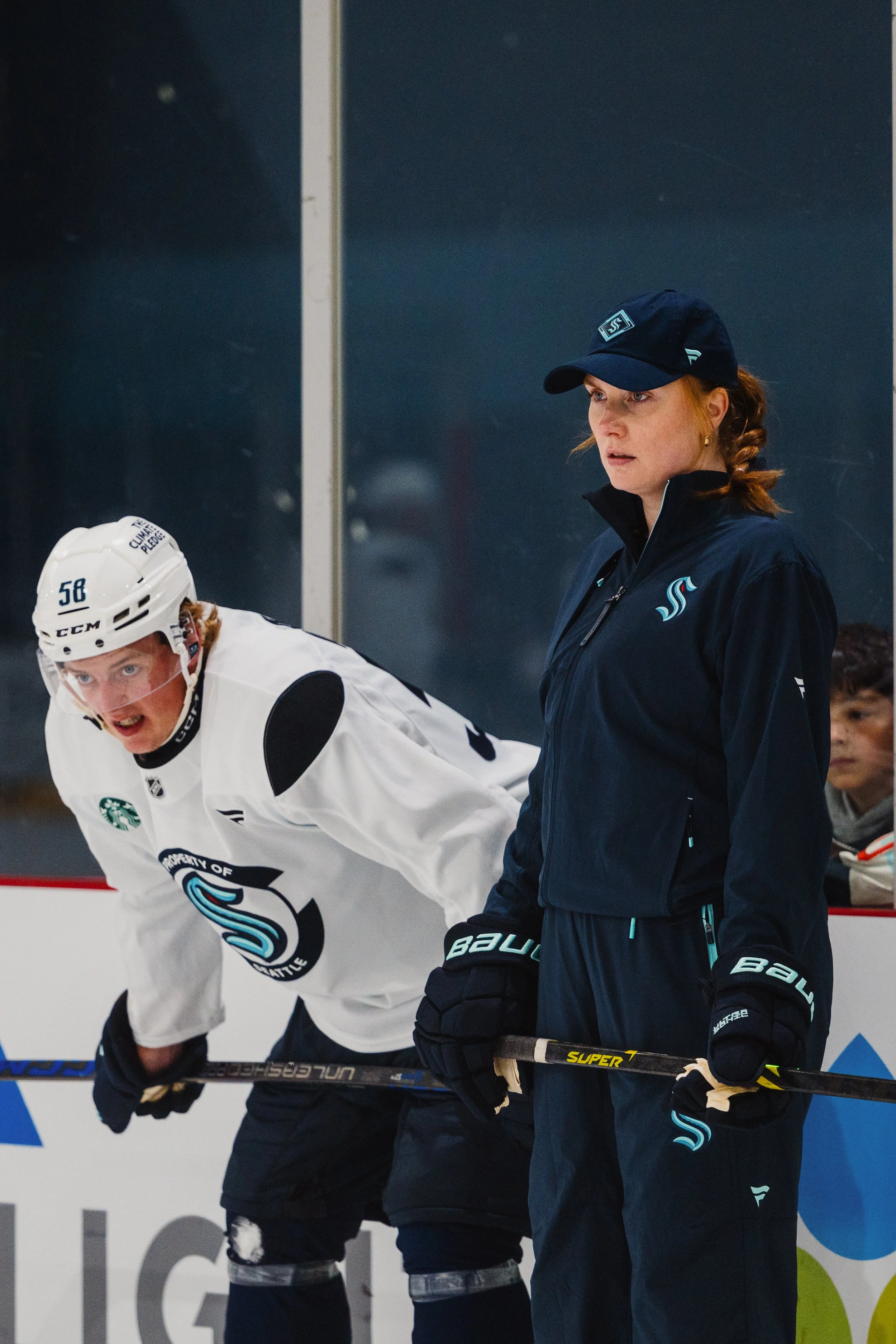
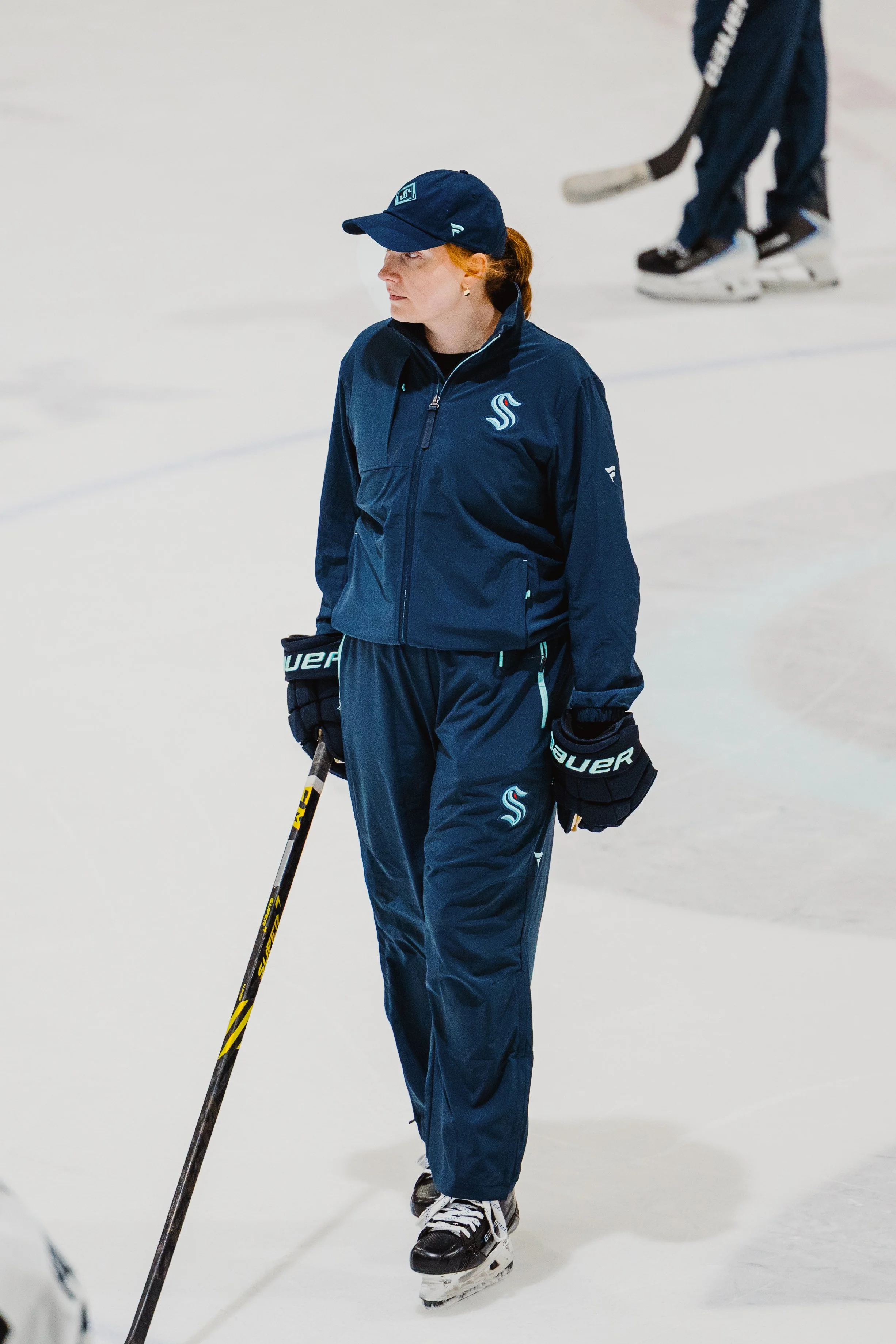
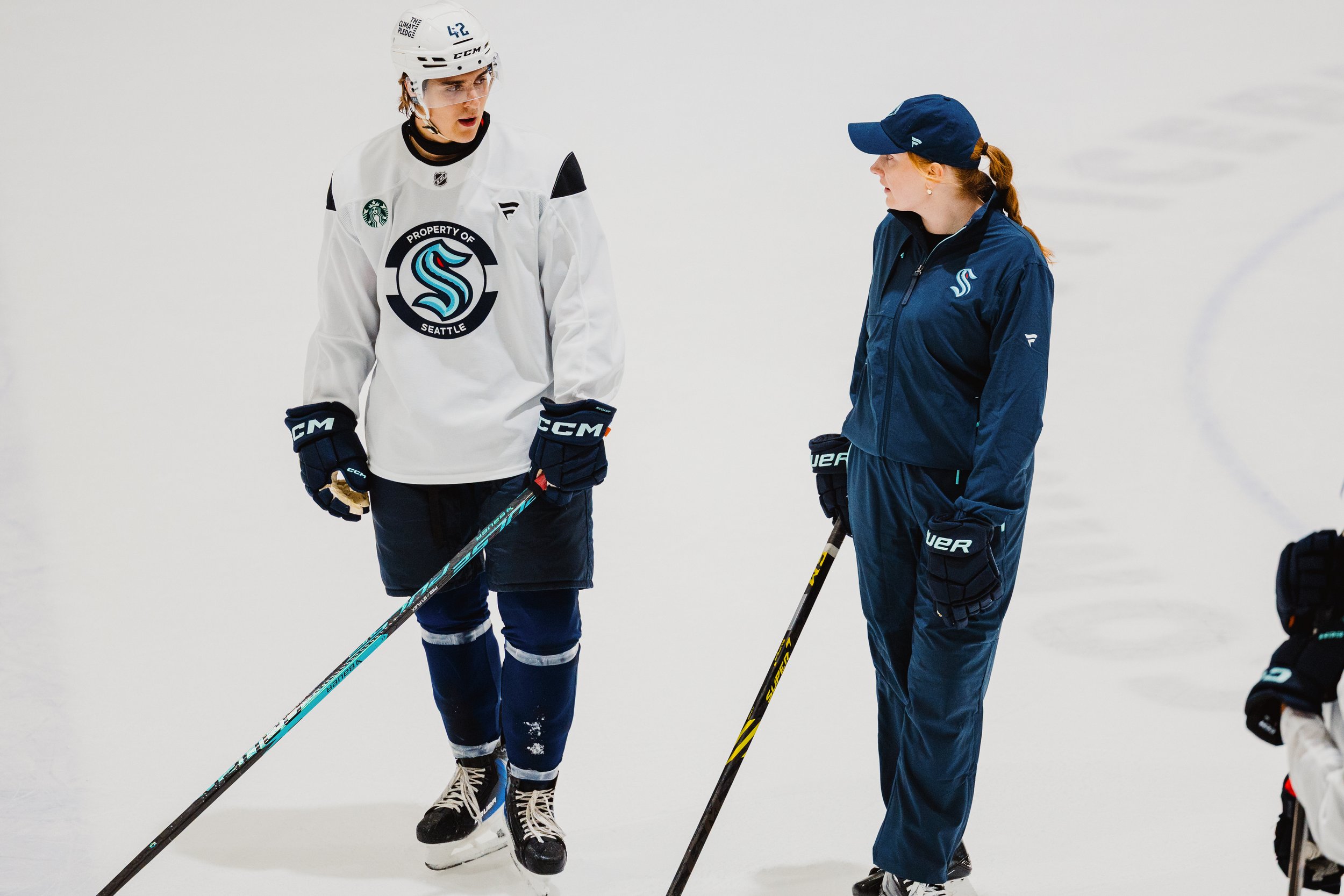
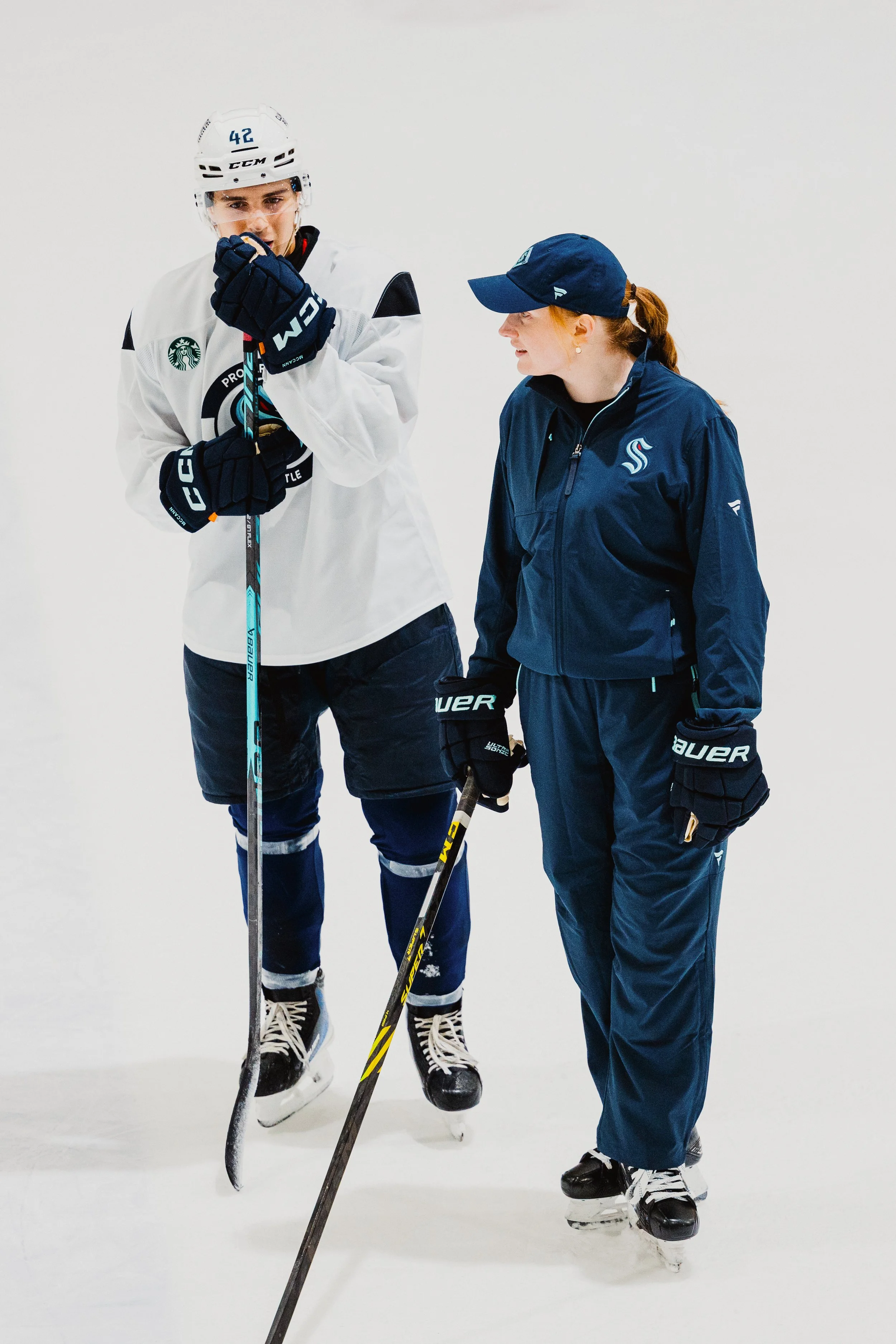
Christine Bumstead, Seattle Torrent head coach, seen at Kraken Development Camp at the Kraken Community Iceplex. (Photos by Walter Williams for Circling Seattle Sports)
Obviously, we hired Stefanie McKeough, so very excited about her on the bench as well. She's proven herself within this league. She's supported two coaches who've been nominated for Coach of the Year; one of them won. She has just done a great job. I was lucky enough to work with her in Boston and see what she could do. So going through, you know, the process of hiring our third bench coach, and I know Christine's looking for someone who's going to kind of complement what we already have today. So yeah, Sheldon's [Goertzen] back, and some of our other coaches are back. So we're really excited about this staff, and I know Christine's going to lead it really, really well.
CSS: The selection of Abbey Murphy was divisive amongst the fanbase. What can you say about her as a person and what you’re hoping to see from her?
Turner: I appreciate the question because Abbey, throughout my conversations, it's clear that she is someone who doesn't play for herself, right? She is playing for, whether it's the University of Minnesota or the United States of America or her family or now the Seattle Torrent fan base. Like, that's who she's playing for, and I think she really embodies someone who plays for, you know, the old cliché of the name on the front of your chest, right?
So, just a great person, comes from a great family. Was fortunate enough to meet them at the draft. Had a lot of really good conversations with her prior to the draft, and I think what stood out to me is that she's just she's really real, right? She's very authentic. She's authentically herself, and I think I said it on another show. But she shows up for her teammates, her fan base, the organizations she's part of, and the different causes. Like she shows up and shows that on the ice, and through her work ethic, and that is something that I think shows. A lot of respect for the game itself and for the organizations she plays for. She did a lot with a Minnesota team this year, and you could see, you know, even in the game against Northeastern, I was watching like she is doing everything she can possibly do to get that team to win a game, and she's not going to stop.
She plays with a ton of emotion, and we talked about it. On the ice, she's a fantastic player, but I just think she's a selfless person and a selfless player, and if you ask any of her teammates or coaches, as everyone says, they say fantastic things about Abbey Murphy. I just had some great conversations with her prior to the draft and heading into it. And she's just someone who's willing to be real and be authentic. And she, as we are, is itching to get to Seattle and get into the market. She's mentioned it to us a million times, and we share that sentiment. So obviously, she needs schedules to get there, but we're really, really excited to get her in front of the fans, and I know she is certainly very excited to get to know the fans too.
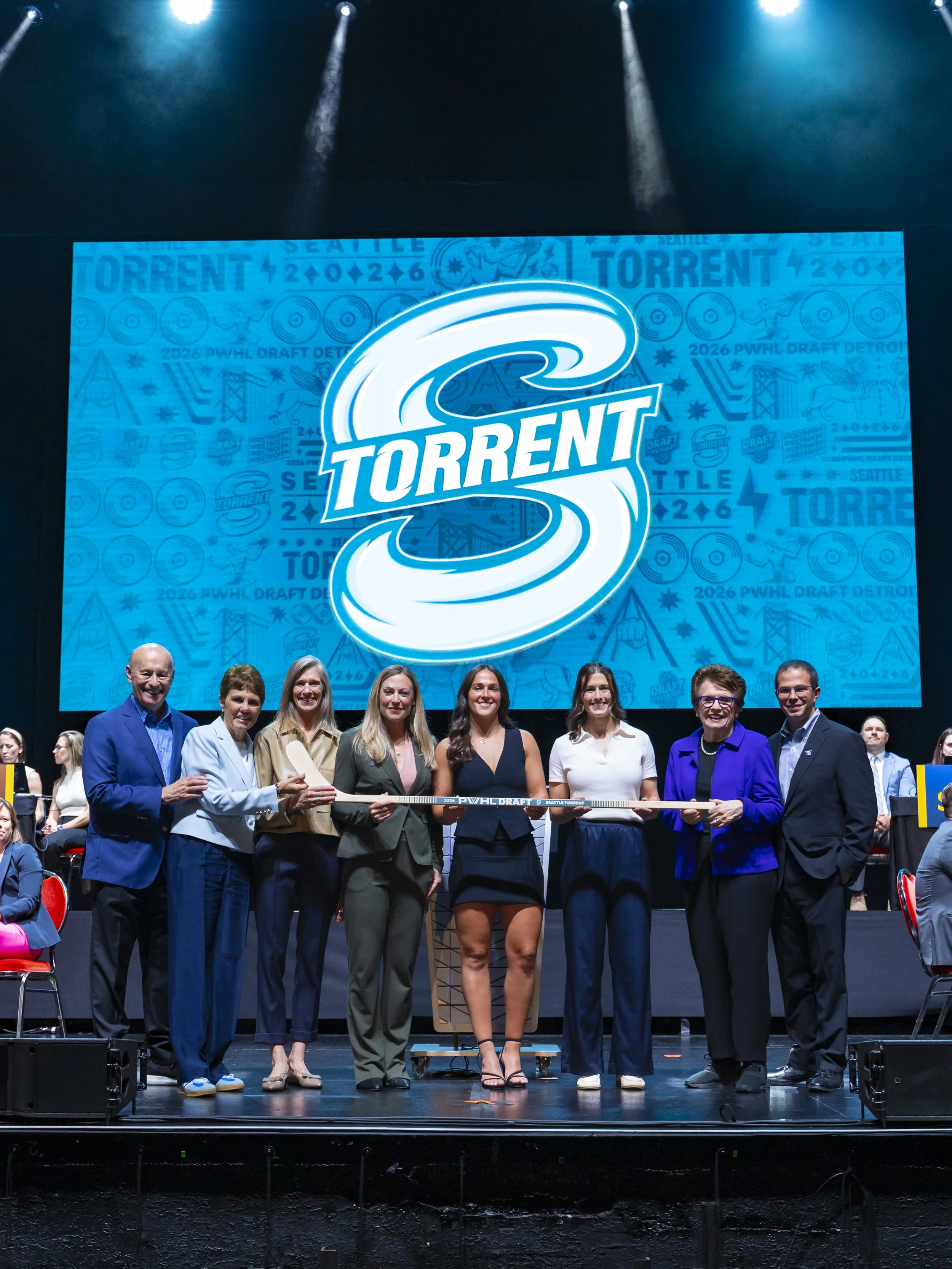
Abbey Murphy (Center) pictured after being selected second overall by the Seattle Torrent in the 2026 PWHL Entry Draft in Detroit, Michigan. (Photo via the PWHL)
CSS: What players from your entry draft class this year do you think may fly under the radar?
Turner: I think the whole draft class was really, really deep. Like, to your point, we got to the sixth round, and we're still selecting high-talent players. So that speaks to just this 2026 class and its depth.
To your point, Grace Elliott is someone Christine [Bumstead] played against, so she had a big say in that pick. But someone who has the size that we're looking to add to our roster, you know, we've said we want to play a heavy kind of punishing game. She is someone who fits that mold, and Christine was lucky to be on the other side of it for a bit of time and play against her, and sometimes you think about the players you don't want to play against; Abbey Murphy being one of them, Grace Elliott being another. So she's just someone who uses her size to her advantage, really, to get pucks into the interior of the ice. She doesn't play on the perimeter too much, which is something that is a good instinct to have; I'm really excited about her.
I think, yeah, you said it. If there's someone I'm hopeful people will see more of and develop in this league, I think Grace is certainly one of those players. But feel really, really good about this draft class. I could go through the whole list, but all of them are well-balanced players. We got some skill in there. Didn't want to go, you know, select kind of the same player throughout the draft, but wanted to make sure we were complementing the group that we had already through the expansion process and what we're trying to do, so we do have a mix of of skill in there, mix of size, and then obviously with Gabby Durante in the back end, we wanted to to add a goalie that we could develop who has already been tested in a big way.
So really, really excited about this class. I think there's a lot of skill, a lot of heart. Just good instincts in terms of how these players play. So excited to get to training camp, get them on the ice, and see what they can do.
CSS: What can you tell me about the Jenna Buglioni trade?
Turner: It was a tough one. Jenna's a fantastic person, great, great person around the rink in every capacity. It was hard, yeah. It's hard to trade away your first round pick, your first ever pick. But to your point, she had some difficulty last year. You know, with injury, and then we kind of go on the road, and it's hard, it's hard as a rookie to come in and play at the pace, period. And I think it was just hard for her to catch up, given that injury and kind of a bit of a setback there. And us going on the road doesn't help, right? Because you're not home, where you can really, you know, dig into your development and catch up a bit quicker with the home staff, resources, and things like that.
So, I think she had a setback pretty early on with the injury, and it was a struggle to get her back into the lineup throughout the year. Going into the expansion process and the draft, wanting her to be with us next year, but, as I was talking about, we had to be flexible, and, not having the ability to project out where everything would fall after expansion, it was sometimes day by day.
You'd start the day thinking one thing, and the end of the day is not something you expected. So we had to be flexible and make that trade. I think it’s certainly a good change of scenery for her for sure. I'm hopeful she has the opportunity to succeed there. You always want to see players play at their best. We just felt coming out of expansion in the draft, like, you know, you want to put players in positions to succeed too. And I just I didn't feel that we had her in the exact right position where where she'd be able to find that success with us.
We got Neena Bricks’ rights for two years. She plays a bit more of the game that we're looking to play. Just has a little more size and, you know, spent some time in the SCHL. Had a good career in college, so yeah, it was certainly not an easy decision. But you want to make sure you're making decisions in the best interests of your organization and the players, too. And felt that she would have, you know, a better experience or a better opportunity on a different squad, and we could kind of fill in with someone that allowed us to get some flexibility in the back end with our depth.
CSS: You’ve said that you don’t want to remain complacent. How do you balance being patient while also wanting to not pull the trigger too fast?
Turner: It's a good question. First, I'll say everyone in the organization - players, staff - is really competitive, and everyone wants to win. So, internally, you know they're athletes for a reason. I'm a former athlete. I'll say former, heavily. Everyone in the organization wants to win. Winning's fun, and it's what you're there to do, and it's what we're all at the end of the day getting paid to do. People want to win. We're competitors through and through, and so there's that. I think to your point though, balancing and not just pulling the plug on something hastily is important.
How I think about that is like, are the foundations there and are the pieces there, right? The power play, I think, is maybe a good example. Last year, we weren't top of the league, but we were in the middle, and, as you know, our team was in last place most of the season, so we have some room to grow there. But we have the foundation, the pieces, and the identity. It's just, you know, getting the looks. Do we need to refine here and there? I think what I try to do is take a step back and look at: Do we have those pieces? Do we have the foundation? Do we have the structure to build, or is the structure, you know, flawed inherently and needs to be changed? So that's kind of when we were doing our reflections this year. We were thinking, okay, what were some pieces that needed to be changed, but were there really underlying pervasive issues that we needed to manage and change?
We hopefully made those changes. And I think going into next year, especially with the vision that Christine's laid out for how we're gonna we're gonna play, you know, you'll see the zones should be connected now. I think, you know, we were kind of playing a disjointed game. Our D zone was not good, and it didn't quite lead into our neutral zone play and our transition play, which didn't really lead into our O zone play. So I think that's kind of how I think about it. Is it refining, or is it going back to the drawing board and kind of throwing it out? And did we give it a good, you know, good effort to succeed? And I think we looked at this year and tried to figure out where the refining points are and where the points are where we need to really go back to the drawing board. So, hopefully that answers the question.
CSS: What excites you most about the upcoming season, and how important is it to have the experience of last year under your belt?
Turner: I think it’s really important. It's the core right now that we have facilities, which is good. So we're starting off on a better foot there. We have some coaching staff that is returning, which will really help. We have some operations staff that are coming back, and obviously our player group - we lost some really big pieces - so we're gonna have to, I think, rebuild a bit of our identity internally, and I'm sure externally with the fan base too. I don't think anyone would challenge that.
I'm excited to see what this group can organically do. In the same way, we were starting from square one last year, and both our player group and our fan base had to come together to define what it means to be a Torrent. I think we're going to build off of that into next year. But I'm hopeful we can also see what else we can do, what other, you know, themes we can come up with, and how we define the identity of our brand together as the Seattle Torrent, because I think that's really important, right?
I think we've established that foundation. I say we, meaning our staff, our team, our fan base, like the city and everyone that's been really engaged with this team from day one, and anyone who, you know, maybe made it to the last game of the season, right? So, I see it as certainly a group effort to get back into the rink, and it will certainly feel a bit different. I'm excited to see what the fans come up with and how we come together again for this year. So I'm sure there's going to be, you know, just some themes that carry over, and some new things that we don't anticipate in a good way, and I'm excited to see how all of us kind of come together and build on what we got last year.
End of questions and answers
Torrent training camp is expected to take place in mid-November at the Kraken Community Iceplex. Follow Circling Seattle Sports across all of our platforms for the best Torrent coverage in Seattle, including more interviews to come in the following weeks.
Instagram: @CirclingSeattleSports Twitter: @CirclingSports Threads: @CirclingSeattleSports Tiktok: @CirclingSeattleSports Facebook: Circling Seattle Sports BlueSky: @circlingseasports.bsky.social
〰️
Instagram: @CirclingSeattleSports Twitter: @CirclingSports Threads: @CirclingSeattleSports Tiktok: @CirclingSeattleSports Facebook: Circling Seattle Sports BlueSky: @circlingseasports.bsky.social 〰️
Check out our previous Seattle Torrent articles here.
Check out our previous articles with writing by Charles Hamaker here.
Check out our previous articles with photos by Eric Hiller here, and his portfolio here.
Support the work of Circling Seattle Sports by checking out our merchandise!